Ear Training for Guitarists: A 10-Min Daily Guide
You hear a song once, reach for your guitar, and then stop.
You know the feeling. The melody is in your head for a second. The groove makes sense. You can almost hear where the chords are going. But without tabs, chord charts, or someone showing you the shapes, everything falls apart. So you guess. You hunt around the fretboard. You get close, then lost.
That frustration is exactly why ear training for guitarists matters.
The good news is that playing by ear isn’t reserved for people with some mysterious gift. It’s a trainable skill. If you can learn chord shapes, scale patterns, and strumming rhythms, you can also learn to hear music more clearly and respond to it on the guitar. And you don’t need perfect pitch to do it. You need steady practice, a simple system, and exercises that connect directly to real playing.
Table of Contents
- Why Most Guitarists Can’t Play by Ear (And Why You Can)
- The Foundational 10-Minute Daily Ear Training Routine
- From Recognizing Intervals to Transcribing Melodies
- Hearing Harmony: How to Decode Chord Progressions
- Your Ear Training Toolkit for Smart Practice and Lasting Habit
- Your New Musical Reality: From Listener to Player
Why Most Guitarists Can’t Play by Ear (And Why You Can)
Most guitarists don’t fail at playing by ear because they lack talent. They fail because they were never shown how to train the skill in the right order.
They learn shapes before sounds. They memorize tabs before they can recognize a note. They watch lessons about improvisation before they can hear whether a phrase is moving up, down, or staying put. That creates a strange gap. Their hands know patterns, but their ears don’t know what those patterns sound like.
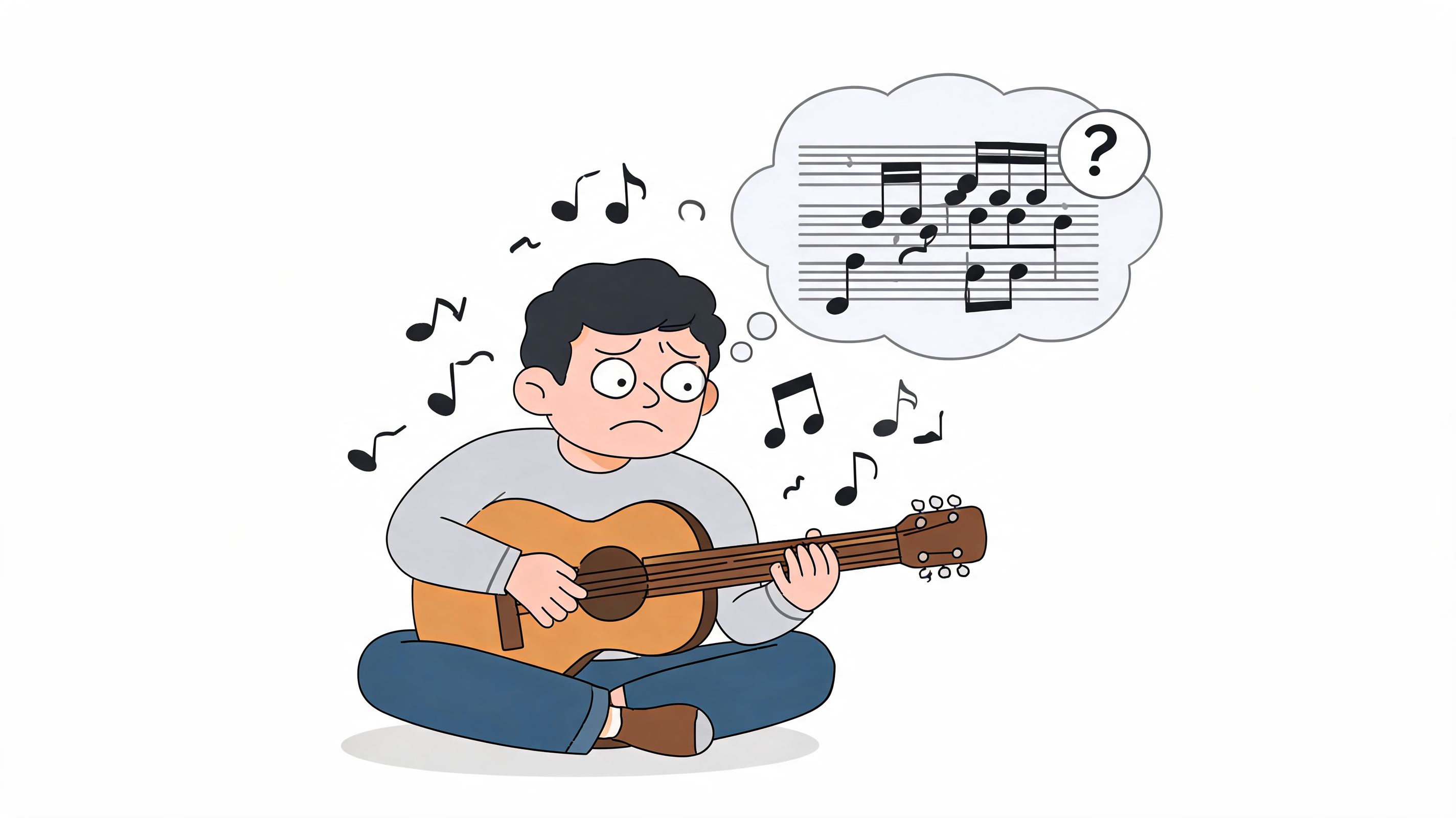
That gap is why so many players feel stuck when the tab disappears. They aren’t really hearing music yet. They’re reacting to visual information.
Practical rule: If you always need to see music before you can play it, your ears haven’t been trained to lead.
The fix is simple, even if it takes patience. Treat ear training the same way you treat fretting a clean chord or keeping steady time. It’s a skill you build through repetition. Not random guessing, not magical insight.
A lot of players also confuse play by ear with perfect pitch. Those are not the same thing. Perfect pitch gets talked about constantly, but most guitarists who can figure out songs, improvise, and jam confidently are using relative hearing. They hear relationships. They hear motion. They hear tension and resolution.
When you train that ability, these are the changes:
- You stop fishing for notes and start narrowing in on them.
- You hear chord changes sooner instead of waiting for someone to tell you the progression.
- You improvise with more purpose because your fingers start following sounds you can predict.
- You learn songs faster because you’re listening for patterns, not hoping luck saves you.
The biggest mindset shift is this. Ear training isn’t about becoming impressive. It’s about becoming independent.
When that clicks, daily practice stops feeling like homework. It starts feeling like freedom.
The Foundational 10-Minute Daily Ear Training Routine
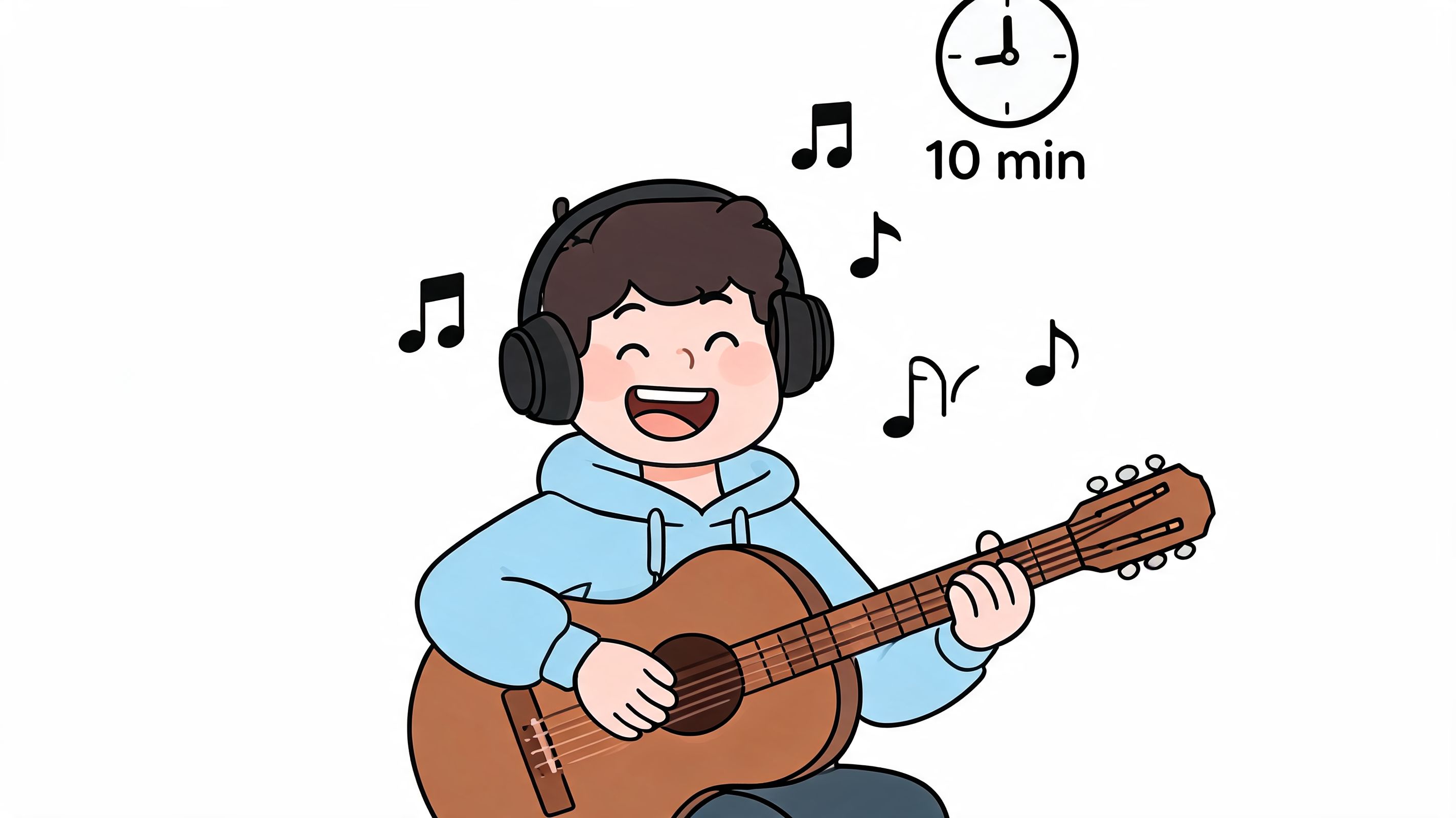
A useful routine has to be short enough to repeat and focused enough to matter. For most guitarists, 10 minutes a day is enough to build momentum if those minutes are active and consistent.
Start with the guitar in your hands.
Why the guitar needs to stay in your hands
Abstract drills can help a little, but guitarists improve faster when ear work is tied to the instrument itself. Musical U advises players to practice playing by ear with your guitar in your hands because it helps bridge hearing, understanding, and action.
That matters in real life. You don’t just want to identify a sound in theory. You want to hear it, locate it on the fretboard, and play it without a long delay.
Keep the loop tight. Hear it, sing it, find it, play it.
A simple daily routine
Use this routine every day for a while before you make it more complicated.
-
Pitch match for a few minutes
Play one note. Sing it back. Then find that same pitch somewhere else on the guitar. You’re training your ear to recognize sameness, not just pitch names. -
Move to short note-finding work
Pick a note on one string, then try to locate it on another string by ear. Don’t rush. The point is to connect sound to fretboard geography. -
Hear basic chord quality
Strum a major chord and then a minor version of the same root. Listen to the mood change. Don’t analyze it like theory homework. Just learn the sound of bright versus darker, settled versus sadder. -
Test before you look
Have an app or backing tool play a chord quality. Guess only after you’ve listened closely. Then check the answer.
A short routine like this works because it doesn’t overload you. It builds the habits that make later skills possible.
If you want a structured daily system for that kind of focused practice, Trill’s daily ear training routine organizes short sessions around hearing notes, chords, and intervals with real audio.
After you’ve spent a few days with single notes and basic chord quality, add one more listening layer. Use a visual example like this to reinforce what you’re hearing.

What doesn’t work is jumping straight into advanced interval drills, long transcriptions, or difficult solos when you still can’t reliably match one note and find it on the neck. Build the first link first. Then the chain holds.
From Recognizing Intervals to Transcribing Melodies
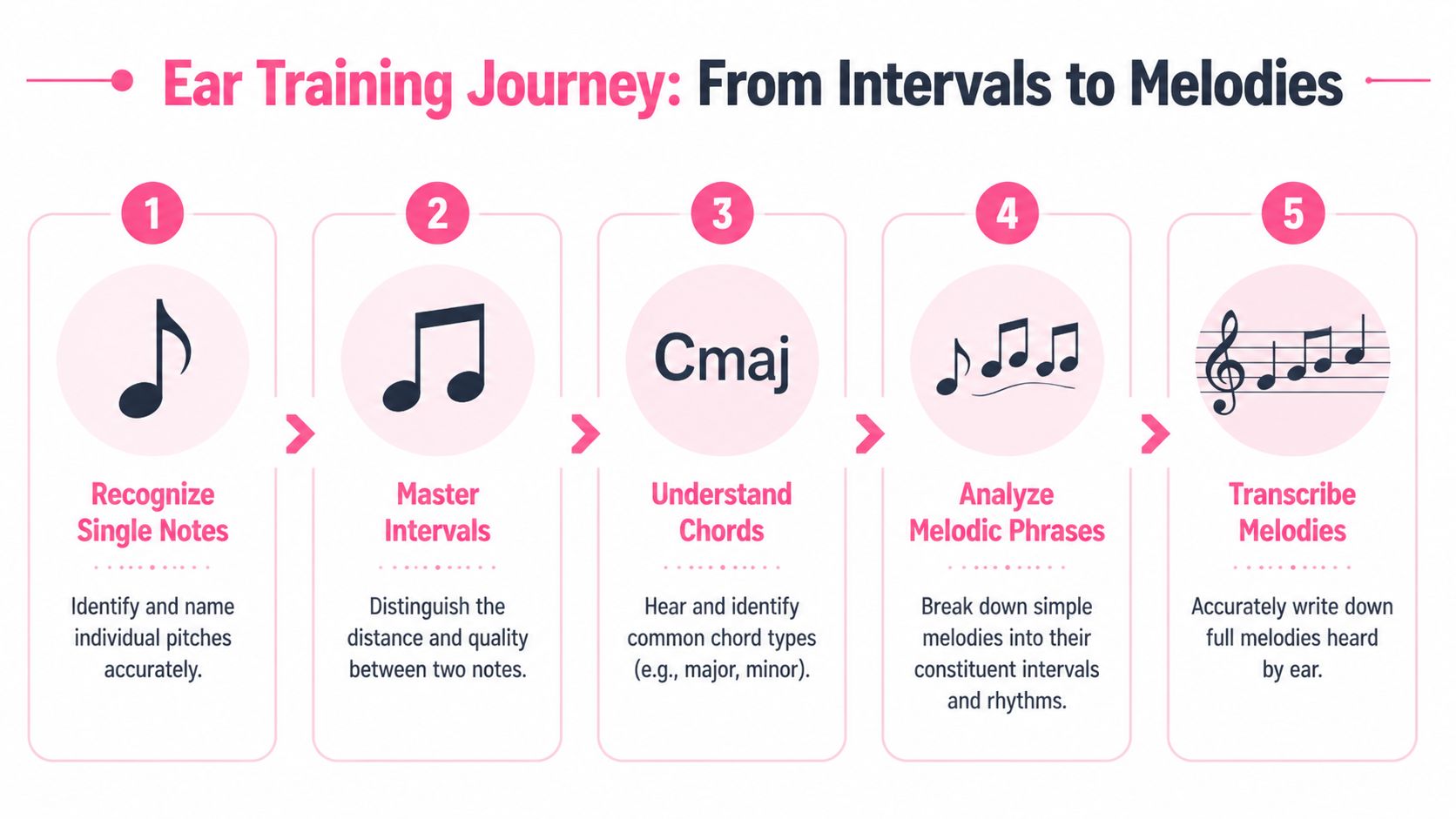
Once you can match notes and hear simple chord quality, the next step is hearing relationships between notes. That’s where melodies stop sounding like a blur and start sounding like something you can decode.
Build from small sound relationships
Many players make a mistake. They try to transcribe full riffs before they can clearly hear what two notes are doing.
A better path is progressive. Acoustic Guitar recommends a structured sequence where players begin with two-note sequences and increase complexity over time. It also advises you to do a rhythm exercise and a pitch exercise every day. When you can repeat up to eight pitches in a row, that’s the point where simple melodic phrases start to make sense by ear.
That progression works because it reduces mental clutter. You’re not trying to hear everything at once.
Try this order:
-
Start with two-note movement
Hear whether the second note goes up, down, or stays the same. -
Add interval character
Work on a few obvious sounds first, such as a strong open leap and a tighter, warmer one. You don’t need a huge catalog right away. -
Use three-note patterns
Play and sing short patterns like up-up-down or down-up-same. -
Bring rhythm in later
First hear the pitch motion clearly. Then keep that same phrase and notice its rhythm.
If you can’t sing a short phrase back, you probably didn’t hear it clearly enough yet.
For a deeper breakdown of how note relationships work, this guide on hearing intervals in music is a useful companion to guitar practice.
How to turn intervals into real melody work
The point of interval work isn’t to win a quiz. The point is to hear a riff, vocal hook, or lead phrase and know where to start.
Use a real-song approach:
| Practice target | What to listen for | What to do on guitar |
|---|---|---|
| Short vocal line | First note and direction of movement | Find the first pitch, then test the next note by ear |
| Simple riff | Repeated notes and jumps | Break it into chunks of two or three notes |
| Melodic lick | Shape before detail | Sing it first, then locate it |
Keep the phrases short. One of the most effective habits is stopping after every tiny success. If you hear the first two notes correctly, that counts. Lock them in. Then move on.
A lot of guitarists sabotage themselves here by racing ahead. They hear a phrase once, make three guesses, get frustrated, and call themselves bad at ear training. That isn’t ear training. That’s panic.
Slow listening wins.
If you’re a lead player, this part deserves extra attention. Intervals are what let you hear where your next phrase wants to go during a solo. They’re also what help you steal the essence of great lines from records without copying blindly.
Hearing Harmony: How to Decode Chord Progressions
You are at a jam, the singer calls a tune you half-know, and the chart never appears. The guitarist who can hear the progression stays in the song. The guitarist who only memorized shapes starts guessing.
For rhythm players, this is one of the highest-payoff ear skills to train.
If your main goal is to back singers, learn songs faster, write tighter rhythm parts, or keep up at open mics, put chord progression work ahead of advanced melodic dictation. Lead players still need harmony too, but they can spend more time on phrasing and interval control. Rhythm players get more immediate mileage from hearing where the chords are going.
If you play rhythm, start here
A lot of ear training advice treats every guitarist the same. That slows people down.
Good practice changes based on the job you want your ear to do. If you want to comp confidently, hear verse and chorus changes faster, and stop asking, “What chord is this?” every eight bars, chord hearing belongs near the top of your list. If you want to improvise over changes, this work still matters. It tells you when your line should resolve, when the harmony tightened, and why one note suddenly sounds wrong.
A practical way to hear chords in songs
Do not start by chasing every extension, slash chord, or inversion. Start with the part that usually carries the clearest signal.
Listen for the bass movement first. The lowest note often points to the root, or at least gives you the best clue about harmonic direction. After that, decide whether the chord sounds major, minor, or unstable enough that you should leave the label open until the next pass.
Then listen for repetition. Popular songs reuse a lot of familiar movement. The more progressions you learn by sound, the less every new song feels new. This guide to hearing common chord progressions by ear can help you build that pattern memory.
Use this order:
-
Root first
Hum the lowest pitch you hear, then find it on the guitar. -
Quality second
Decide whether the chord feels bright, dark, or tense. -
Function third
Ask what the chord is doing. Is it resting, building, or pulling back home? -
Shape last
Choose a playable voicing that fits the band. In a real jam, a clean triad in the right place beats a fancy wrong chord.
A simple comparison helps:
| What many guitarists do | What works better |
|---|---|
| Guess full chord shapes immediately | Track the root movement first |
| Judge each chord alone | Hear how one chord sets up the next |
| Chase exact labels too early | Get the function, then refine the color |
| Freeze when unsure | Play a solid basic voicing and keep listening |
Root movement gives you the floor. Chord quality and function tell you how to furnish the room.
Band context matters too. If the bass player is strong and the keyboard player is filling extensions, your job may be to hear the movement, grab the right major or minor shape, and lock in the rhythm. That is not a shortcut. That is good musicianship.
I teach students to test this skill on simple songs first. Four-chord pop tunes, blues, and folk songs are ideal because the harmony is exposed. Once you can hear those patterns quickly, jazzier or denser material stops feeling like a wall and starts feeling like a harder version of the same job.
Your Ear Training Toolkit for Smart Practice and Lasting Habit
Good exercises matter. Good practice design matters just as much.
Most players don’t quit ear training because it doesn’t work. They quit because they practice in a vague way, expect smooth progress forever, and lose focus when improvement stops feeling obvious.
Use tools to sharpen attention, not replace it
Your tools should support listening, not distract from it.
A metronome helps when rhythm starts slipping during call-and-response drills. A tuner helps you trust that the notes you’re matching are in tune. A chord visualizer or interval visualizer can be useful after you listen, because they confirm what you heard without becoming a crutch.

One practical feature for consistency is Focus Lock, which blocks distracting apps until daily training is done. That matters because habit beats mood. If your session only happens when you feel inspired, it won’t happen often enough.
Try a basic smart-practice setup:
-
One listening target
Pick one thing per session, such as note matching, interval direction, or chord quality. -
One support tool
Use only the tool that serves that target. Don’t open five apps and pretend that’s practice. -
One musical application
End by using the skill on a song, riff, or jam track.
What to do when progress slows down
Plateaus are normal. Existing ear training advice often ignores the plateau effect, even though Justin Guitar’s ear training material highlights how stalled progress can hurt motivation and why varying exercises and tracking milestones helps learners push through.
That slowdown doesn’t mean you’ve stopped improving. It usually means your ear has absorbed the easy wins and now needs cleaner repetition.
When that happens:
- Shrink the challenge
Go back to shorter phrases or simpler chord choices. - Change the angle
If you’ve been drilling intervals only, switch to short melodies or root movement. - Track real wins
Write down the first song intro you figured out, the first clean chord change you heard, the first melody you sang and found.
Progress in ear training often feels invisible right before it becomes obvious in your playing.
Many players finally understand the point of daily work at this stage. You aren’t collecting trivia about sound. You’re building a reflex. And reflexes only show up after enough clean reps.
Your New Musical Reality: From Listener to Player
A trained ear changes your whole relationship with guitar.
You hear a melody and your hands know how to begin finding it. You sit in with other musicians and feel less dependent on charts. You recognize when a chord change is coming. You stop treating improvisation like random scale movement and start hearing phrases before you play them.
That kind of freedom doesn’t arrive all at once. It comes from small, boring, repeatable sessions that slowly become instinct. A few minutes of focused ear training each day can do more for your musical life than another month of memorizing shapes you can’t yet hear.
You don’t need perfect pitch to get there. You need the habit of listening on purpose.
If you’ve been stuck relying on tabs, this is the way out. If you’ve wanted to play by ear but assumed some people just have it and you don’t, drop that idea. Ears improve the same way hands improve. They respond to clear work.
Start today. Sing one note. Find it. Hear one chord. Name its quality. Catch one tiny melody and pull it onto the fretboard.
That is how musicians stop guessing and start hearing.
If you’re ready to build that habit, Trill: Ear Training Daily gives you a simple way to practice ear training for guitarists in short daily sessions focused on hearing notes, chords, intervals, and the skills that help you play by ear with more confidence.