The Best Vocal Warm Up: 8 Drills to Train Your Ear

Warm Up Your Voice, Train Your Ear
You warm up before singing. You do the lip trills, the hums, the scales. Then rehearsal starts, someone sings a line, and you still have to guess where the next note lands.
That gap is common. The voice may be awake, but the ear still isn’t leading.
The best vocal warm up doesn’t just get sound moving. It teaches you to hear what you’re singing while you sing it. That’s the missing link for matching pitch faster, finding harmonies without panic, and learning to play by ear instead of hoping your fingers land in the right place.
This matters more than most singers realize. A 2023 study in the Journal of Voice found that just 5 minutes of warm-up could create a measurable change in how singers perceived their voice response, and that the type of warm-up mattered, with semi-occluded vocal tract exercises standing out. In plain language, short and targeted often beats long and unfocused.
That’s good news if your practice time is limited. It also creates a perfect opening for ear training. If you’re already spending a few minutes warming up, you can turn those same minutes into listening practice that helps with pitch, intervals, chord recognition, improvisation, and musical freedom.
Table of Contents
- 1. Lip Trills
- 2. Sirens
- 3. Straw Phonation
- 4. Octave Jumps
- 5. Descending Arpeggios
- 6. Tongue Trills
- 7. Nasal Consonant Exercises
- 8. Ascending and Descending Scales
- Comparison of 8 Vocal Warm-Ups
- Turn Daily Practice Into Musical Freedom
1. Lip Trills
Lip trills are still one of the best places to start because they lower unnecessary tension fast. If your jaw, tongue, or throat wants to grab control, the bubbling motion pushes you toward steadier airflow and a lighter setup.
For singers, that’s useful physically. For ear training, it’s even better. A lip trill strips away words, style, and performance habits, so all that’s left is pitch motion. You can finally hear whether you’re gliding smoothly, overshooting notes, or sagging on the way down.
Use lip trills to stop sliding blindly
Start on a comfortable pitch and trill a simple three-note pattern. Then repeat the same shape while listening for exact note targets instead of treating it like a blur. If you’re using vocal training tones from Trill, match the tone first, then trill the interval back.
That one change matters. Most singers think they’re training pitch when they’re really training approximate movement.
Practical rule: If you can’t hear the start note and end note clearly during a lip trill, slow the pattern down until you can.
A common real-world use is before choir rehearsal. If you’re about to sing harmony, do a few lip trill glides, then check yourself by singing root to third, root to fifth, and back down. You’re warming the voice and teaching the ear what stable interval spacing feels like.
A few things work well here:
- Keep the lips loose: Pressing them together too hard kills the trill and adds tension.
- Use small patterns first: Short patterns reveal pitch accuracy better than wide dramatic slides.
- Alternate trill and open vowel: Trill the pattern, then sing it on “ah” and compare the tuning.
- Listen for return accuracy: The trip back to the starting note tells you whether your ear stayed engaged.
What doesn’t work is mindless repetition. Ten sloppy lip trills won’t help you play by ear. A few attentive ones will.
2. Sirens
Sirens expose the truth about your coordination. If your voice flips, bumps, or suddenly narrows in one part of the range, the siren lets you hear it immediately.
That’s why I like them early in a warm-up. They don’t just stretch range. They reveal where your ear loses contact with the sound you’re making.

Hear the break before you feel it
Run a slow siren from low to high, then back down. Keep the volume moderate. The point isn’t power. The point is continuity.
When singers rush this drill, they miss the best part. Your ear can learn to detect the exact moment the tone disconnects, spreads, or gets unstable. Once you can hear that moment, you can fix it earlier.
Try pairing the glide with pitch recognition inside Trill. Start the siren, then pause on two or three spots along the way and name what you hear relative to your starting pitch. Was that a third, a fifth, an octave? This is how a warm-up becomes ear training instead of background noise.
A singer in music theater might use sirens before a show because the voice has to move quickly across registers. A background vocalist might use them before stacking harmonies, where smooth register shifts keep the blend clean. A songwriter can use them to map where melodies want to sit naturally.
The best vocal warm up often isn’t the one that feels most athletic. It’s the one that helps you hear your range clearly enough to use it musically.
What works is smooth travel and active listening. What doesn’t work is making a dramatic ambulance sound and calling it done.
3. Straw Phonation
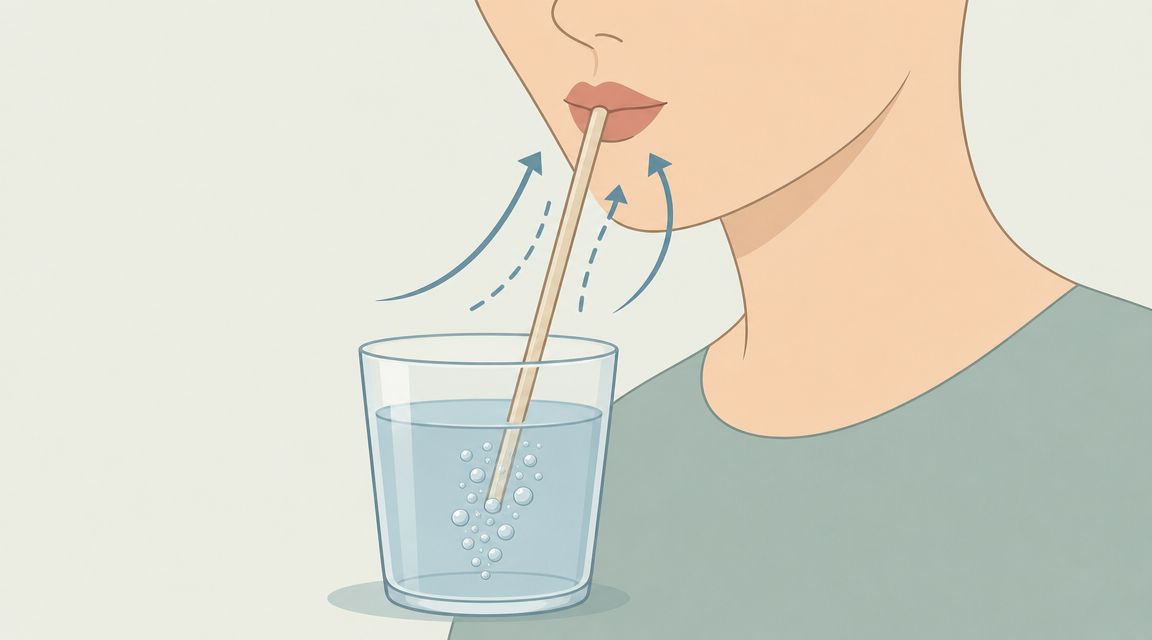
Straw phonation is one of the few warm-ups that gives immediate feedback. If the airflow is uneven, the sound tells on you. If you’re forcing, the resistance tells on you.
That makes it a strong choice when the voice feels stiff, overused, or unfocused.
A useful detail from the research matters here. A University of Miami news summary of 2023 research reported that classical singers perceived that 5 or 10 minutes of warm-up was enough to begin practice, while extending to 15 minutes didn’t add meaningful extra benefit in self-perceived ease of singing. If you’re busy, that’s a practical benchmark. You don’t need a long ritual. You need a focused one.
Why straw work is worth the setup
Straw work belongs in that focused category. It’s a semi-occluded vocal tract exercise, often shortened to SOVT or SOVTE, and it tends to organize the voice quickly. That’s useful before rehearsal, before tracking vocals, or between multiple singing sessions in one day.
The ear training angle is simple. Sing short patterns through the straw, then remove it and repeat the exact pattern on a vowel. You aren’t guessing whether the second version matches. You’re comparing it against a sound your body just stabilized.
This is especially effective for interval work. Sing a root and a fifth through the straw. Then sing the same two notes on “oo” or “oh.” If the open vowel version drifts, your ear will catch the difference faster because the straw version gave you a cleaner reference.
Here is a quick demo format many singers find helpful:
- Start with single pitches: Hold one note through the straw until the airflow feels even.
- Move to small intervals: Try simple skips instead of full scales right away.
- Repeat without the straw: Keep the same pitch center after the resistance is gone.
- Use quiet focus: This drill works best when you listen closely, not when you sing loudly.
A short visual walkthrough helps if you’re new to it:

What doesn’t work is turning straw phonation into a hard blowing contest. The point is efficiency, not force.
4. Octave Jumps
Octave jumps are where many singers discover whether they can hear an octave or whether they only recognize the idea of one. That’s an important difference.
A clean octave isn’t just a bigger note. It’s the same pitch class in a different register. If your ear doesn’t lock onto that relationship, the jump gets wide, flat, or tense.
Clean leaps come from hearing first
Start in the middle of your range. Sing one pitch, hear the octave above in your head, then jump. Don’t slide to it. Don’t search. Commit.
This is one of the best bridges between vocal warm-up and playing by ear because octave hearing shows up everywhere. Bass lines, melody doubling, piano voicings, guitar riffs, and harmony parts all depend on recognizing when two notes belong to the same pitch family.
I like using a steady pulse here because many singers rush upward leaps and drag the way back down. A simple click from Trill’s online metronome keeps the spacing honest. That matters because rhythm can hide poor intonation. If the leap is late or rushed, the ear often forgives an inaccurate note.
Don’t check an octave by effort. Check it by resonance and recognition. When it’s right, it sounds related, not merely higher.
This drill pays off in real sessions. If you’re harmonizing with a friend and need to double a melody up the octave, this is the exact skill. If you’re transcribing by ear, octave recognition helps you place lines in the right register before you work out the rest.
A good pattern is simple:
- Sing and hold: Land on the octave and hold it long enough to verify it.
- Jump both ways: Upward octaves and downward octaves reveal different weaknesses.
- Use neutral syllables: “Ng” or “ya” can keep the setup lighter.
- Restart when you slide: The point is hearing the leap, not gliding into it.
What works is precision. What doesn’t is treating octave jumps like a range stunt.
5. Descending Arpeggios
Descending arpeggios solve two problems at once. They release excess effort, and they teach you to hear harmony as structure instead of as isolated notes.
That second part is why they’re underrated for ear training. When you sing a descending arpeggio, you’re not just making a pleasant pattern. You’re outlining a chord in order.
Chord hearing starts here
Take a simple arpeggio on “oh.” Start high enough that the descent encourages release, not strain. As you sing each note, identify its role in the chord by ear. Root, third, fifth, then back down.
That kind of listening is how singers stop guessing in harmony settings. If the band plays a major chord and you can hear the third and fifth inside it, you don’t need luck to find your line. You need trained ears.
This drill also helps musicians who sing while playing. Guitarists who rely on shapes often know what to press but not what they’re hearing. Descending arpeggios reconnect the sound to the function. Sing the chord tones first, then find them on your instrument.
A controlled study discussed in an LSU thesis summary noted that 5 minutes of warm-up increased self-perceived vocal effort immediately after the exercise, with ratings returning to baseline after 5 minutes of silence, and that timing detail matters for performance readiness. That’s a practical reminder not to confuse “I just warmed up” with “I’m ready to sing my most exposed phrase right now.”
If you’re using descending arpeggios before a take or audition, leave a brief quiet buffer and then sing actual musical material.
A strong way to practice them:
- Name the harmony mentally: Hear “root, third, fifth” as you descend.
- Switch chord qualities: Move between major and minor so the ear learns the difference.
- Repeat on piano or guitar after singing: This ties the voice directly to playing by ear.
- Keep the sound released: Descending patterns should free the voice, not press it down.
This drill is one of the clearest routes from warm-up to chord recognition.
6. Tongue Trills
Tongue trills help singers who look fine on paper but sound stuck in real life. The notes may be correct, yet the tone feels jammed, heavy, or overly controlled.
A lot of that comes from tongue tension. When the tongue braces, the ear often gets less reliable too, because the sound itself becomes less free and less consistent.
What tongue tension hides from your ear
If you can roll an “r,” use it on a single comfortable pitch first. Then move to short scales or arpeggios. If you can’t roll the tongue easily, don’t force it. Use a lighter substitute and focus on the same release.
This drill is valuable because it removes some of the muscular clutter between intention and sound. Once that clutter drops, pitch tends to reveal itself more clearly. You can hear whether a note is centered instead of just feeling that you worked hard to produce it.
A good use case is after a long speaking day. Teachers, worship leaders, podcasters, and anyone who talks for work often bring tongue and jaw tension straight into singing. A few tongue trills can clear that out fast enough to make the rest of the warm-up useful.
One thing I tell singers is to pair the trill with active pitch checking. Sustain a note, then verify whether it drifted. Move up one step, then back. When that gets easier, your ear isn’t becoming gifted. It’s becoming trained.
If a drill reduces tension but you still aren’t listening closely, it stays a relaxation exercise. The moment you compare, identify, and correct, it becomes ear training.
What works here is ease and repetition with attention. What doesn’t work is grinding through an uncomfortable roll and losing the point of the exercise.
7. Nasal Consonant Exercises
Nasal consonants are excellent when the voice feels sleepy, breathy, or spread. “Ng,” “mm,” and “nn” give the sound a narrower path and often help singers find cleaner pitch center without pushing.
They also make it easier to hear resonance shifts. That matters if you’re trying to build the kind of ear that can sing in tune with other people, not just alone in a room.
Use resonance to lock into pitch
Start with “ng” on a single pitch. Hold it. Then glide a little higher and return. Keep the resonance focused and even. After that, open into a vowel without losing the core of the sound.
This drill is especially useful for harmony singers. If you’re singing a third above a melody and the pitch feels slippery, starting on a nasal consonant can help the note settle before you open it into text. That’s practical, not theoretical.
Mainstream warm-up advice often treats all singers the same, but one of the more useful questions is whether you need a shorter, lighter routine on a given day. A School of Rock article highlights common SOVT-style choices like humming, lip trills, sirens, and straw phonation, while also pointing toward a more important practical question: what is the minimum effective warm-up for your voice today. That’s the right mindset if you’re fatigued, recovering, or singing multiple times in one day.
For ear training, nasal drills work well with drone practice. Hold one reference pitch on an app or instrument, then sing different notes against it on “mm” or “ng.” Listen for stability, friction, and resolution. That’s how you begin hearing intervals as relationships, not random distances.
Use this drill when:
- Your pitch feels unfocused: Nasal sounds often center it faster.
- You need quiet warm-ups: They work well in backstage or apartment settings.
- You want smoother vowel entry: Transitioning from nasal to open vowel can keep tuning cleaner.
- You’re training harmony: The focused resonance makes interval checking easier.
8. Ascending and Descending Scales
Scales can become useless very quickly if you sing them like a formality. They become powerful again when you treat them as organized hearing.
That’s why this is still one of the best vocal warm up choices for singers who want more than vocal maintenance. Scales teach the ear where notes live in a key.
Scales train more than technique
Sing a major scale slowly. Don’t rush to the top and back. Hear each degree before you produce it. If one note tends to go sharp or flat, that’s not random. Your ear hasn’t mapped that spot securely yet.
The same goes for minor scales. If major feels familiar and minor feels vague, that’s a listening issue, not a talent issue. You can train it.
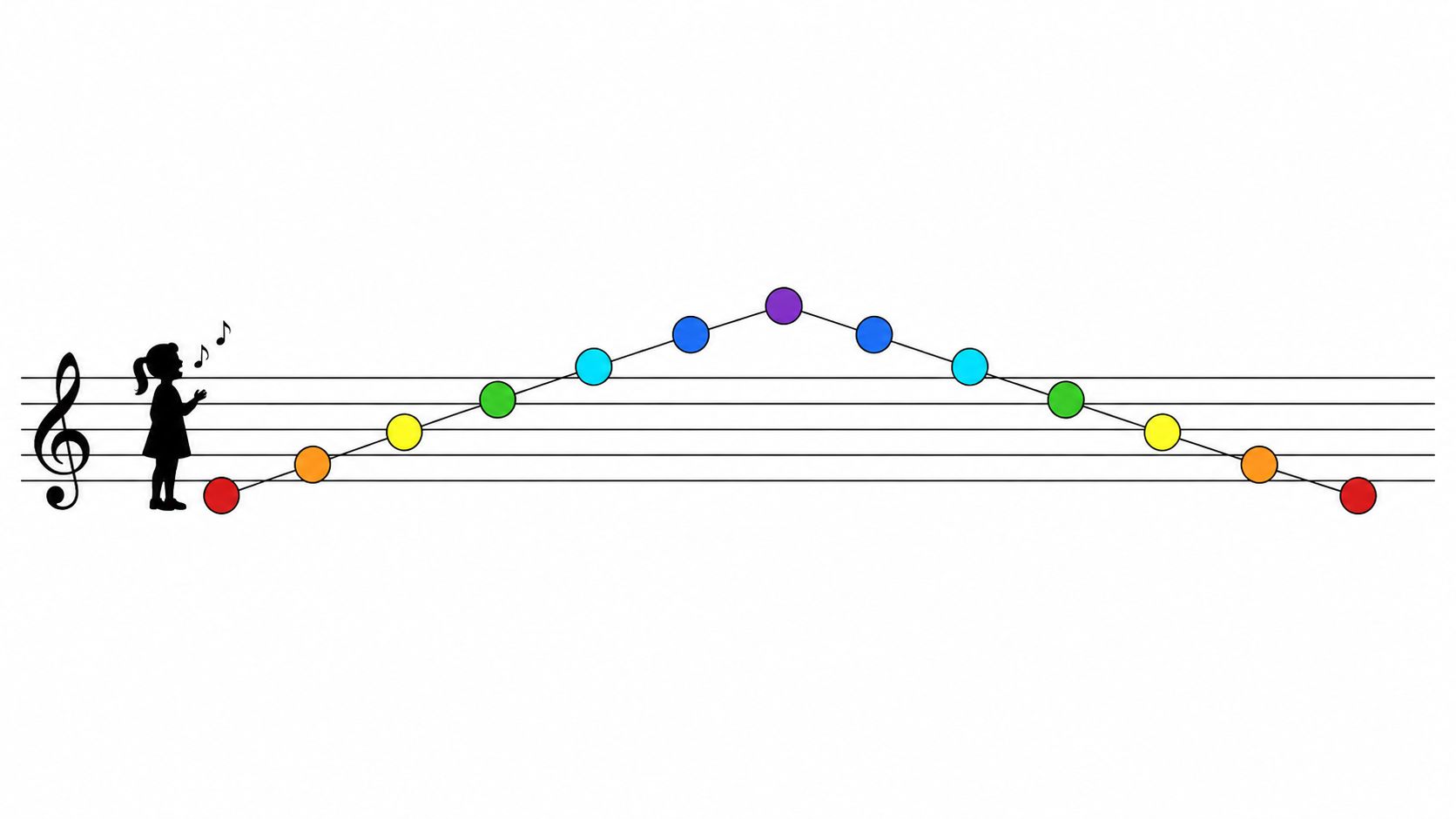
I like scales most when they’re tied directly to real music. If you’re learning songs by ear, scale awareness helps you predict melody direction. If you’re improvising, it helps you hear available notes before you sing or play them. If you’re trying to develop perfect pitch skills, daily note and scale recognition gives your ear repeated contact with stable sound categories.
Using Trill’s scale tool alongside your warm-up makes this more concrete. Sing the scale, identify the sound of each degree, then test whether you can hear the difference between major and minor before you vocalize it.
A useful pattern is to vary the purpose:
- One pass for tuning: Focus only on pitch center.
- One pass for function: Hear which note feels like home, tension, or release.
- One pass for memory: Sing it back without the reference.
- One pass for transfer: Find the same scale on your instrument.
That last step matters. Ear training should lead to action. If you can sing it, hear it, and then play it, you’re building musical freedom.
Comparison of 8 Vocal Warm-Ups
| Exercise | 🔄 Implementation Complexity | ⚡ Resource Requirements | ⭐ Expected Outcomes | 📊 Key Advantages | 💡 Practical Tips |
|---|---|---|---|---|---|
| Lip Trills (Lip Bubbles) | Low, easy to start, needs relaxation practice | Minimal, none | Reduces tension; improves breath support and fold coordination | Gentle, protective warm-up; versatile across pitches | Keep lips relaxed, steady diaphragmatic airflow; 30–60s per set |
| Sirens (Siren Sound Exercise) | Moderate, requires smooth control across range | Minimal, none | Expands range; smoothes register transitions and resonance | Reveals tension points; good for full-range exploration | Start slowly, round lips slightly; 3–5 smooth glides per session |
| Straw Phonation (Straw Exercises) | Moderate, technique-sensitive (back‑pressure use) | Low, thin straw (optional water) | Increases vocal efficiency; reduces air loss and strain | Scientifically validated; improves phonation economy | Use a thin straw, sing 30–60s, then compare without straw |
| Octave Jumps (Octave Leaps) | Moderate–High, needs accurate pitch recognition | Minimal, pitch reference helpful (app/tuner) | Builds agility and register coordination; improves interval control | Fast, effective for large-interval strength and clarity | Start from a comfortable pitch, use consonants like “ng/y”; 8–10 reps |
| Descending Arpeggios (Five‑Tone Arpeggios) | Low–Moderate, pattern familiarity needed | Minimal, none | Improves tone, resonance, and relaxed descent through range | Restorative; strengthens harmonic awareness | Descend by half‑steps, use “oh/ah,” 8–10 patterns moving down |
| Tongue Trills (Rolled R Sounds) | Moderate–High, depends on ability to roll R | Minimal, none | Releases tongue/jaw tension; aids articulation and free resonance | Effective for deep muscular tension release and diction | If unable to roll R, use softer tongue vibration; add pitch after comfort |
| Nasal Consonant Exercises (Ng, Mm, Nn) | Low, simple to begin, needs transition skill | Minimal, none | Enhances head resonance; eases access to lighter registers | Gentle, safe way to develop head voice and resonance | Glide on “ng,” then transition to vowels (ng‑oh); 30–60s work |
| Ascending & Descending Scales (Major/Minor) | Low–Moderate, requires pitch reference and focus | Minimal, tuner or scale reference helpful | Strengthens intonation, pitch memory, and harmonic sense | Fundamental exercise for ear training and consistent intonation | Start slow, use syllables or vowels, vary tempo and range as you progress |
Turn Daily Practice Into Musical Freedom
You run lip trills, sirens, maybe a few scales. The voice feels loose. Then the song starts, the band hits the intro, and the first note still comes out guessed instead of heard.
That gap usually has nothing to do with effort. It comes from warming up the instrument without training the listening that guides it.
The best vocal warm up does both at once. Every exercise in this list can train coordination, breath, and resonance while also sharpening pitch memory, interval recognition, and harmonic hearing. A siren is not only a way to smooth register changes. It also teaches the ear to track continuous pitch motion. Octave jumps are not only about range. They train you to hear distance cleanly before you sing it. Descending arpeggios help the voice release tension on the way down, and they also teach you how chord tones sit inside real music.
That is the part many singers miss. If you only repeat the motion, you get better at repeating the motion. If you listen actively, label what you heard, and check it right away, the warm-up starts feeding actual musicianship.
I use a simple practice rule with students and in my own sessions. Give each warm-up a hearing target.
- lip trills for matching a starting pitch and holding center
- sirens for hearing whether pitch rises and falls evenly
- octave jumps for naming the interval before singing it
- arpeggios for hearing chord quality and function
- scales for locking in scale degrees, not just note order
Trill: Ear Training Daily works well for that job because it lets singers test the sound they just produced while the sensation is still fresh. After a set of sirens or arpeggios, you can check whether you heard a major third, a perfect fifth, or the pull back to the tonic, instead of assuming you did. That feedback loop is where warm-ups start carrying over into rehearsal, recording, and live performance. Try it at https://trill.studio.
The goal is simple. Hear better, then sing with less guesswork. That is what daily warm-ups should build.