Harmonic Minor Scale Chords You Can Actually Hear
You hear a song in a minor key, and then one chord shows up that feels sharper, darker, and more magnetic than the rest. It sounds like the music suddenly knows exactly where it wants to go. If you’ve ever tried to figure that sound out by trial and error, you already know the frustrating part. You can recognize the mood, but not the reason.
That sound often comes from harmonic minor scale chords.
Most players first meet harmonic minor on paper. They memorize the scale, maybe run a fingering pattern, and move on. But music doesn’t happen on paper. If you want to play by ear, improvise with confidence, or stop relying on tabs and chord charts, you need to hear what these chords do.
The good news is that ear training isn’t a gift some people are born with. It’s a skill you can build with short, focused practice. Even 10 minutes a day changes how you listen.
Table of Contents
- That Dramatic Sound You Hear in Music Has a Name
- Why the Harmonic Minor Scale Exists
- Building the Chords of the Harmonic Minor Scale
- Hearing Common Harmonic Minor Progressions
- How to Practice Playing and Hearing These Chords
- Your Path to Hearing Music with Confidence
- Frequently Asked Questions about Harmonic Minor Chords
That Dramatic Sound You Hear in Music Has a Name
A lot of musicians can spot “sad” minor and “bright” major. Then they hit a sound that doesn’t fit either box. It feels tense, elegant, a little dangerous, and somehow more focused than ordinary minor harmony.
That’s often the sound of the harmonic minor scale at work.
What makes it so memorable isn’t just the scale itself. It’s the chords that come out of it. Some of them feel familiar. Others feel unusual right away. One chord in particular pulls so hard toward home that your ear starts anticipating the resolution before it happens.
Practical rule: If a minor-key progression suddenly sounds more dramatic and more “pulled forward” than usual, listen for harmonic minor rather than guessing randomly.
This matters for ear training because hearing music clearly starts with learning to recognize emotional functions, not just note names. You don’t need perfect pitch to hear harmonic minor. You need pattern recognition. You need to notice, “That chord created tension,” or “That resolution felt stronger than a normal minor-key move.”
When students get stuck, it usually isn’t because theory is too hard. It’s because they try to identify everything at once. A better approach is simpler:
- Hear the home chord. Find the minor chord that feels settled.
- Notice the tension chord. Listen for the chord that seems to lean hard into that home chord.
- Compare the feeling. Ask whether that pull sounds stronger than a softer, more ordinary minor-key cadence.
That process trains the ear far faster than memorizing isolated facts.
If you can learn to hear the emotional fingerprint of harmonic minor chords, you stop treating harmony like a puzzle. You start recognizing it like a familiar voice.
Why the Harmonic Minor Scale Exists
The harmonic minor scale came from a very practical musical problem. Composers wanted a stronger cadence in minor keys. In natural minor, the chord built on the fifth scale degree is minor, and that doesn’t create the same clear pull back to the tonic.
According to JustinGuitar’s explanation of harmonic minor, the scale developed to enable a Perfect Cadence in minor keys through a dominant V chord on the 5th scale degree, and that happened by raising the 7th scale degree by exactly 1 semitone.
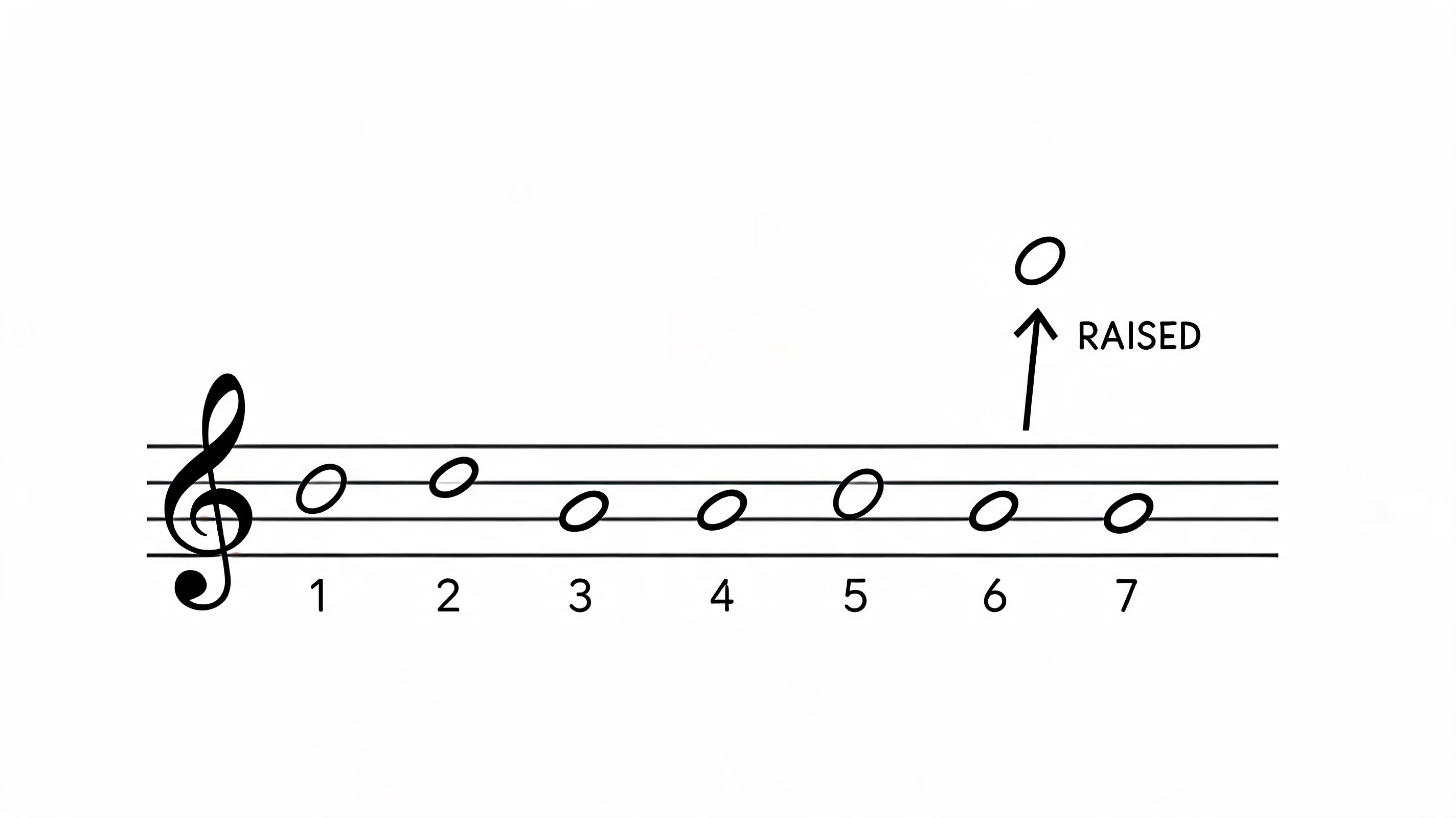
One note changes the whole flavor
That single raised note is the whole trick.
Take a natural minor scale. Then raise the seventh note by a semitone. That’s harmonic minor. One note changes, but the effect is huge. It’s like adding one spice to a simple meal and changing the entire taste.
That raised seventh creates a leading tone, which sits 1 semitone below the tonic. Your ear hears that tiny distance as unfinished business. It wants to resolve.
In plain language, the note feels like it’s leaning upward into home.
What your ear should listen for
Theory manifests as a listening skill. You don’t need to recite scale formulas while a song is playing. You need to notice the sensation created by that raised seventh.
Listen for these signs:
- A stronger return home when the progression lands on the minor tonic
- A brighter, more urgent dominant chord in a minor key
- A feeling of narrow tension right before resolution, caused by the leading tone sitting close to the tonic
Think of the raised seventh as a magnet placed near the tonic. The closer sound creates stronger pull.
Historically, this change let musicians turn the fifth chord into a major V chord or V7 chord, which gave minor-key harmony much more direction. That’s why harmonic minor doesn’t just sound “exotic.” It sounds purposeful.
For ear training, this gives you a reliable entry point. If you hear a minor-key progression and the dominant chord sounds unusually strong and decisive, don’t ask, “What scale is this?” first. Ask, “Did that fifth chord sound like it demanded resolution?”
If the answer is yes, your ear may already be hearing harmonic minor.
Building the Chords of the Harmonic Minor Scale
Harmonic minor starts to make real musical sense when you stop viewing it as a row of notes and start hearing it as a set of chord colors.
A good ear-training question here is simple: which chords make this minor key sound darker, sharper, or more dramatic than natural minor? The answer lives in the chord qualities that grow out of the scale.
An important shift happens in the chord mix. Harmonic minor gives you two major chords, two minor chords, two diminished chords, and one augmented chord. Natural minor has a more familiar balance, so harmonic minor often feels less predictable the first time you hear it. As outlined in Jazz Guitar Licks on harmonic minor scale chord construction, that altered balance is part of why the harmony feels more dramatic.
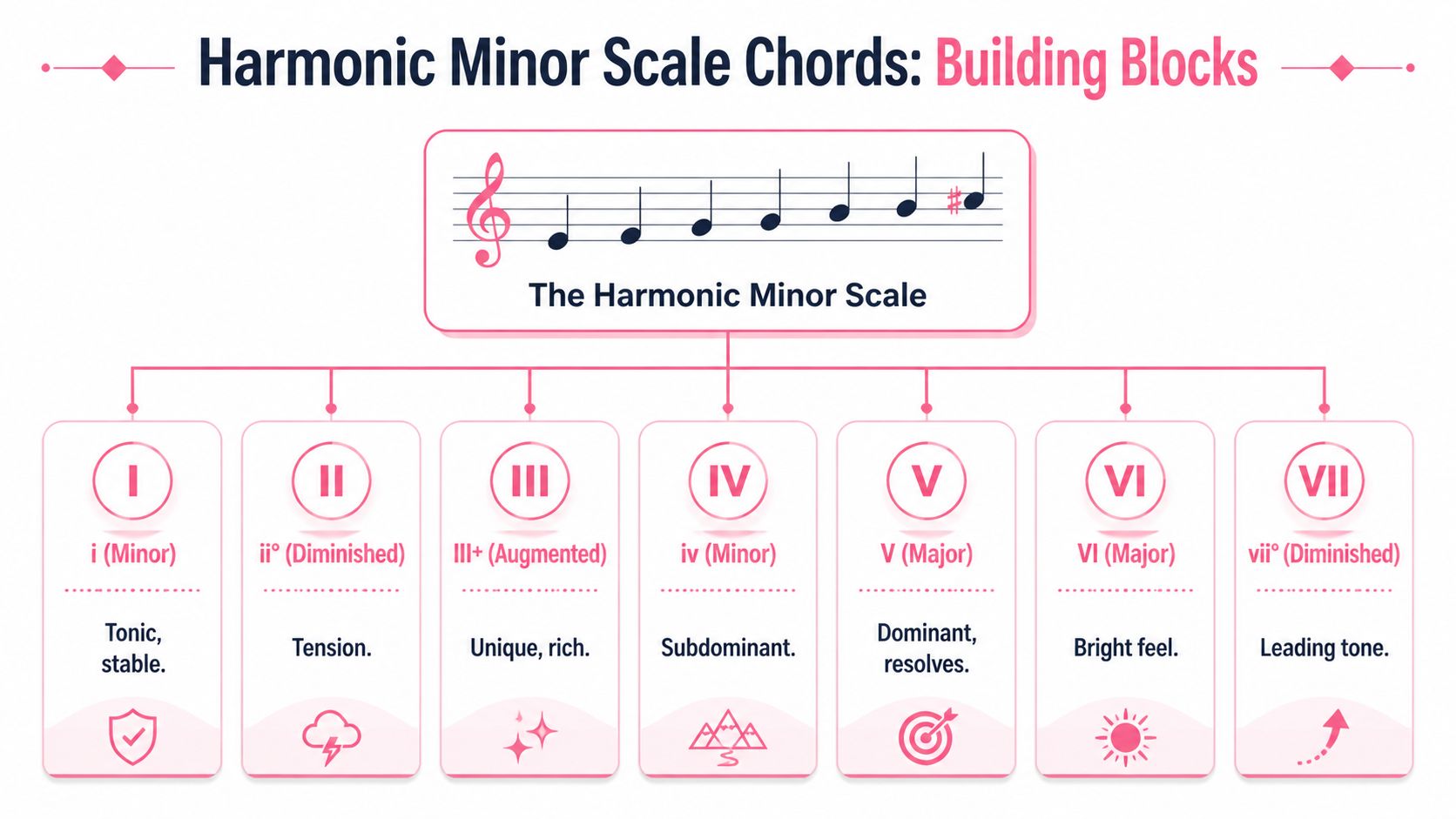
The chord palette has more tension built in
If you have mostly played songs in major or natural minor, a few of these chords may sound unfamiliar at first. That is normal. Harmonic minor includes an augmented chord and a stronger set of tension chords, so your ear gets more than one flavor of instability.
The seventh chords are especially useful for recognition practice:
- i minor major seventh
- ii half-diminished seventh
- III augmented major seventh
- iv minor seventh
- V dominant seventh
- VI major seventh
- vii diminished seventh
That variety matters because ear training works better with contrast. If every chord color feels similar, your ear has little to grab onto. Harmonic minor gives you clearer emotional fingerprints.
For a stronger foundation in how triads and seventh chords are built, this guide to music theory chords connects Roman numerals to actual chord shapes you can play.
Chords of A harmonic minor
A harmonic minor uses the notes A, B, C, D, E, F, G#, A. Build a triad on each scale degree by stacking every other note, and you get this set:
| Scale Degree | Roman Numeral | Triad Chord | Triad Quality | Seventh Chord | Seventh Chord Quality |
|---|---|---|---|---|---|
| 1 | i | A minor | Minor | Am(maj7) | Minor major seventh |
| 2 | ii° | B diminished | Diminished | Bm7(♭5) | Half-diminished seventh |
| 3 | III+ | C augmented | Augmented | Caug(maj7) | Augmented major seventh |
| 4 | iv | D minor | Minor | Dm7 | Minor seventh |
| 5 | V | E major | Major | E7 | Dominant seventh |
| 6 | VI | F major | Major | Fmaj7 | Major seventh |
| 7 | vii° | G# diminished | Diminished | G#dim7 | Diminished seventh |
If that table feels dense, reduce it to a listening exercise. Play each chord, then ask: does this sound settled, leaning, or sharply unstable? That one question trains your ear faster than memorizing labels alone.
Three chords your ear should notice first
You do not need all seven sounds in your head on day one. Start with the three that most clearly stamp the harmonic minor sound into your ear.
The III+ chord
The augmented chord on the third degree has a stretched, floating quality. It works like a major chord with one note pulled wider, which is why it can sound glossy, eerie, or suspended. If your ear hears “major, but something is off,” you are probably noticing the augmented shape.
The V7 chord
In A harmonic minor, this is E7. This chord usually gives the clearest clue because it carries the strongest push back to A minor. When you practice by ear, listen for that sense of forward motion, like a sentence that clearly wants its final word.
The vii°7 chord
This diminished seventh chord sounds tighter and more brittle than V7. If V7 feels like a strong push toward home, vii°7 feels like a knot of tension that can only relax by resolving.
Those are useful listening categories. Your ear does not only hear chord names. It hears kinds of tension.
That mindset helps a lot. Instead of asking only, “Which chord is this,” ask, “What does this chord feel like it wants to do next?” In harmonic minor, that question often leads you to the right answer faster than theory terms alone.
Hearing Common Harmonic Minor Progressions
The heart of harmonic minor isn’t the scale run. It’s the movement between chords. You hear harmonic minor most clearly when chords create tension and release in sequence.
The pull of V7 to i
The most important sound to recognize is V7 to i.
According to Simplifying Theory’s discussion of harmonic minor harmony, the critical functional dynamic in harmonic minor happens at the V-I cadence, and this pattern is the easiest way to recognize the scale by ear because the raised seventh creates the strongest resolution in Western harmony.
In A harmonic minor, that move is E7 to Am.
Play those two chords back to back and listen to the story they tell. E7 doesn’t feel settled. It feels loaded. Then Am arrives and releases that pressure. Once you hear that sensation a few times, you start catching it in real music.
A useful comparison is this:
- v to i in natural minor feels softer and less urgent
- V7 to i in harmonic minor feels more directional and final
That contrast is gold for ear training. If you want better chord recognition, don’t only practice naming isolated chords. Practice hearing how one chord wants to move into the next.
For extra listening work on progressions like this, you can practice with focused ear training for chords and compare dominant tension against minor-key resolution.
Other progressions worth hearing
Once V7 to i is familiar, add a few short progressions that keep the same emotional center.
i to iv to V7 to i
This one feels like a full sentence. The tonic sets the mood, iv deepens it, V7 creates the sharp turn, and i closes the loop.
VI to V7 to i
This progression often gives a brief lift before the dominant chord tightens everything. The move from VI down to V7 can sound especially dramatic.
i to vii°7 to i
This is a more nervous sound. The diminished chord acts like compressed tension. It doesn’t just “want” to resolve. It sounds like it can’t stay where it is.
Don’t memorize these as theory objects. Sing the bass notes, then sing the top note of each chord. Your ear learns progressions faster when it tracks motion, not labels.
This short video gives you a chance to hear the sound in action:

When you listen, keep one question in mind: which chord creates the strongest desire to go home? If you can answer that consistently, you’re no longer guessing. You’re starting to play by ear.
How to Practice Playing and Hearing These Chords
A short daily routine can turn harmonic minor from something you understand on paper into something you can spot by sound. That is a significant victory. You hear a chord and recognize its mood the way you recognize a friend’s voice.
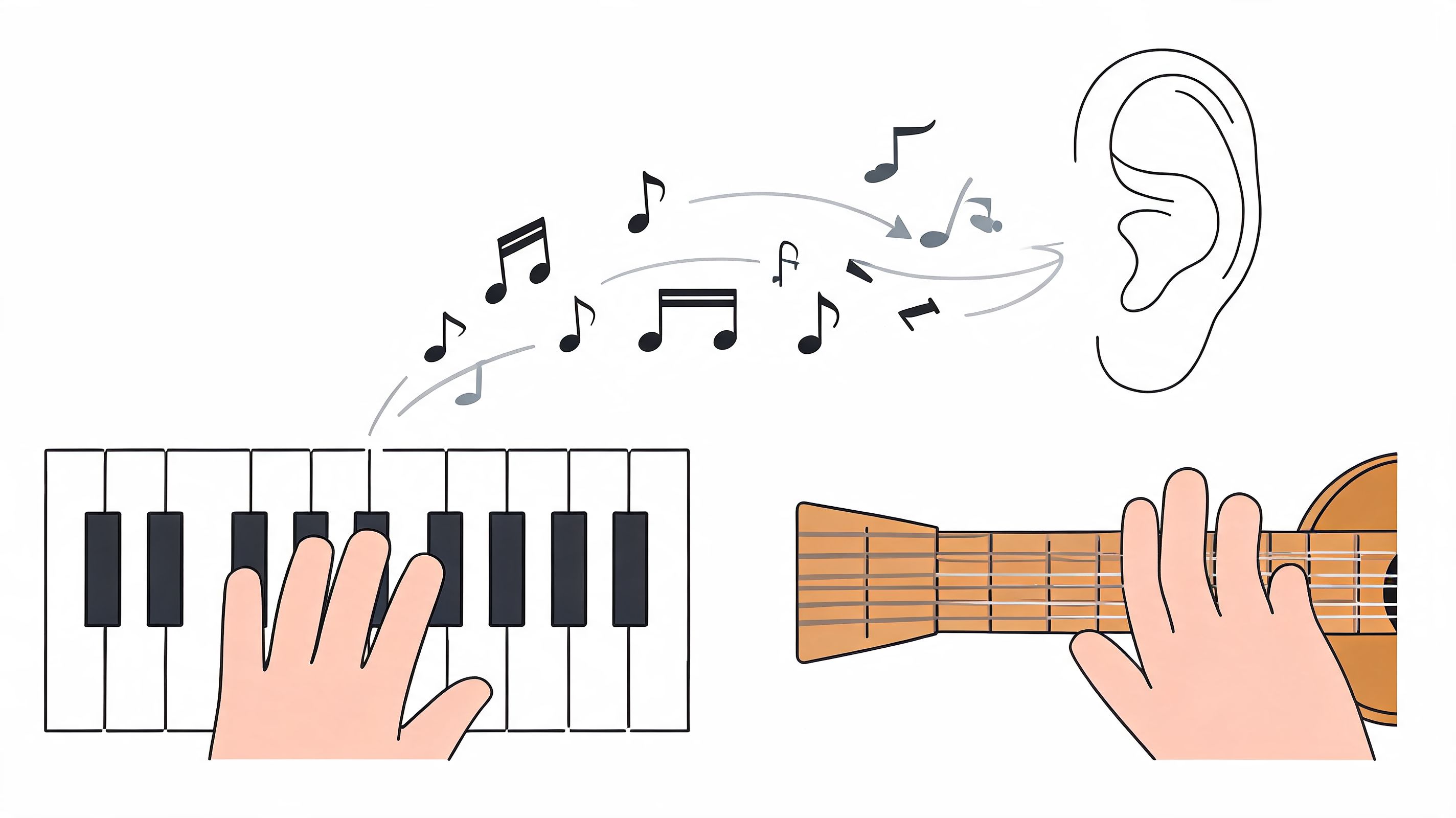
Start with just three chords in A harmonic minor. Staying in one key helps your ear latch onto one emotional world instead of constantly resetting.
On piano, play these in root position:
- Am: A C E
- E7: E G# B D
- G#dim7: G# B D F
On guitar, use easy shapes you can grab without thinking too hard:
- Am: open Am shape
- E7: open E7 shape
- G#dim7: any small diminished shape you already know, even part of the chord
These voicings are simple on purpose. Clear sound helps your ear more than fancy fingerings.
First, play Am to E7 to Am several times. Let the last Am ring. Listen for the feeling of return. E7 should sound like a stretched rubber band that finally snaps back home.
Then try a comparison. Play Am to Em to Am, then Am to E7 to Am. The first version sounds gentler and less urgent. The second has that unmistakable harmonic minor bite. That side-by-side contrast trains your ear faster than memorizing chord labels.
Two ear training drills for 10 minutes a day
Here are two drills that build recognition, not just recall.
-
Cadence comparison drill
Record yourself playing two short endings in the same key. One uses the softer minor v chord. The other uses V7 to i. Shuffle the recordings and listen back without looking. Your job is to identify which ending pulls harder toward home. -
Tension color drill
Play three seventh-chord sounds from harmonic minor: the tonic minor-major seventh, the dominant seventh, and the diminished seventh. Before naming them, describe what you hear in plain language. One may feel settled but shadowed. Another may feel bright and demanding. Another may feel tightly coiled, like it cannot sit still. Then check which chord was which.
If you want extra repetition, Trill: Ear Training Daily includes short audio practice for chords, intervals, notes, and scales, and these interactive chord tools for ear training and voicing practice can help you connect what you hear to what your hands are playing.
A few habits make this work:
- Stay in one key for a full week. Your ear learns faster when the tonal center stays familiar.
- Sing before you play. Even an uncertain sung note helps you predict the sound instead of reacting after the fact.
- Keep the session short. Ten focused minutes is enough if you listen with intent.
- Reuse the same chords often. Recognition grows from repeated exposure.
One more tip helps a lot. After you play a chord, pause and ask, “Does this sound like home, motion, or tension?” That simple question turns theory into a listening habit.
The goal is practical. You want to hear a harmonic minor chord and recognize its role in the story of the music.
Your Path to Hearing Music with Confidence
Harmonic minor chords can look advanced on paper, but the breakthrough is simpler. You learn to recognize a specific sound world. You hear the stronger dominant pull, the darker tonic, and the unusual tension colors that don’t show up the same way in ordinary minor harmony.
That’s a practical skill.
When your ear starts catching those sounds, a lot changes. Transcribing gets less random. Improvisation gets less stiff. Chord progressions stop feeling like hidden information and start feeling readable.
You also don’t need perfect pitch for any of this. You need repetition, attention, and a method you can stick with. 10 minutes a day is enough to make steady progress if you’re listening actively and comparing sounds on purpose.
If harmonic minor has felt intimidating before, treat it like ear training material, not a theory exam. Learn the sound of home. Learn the sound of tension. Learn the pull between them.
That’s how you start hearing music with confidence instead of reacting with guesswork.
Frequently Asked Questions about Harmonic Minor Chords
A few questions come up every time musicians start working on harmonic minor by ear. Here are concise answers that keep the focus on hearing and playing.
| Question | Answer |
|---|---|
| What’s the biggest audible difference between natural minor and harmonic minor? | The dominant chord feels stronger in harmonic minor. Your ear hears a clearer pull back to the tonic because of the raised seventh. |
| Do I need perfect pitch to recognize harmonic minor scale chords? | No. Relative listening is enough. You’re learning to hear functions and relationships, not isolated note names. |
| Should I practice the full scale first or the chords first? | Start with the chords, especially i, V7, and vii°7. Those give your ear the clearest harmonic identity faster than scale runs alone. |
The fastest learners usually do one thing well. They revisit the same sounds every day until recognition feels automatic. If you keep returning to the sound of harmonic minor instead of cramming theory, your ear will catch up.
If you want a simple daily system for ear training, chord recognition, and learning to play by ear, Trill: Ear Training Daily gives you short practice sessions built around listening skills you can use in real music.