10 Best Music Note Name Worksheet Downloads for 2026
A student finishes a music note name worksheet in two minutes, gets every treble clef line right, then freezes when I play three notes and ask for the first one back on the keyboard. That happens all the time. The eyes learned the symbol. The ear still has no claim on the sound.
Worksheets still have a job. They help beginners map staff positions to note names fast, sort out line notes from space notes, and stop guessing every time a note appears on the page. That visual fluency matters because slow note recognition clogs everything else, from rhythm reading to basic hand coordination.
The limit is clear in lessons. A student can circle C on a worksheet and still miss C by ear in a simple melody. If the goal is real musicianship, the process has two parts. First, learn the note’s written name. Second, train your ear to recognize that same note as sound.
That is the standard I use for every worksheet in this list. I am not only looking at whether a page is clean or beginner-friendly. I am looking at whether it sets up the next step well. After a short worksheet block, sing the notes, find them on your instrument, and run a few ear drills in an app such as Trill: Ear Training Daily. That simple handoff turns paper practice into listening practice.
Use worksheets to get the visual label right. Then spend 10 minutes a day connecting that label to pitch, melodic direction, and function inside real music. That is where note names start to stick, and where playing by ear begins.
Table of Contents
- 1. MakingMusicFun.net Free Music Theory Worksheets Note Names
- 2. Music Theory Academy Free Note Naming PDFs
- 3. Twinkl USA Treble Clef Notes Activity Sheet
- 4. MusicAndTheory.com Freebie Grand Staff Note Names
- 5. Mom’s Printables Music Notes and Note Matching Worksheets
- 6. Music Theory Print Note Reading Worksheets Treble Bass Alto
- 7. Melody Payne Teachers Pay Teachers Note Naming Practice Pack
- 8. Music Theory Playground Name the Note Big Note Worksheets
- 9. Piano With Lauren Note Naming Worksheets Treble and Bass
- 10. Education.com How to Read Music Worksheet Treble and Bass
- Top 10 Note-Name Worksheets Compared
- Turn Theory Into Instinct with 10 Minutes a Day
1. MakingMusicFun.net Free Music Theory Worksheets Note Names
A common first lesson problem looks like this. A student can point to middle C on a worksheet, write the right letter, and still hesitate when that same note shows up in actual music. MakingMusicFun.net is useful because it gives you enough variety to keep that first stage of recognition from getting stale.
MakingMusicFun.net offers kid-friendly note-name practice in several formats, including color pages, code activities, and straightforward staff drills. That mix works well with younger beginners who lose focus if every page looks the same.
Why it works for beginners
The teaching sequence is the strong point here. Students first match the visual symbol to a note name. Then they repeat that task in slightly different formats until recognition speeds up. For early readers, that change in format matters. One student may shut down on a plain drill and finish the same skill happily in a color-based activity.
I use these pages most often with children in their first stretch of note reading, especially when they still need large print and clear spacing. The trade-off is style. Older beginners, teens, and many adults usually prefer cleaner pages that feel less elementary.
- Best for young learners: Large notes and playful layouts reduce visual overload.
- Best for mixing lesson materials: You can rotate worksheet styles without changing the skill target.
- Less ideal for older students: The design may feel too young, even if the note-reading practice is sound.
Practical rule: If a student can fill in note names on paper but cannot hear or sing those notes back, stop adding worksheets and start training the ear.
That is the true value test. A music note name worksheet should handle the visual half of the job, not the whole job.
Use a simple two-part routine. Finish one short worksheet. Then go to the instrument, play each answered note, and sing it back before moving on. After single-note work starts to feel quicker, add short interval ear training exercises so the student begins hearing distance and direction, not just memorizing staff positions.
That shift is what turns note naming into usable musicianship.
2. Music Theory Academy Free Note Naming PDFs
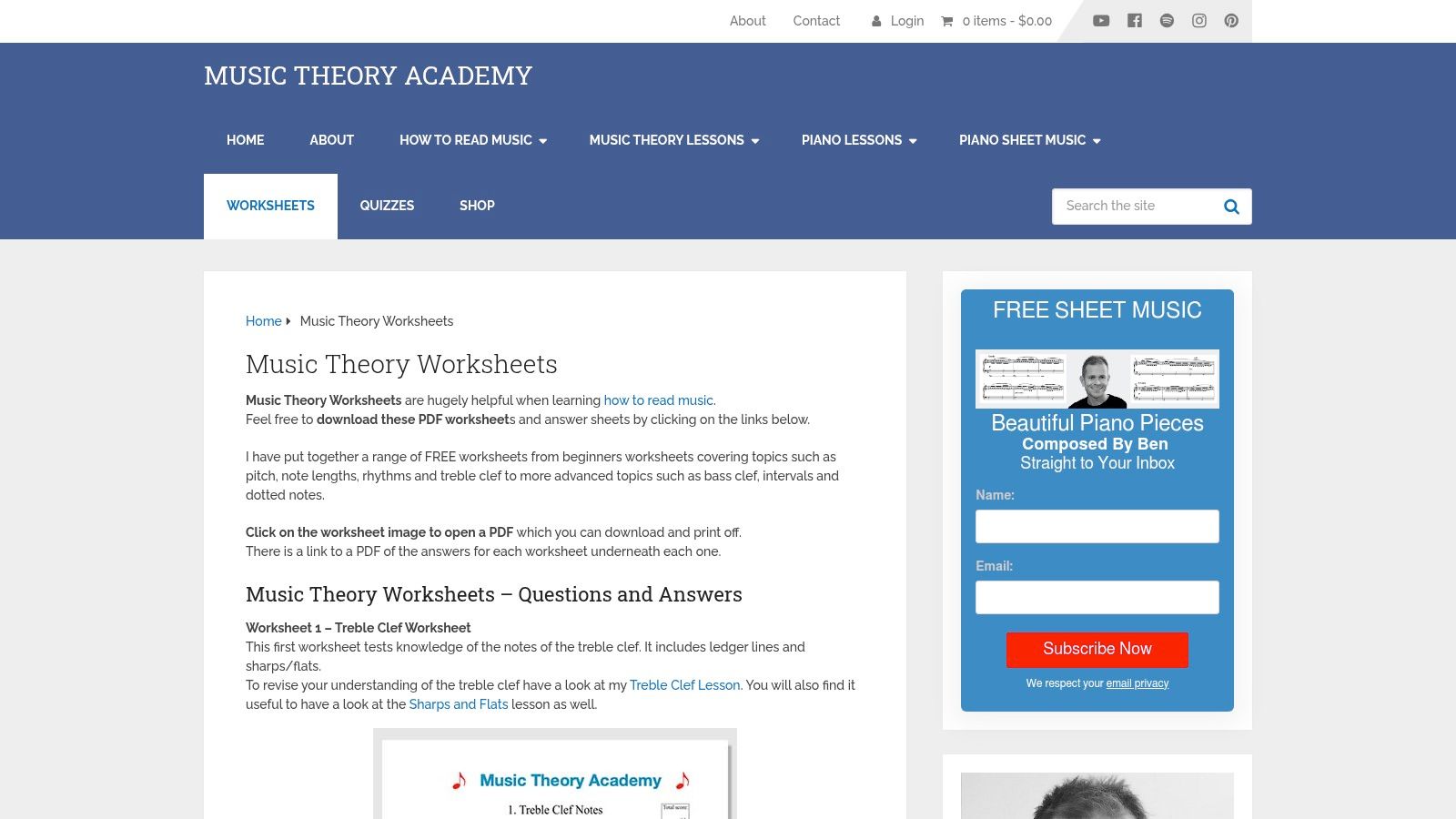
Music Theory Academy keeps things plain and focused. If you want clean PDFs for treble and bass clef reading, with less decoration and more direct practice, this is a strong option.
Some students do better when the page gives them one job and nothing else. This site fits that style.
Best use case
The useful part here is that the worksheets stay close to staff reading itself. You’re not distracted by games, which is good for older beginners, adult learners, and exam-focused students who need fast review.
The trade-off is obvious. If motivation depends on playfulness, these pages can feel dry. But if your problem is inconsistency in note recognition, dry is sometimes exactly what works.
Try this progression:
- Start with visual naming: Complete one treble or bass page without an instrument.
- Add sound immediately: Play each note after you name it.
- Move to interval hearing: Once single notes feel easier, practice hearing the distance between notes with interval ear training exercises.
A worksheet like this is also useful when ledger lines start causing trouble. Students often think they forgot note names, but the core issue is that they never learned to spot landmarks quickly. Use the sheet, then isolate a few anchor notes at the keyboard and listen to how they sit high or low in relation to middle C. That ties the page to the ear.
3. Twinkl USA Treble Clef Notes Activity Sheet
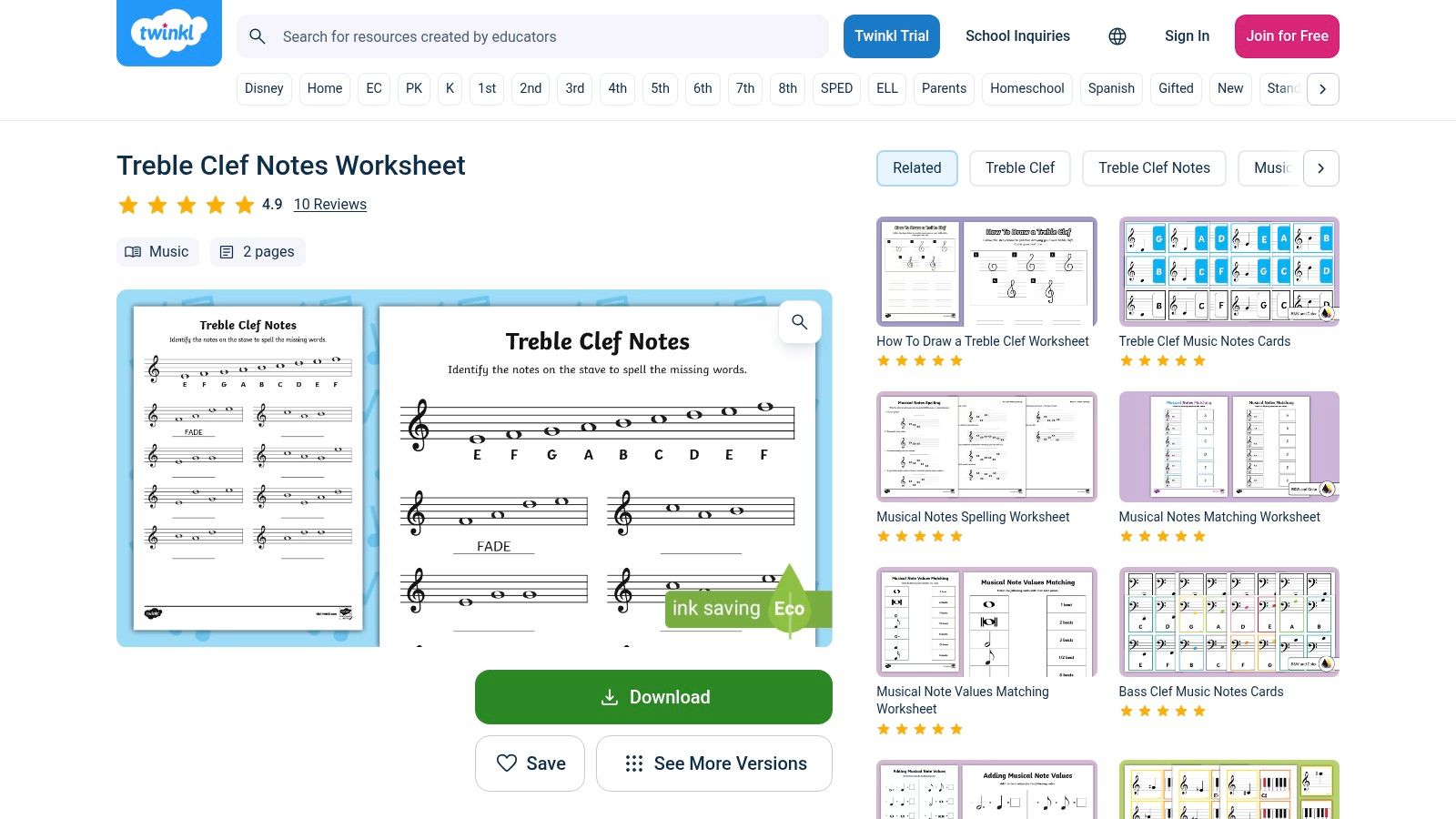
Twinkl’s Treble Clef Notes Activity Sheet feels built for classrooms first. The formatting is polished, the presentation is consistent, and teachers who already use Twinkl will find it easy to slot into a lesson plan.
That consistency is the main advantage. If you’re teaching groups, you don’t want one worksheet to look homemade and the next to look completely different.
Where it fits best
This is a practical choice when you need something ready to print and easy to explain in under a minute. It’s less compelling if you only want one quick free worksheet and don’t plan to use the wider platform.
A lot of search results for music note name worksheet focus heavily on simple treble-clef naming, color-by-note tasks, and basic identify-the-note activities, with less support for broader goals like bass clef integration, ledger lines, or moving toward audiation skills (treble clef note reading packet context). Twinkl is useful inside that beginner space, but it still works best when you treat the page as a launch point, not the final skill.
Worksheets can tell you whether a student sees the note. They can’t tell you whether the student hears it.
For real-world transfer, have students complete the sheet, then clap a pulse and sing each answer on a neutral syllable. After that, ask them to find those same notes in a simple melody. That’s how note naming starts helping with play by ear instead of staying trapped in workbook mode.
4. MusicAndTheory.com Freebie Grand Staff Note Names
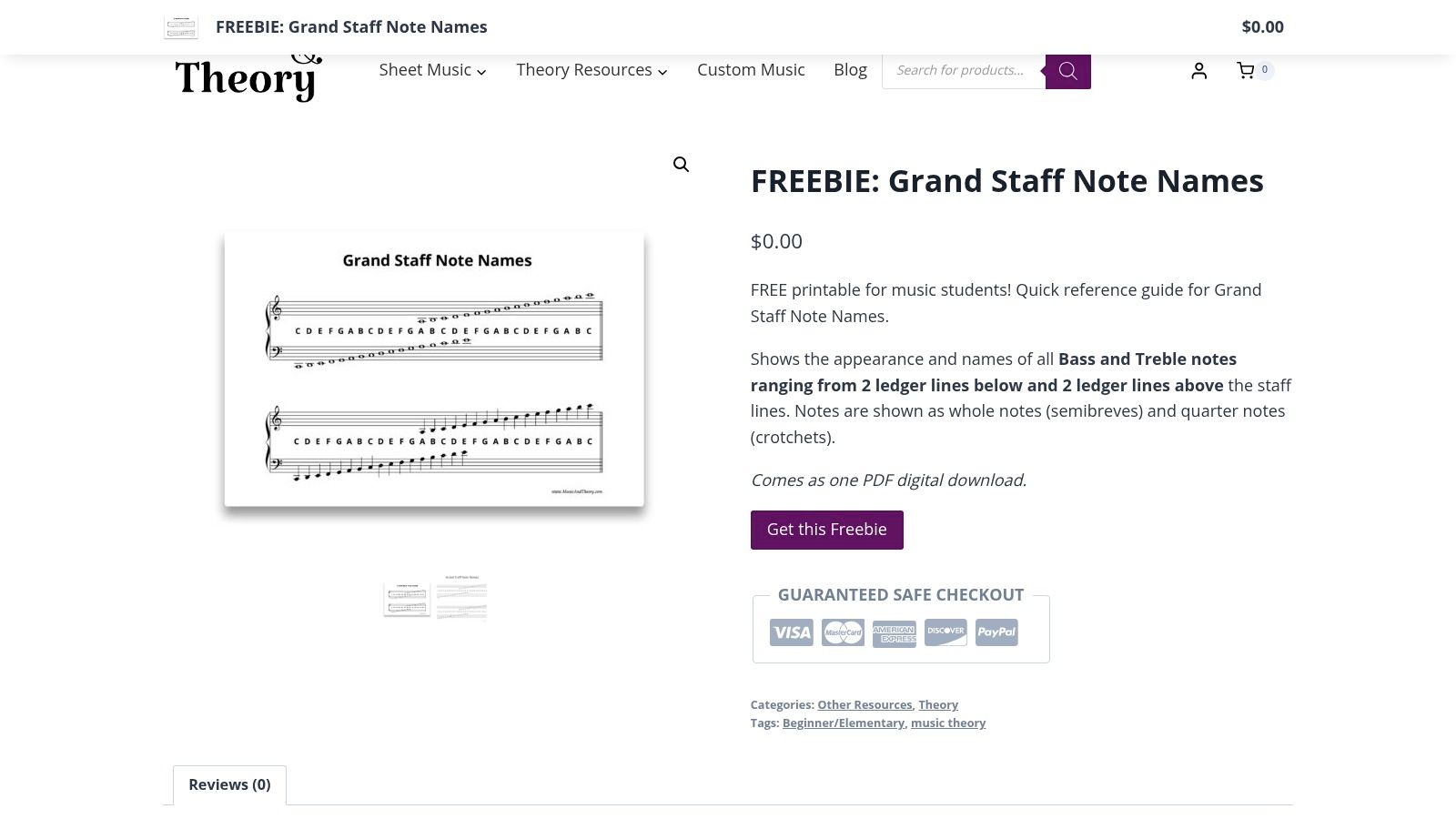
If you want something concise, MusicAndTheory.com’s grand staff freebie is useful. It doesn’t try to be a huge library. It gives you a simple grand staff reference and quick drill format.
That makes it especially good for piano beginners who keep treating treble and bass clef as separate worlds.
Use it as a bridge sheet
Grand staff work is where many students finally understand that note reading is one connected system. A one-page handout can help if the student needs a visual map before tackling denser exercises.
The downside is that there isn’t much variation. You won’t build a long-term program from one page alone. But one clean page can solve a very specific problem.
Use it like this:
- Reference first: Keep it nearby during early piano reading.
- Test second: Cover the labels and name notes out loud.
- Hear third: Play a left-hand note, then a right-hand note, and ask which sounded lower or higher before naming them.
This kind of page is best when the student still needs orientation. Once the map is clear, move on fast. The goal isn’t to stare at labeled notes forever. The goal is to recognize them quickly enough that your ears can start noticing melody shape, bass movement, and simple chord patterns.
5. Mom’s Printables Music Notes and Note Matching Worksheets
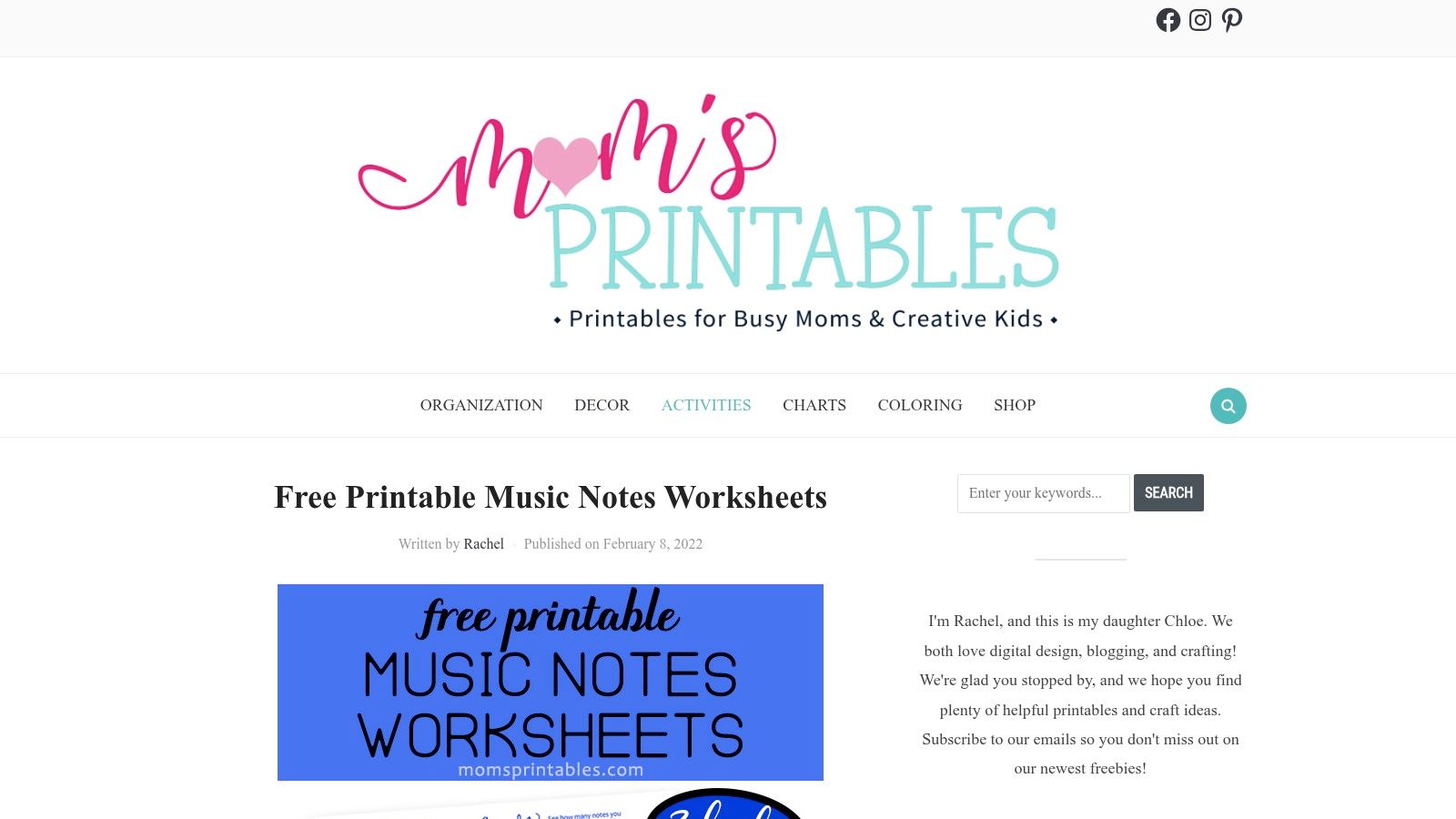
Mom’s Printables is simple, free, and practical. It feels less like a curriculum platform and more like a helpful set of home or studio resources that you can print and use right away.
That’s a strength. Not every learner needs a giant ecosystem.
Best for home practice
The stepwise structure is what makes these pages useful. You can move from guided note matching into more mixed-note practice without overwhelming a beginner in the first session.
For parents, this style is easier to supervise. The task is clear, and you don’t need a music degree to understand what the child is being asked to do.
- Good fit for short sessions: Print one page, finish it, and stop before focus drops.
- Good fit for beginners: The progression is gentle.
- Less ideal for advanced readers: You’ll outgrow the set if you need broader clef work or more depth.
After the worksheet, switch from note names to sound relationships. Ask the student to play two notes and decide whether the second one sounds higher or lower. Then move to basic triads and hearing whether a group of notes sounds stable or tense. If you want to connect note reading to harmony, this is a good point to study basic chord structure in music theory.
A lot of players get stuck because they know isolated note names but don’t hear how notes work together. Matching worksheets help with recognition. Chord listening helps with music.
6. Music Theory Print Note Reading Worksheets Treble Bass Alto
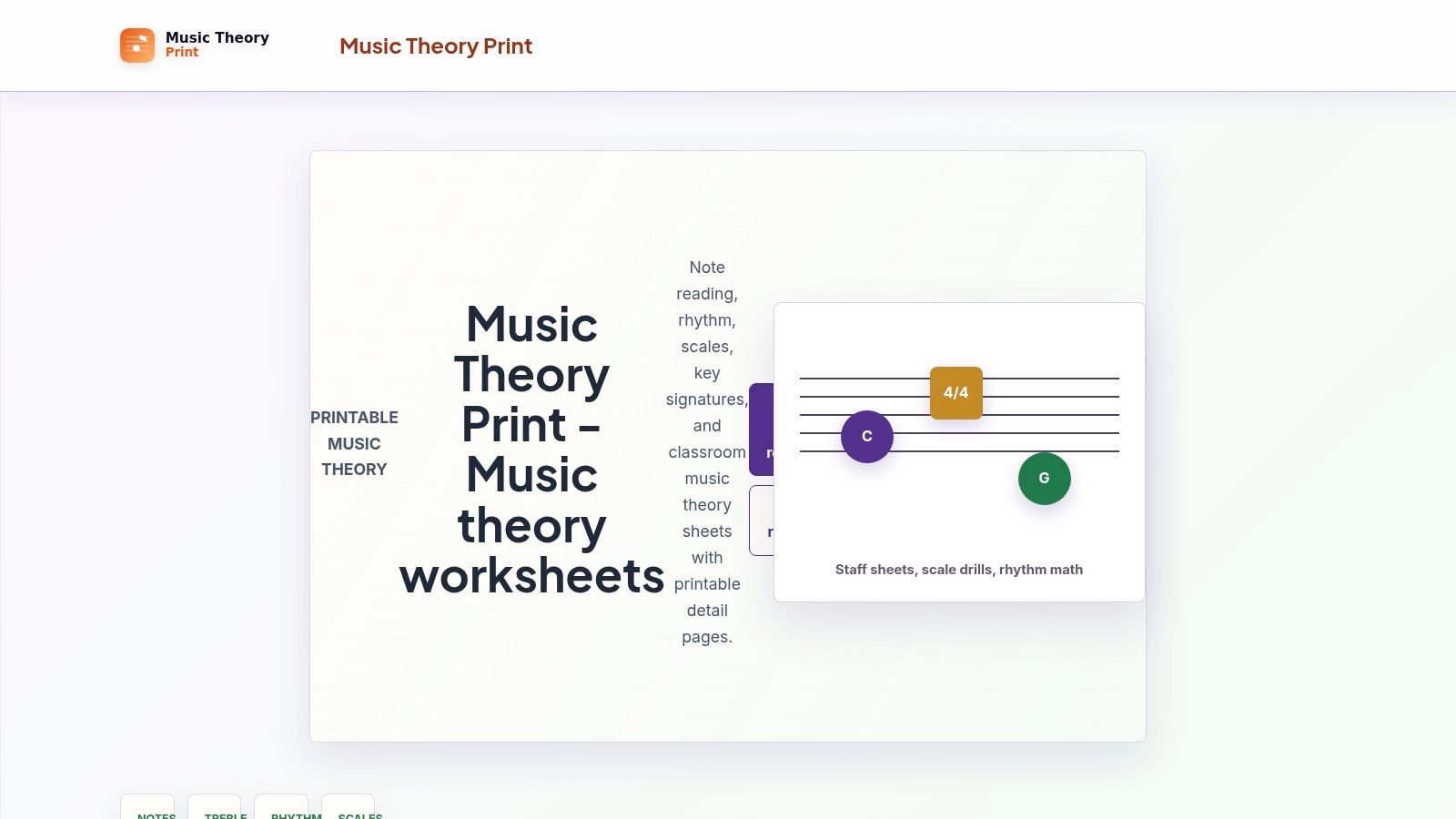
Music Theory Print is organized like a resource shelf. You go there when you want note reading worksheets, flashcards, and companion theory pages in one place.
I like it most for teachers and private instructors who assemble custom packets. It’s less about visual flair and more about coverage.
Why teachers like this format
One important shift in worksheet publishing has been the move from isolated handouts to larger digital libraries. Presto It’s Music Magic Publishing describes its note identification worksheets as using guide notes, patterns, and careful, logical, meaningful sequencing of note learning and practice, which reflects how online worksheet ecosystems now support multiple clefs and skill levels rather than a single beginner drill (Presto note reading overview).
Music Theory Print fits that broader pattern. You can grab note reading pages, then add rhythm or scale material without switching systems.
The upside is flexibility. The downside is that the worksheets feel drill-oriented, so motivation has to come from how you use them.
Coaching note: When a student groans at another note worksheet, I usually don’t need a better worksheet. I need a better follow-up task.
One follow-up that works: complete a clef drill, then improvise a tiny melody using only three of the notes from the page. Next, sing it back. That simple move starts turning literacy into musicianship.
7. Melody Payne Teachers Pay Teachers Note Naming Practice Pack
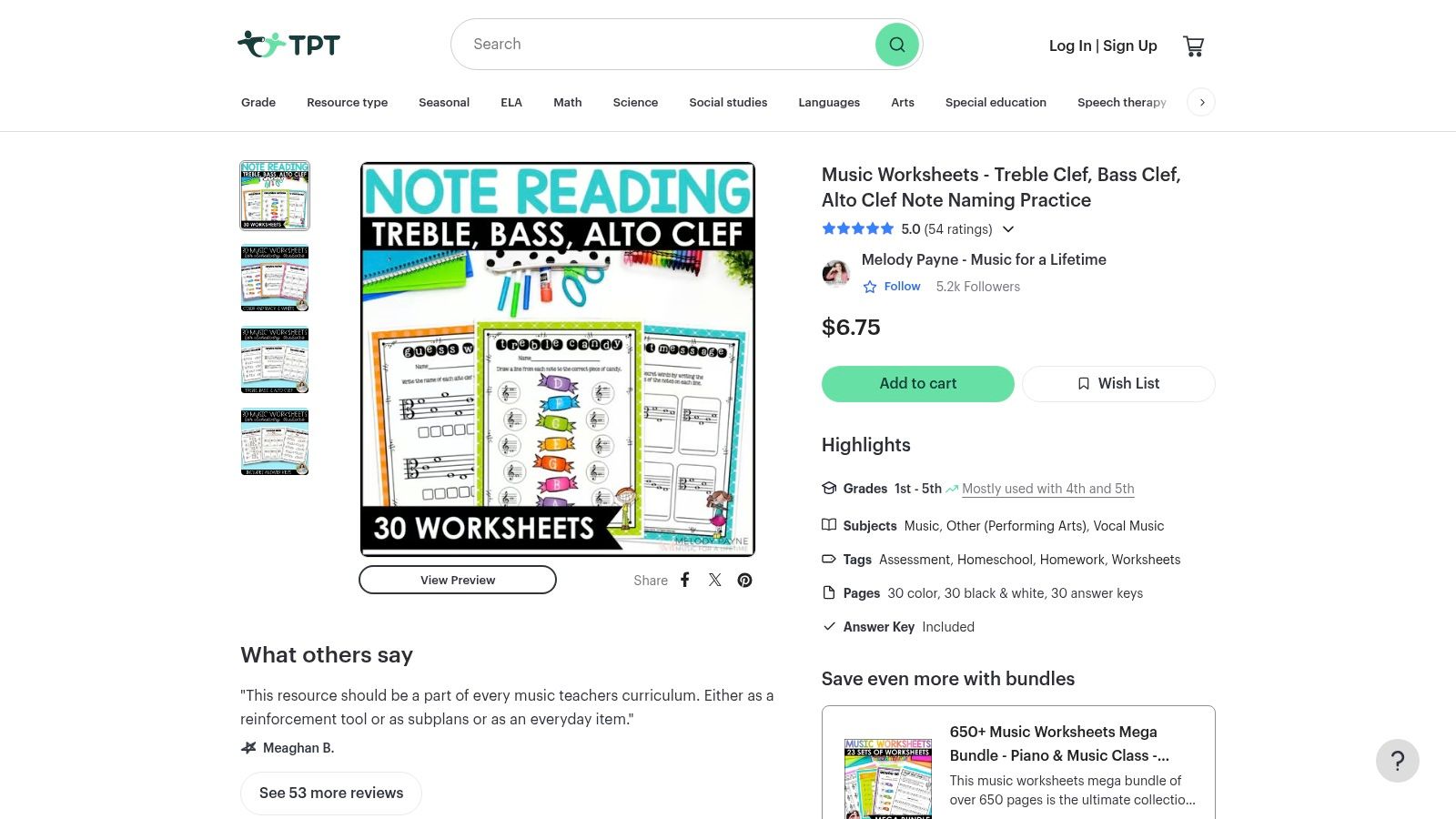
If you want sheer volume and activity variety, Melody Payne’s note naming pack on Teachers Pay Teachers is a serious option. It includes 90 pages made up of 30 color worksheets, 30 black-and-white versions, and 30 answer keys on the product page itself.
That size can save real prep time for classroom teachers.
When a large pack is worth it
This kind of pack works best when you teach mixed groups and need options. Some students will respond to matching. Others will do better with drawing, secret-message tasks, or spelling-style pages.
The danger is overassigning it. A large pack can tempt teachers into giving more paper instead of better practice.
- Worth it for classrooms: You get many variations in one purchase.
- Worth it for rotating review: Students aren’t seeing the same format every time.
- Less worth it for one learner: A smaller free resource may cover the same immediate need.
A good rule is to choose one page for visual review, then pair it with one sound-based task. For example, after a note naming page, play three notes and ask the student to identify whether they formed a stepwise pattern or a skip pattern. That keeps the ears involved.
The pack is broad. Your job is to keep the goal narrow. Faster recognition, better hearing, and more freedom at the instrument.
8. Music Theory Playground Name the Note Big Note Worksheets
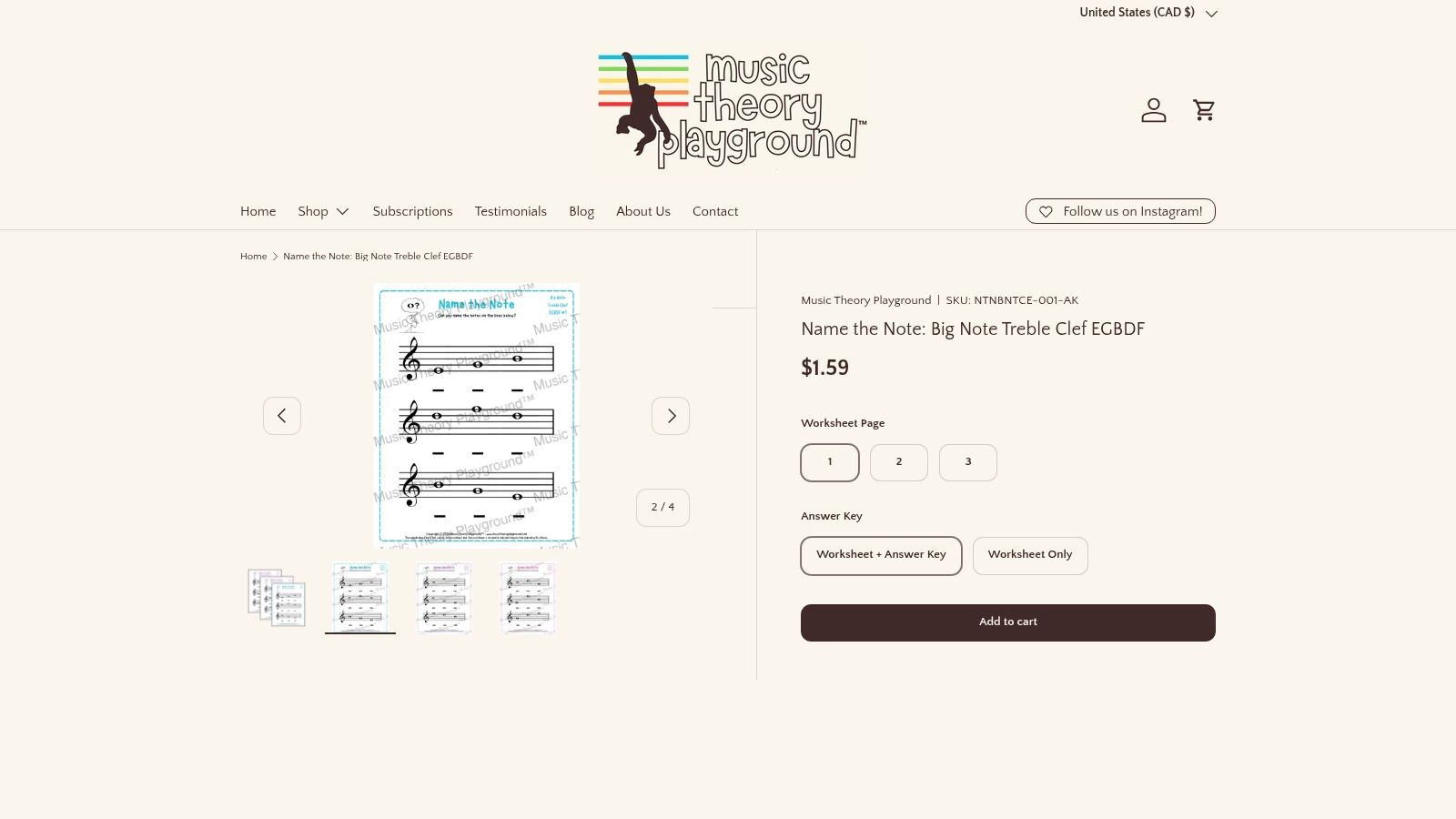
Music Theory Playground’s Big Note worksheets are very targeted. Oversized staves, large notation, and note-set-specific pages make them a smart pick for very early learners who still struggle to visually track small symbols.
That bigger layout solves a real problem. Some children aren’t confused by note names. They’re confused by tiny print.
Best for very early readers
The clearest use case is controlled repetition. If a student is learning just a handful of notes, a focused sheet on those specific notes keeps the task manageable.
The trade-off is that targeted pages can pile up. If you need a full curriculum, buying one worksheet at a time may not be the most efficient route.
This format also works well for timed review, but only if speed comes after accuracy. Don’t turn note reading into a race too soon. First, the student should see the note, say the name, play it, and sing it. Then you can trim the response time.
A nice extension is to point to one note from the sheet, play it on an instrument, and ask the student to match the sound by ear. That’s the moment when a music note name worksheet stops being a paper task and starts feeding perfect pitch awareness, relative pitch, and practical ear training.
9. Piano With Lauren Note Naming Worksheets Treble and Bass
Piano With Lauren is strong on sequencing. The emphasis on landmark notes like middle C, bass F, and treble G matches how many piano teachers reduce confusion at the start.
That’s practical pedagogy. Students don’t memorize the whole staff at once. They use stable reference points.
A solid piano studio sequence
This is one of the better options for one-on-one piano teaching because the progression feels intentional. Landmark notes first. Then line and space reading. Then reinforcement across multiple pages.
That sequence matters because beginners rarely need more information. They need the right information in the right order.
A useful routine with this resource:
- Landmark first: Spot the anchor notes instantly.
- Shortest path next: From each landmark, move by step to nearby notes.
- Ear last: Play a note near middle C and ask whether it sounds above or below the anchor before naming it.
Recent educator coverage of custom worksheet tools highlights features like choosing clef, note range, layout, and accidentals to generate printable drills quickly, which shows how much demand there is for differentiated note-reading practice at scale (custom worksheet generator review). Piano With Lauren isn’t a generator, but it benefits from the same idea: sequencing works better when practice matches the learner’s current range.
10. Education.com How to Read Music Worksheet Treble and Bass
Education.com’s How to Read Music worksheet is a primer. It’s not the worksheet you use for long-term development. It’s the worksheet you use when a true beginner needs a simple first look at treble and bass note names.
That limited scope is exactly why it can help.
Use it for first contact only
When someone is brand new, a one-page overview lowers the barrier. They see the staff, basic labels, and mnemonics in one place. Good. That’s enough for day one.
It’s not enough for week three. Beginners quickly outgrow a single introductory sheet, and that’s fine.
A major weakness in worksheet-first learning is that most note-name resources stay static and print-first even as music learning has shifted toward more digital and adaptive practice. Worksheet-style resources remain popular largely because they’re easy to assign, not because they train the speed of recognition or listening needed for real-time music making (Hoffman Academy note identification discussion).
That’s why this sheet should lead directly into active training. After naming notes on paper, use a listening system that asks you to identify what you hear, not just what you see. If you want that next step, Trill’s music theory app is built around daily ear training for notes, chords, intervals, and related theory tools.
Top 10 Note-Name Worksheets Compared
| Resource | Core focus & features | 👥 Target audience | ★ / 🏆 Quality | 💰 Price / Value | ✨ Unique selling points |
|---|---|---|---|---|---|
| MakingMusicFun.net, Free Music Theory Worksheets | Large library; varied worksheet types (games, speed drills, clefs) | Teachers, parents, elementary students | ★★★★ 🏆 | 💰 Mostly free; some premium packs | ✨ Huge free catalog; classroom-ready themes |
| Music Theory Academy, Free Note‑Naming PDFs | Clean downloadable PDFs; ledger lines & accidentals; lesson links | Beginners & self-learners | ★★★★ | 💰 Free | ✨ Linked lessons for instant review |
| Twinkl (USA), Treble Clef Notes Activity | Standards-aligned, teacher-formatted worksheets | K–12 teachers, schools | ★★★★ 🏆 | 💰 Subscription required for full access | ✨ Professional, curriculum-aligned design |
| MusicAndTheory.com, Grand Staff Note Names | One-page grand staff reference/worksheet | Beginners, quick-reference use | ★★★ | 💰 Free | ✨ Concise single-page handout |
| Mom’s Printables, Note & Matching Worksheets | Stepwise levels, note-matching, parent instructions | Home learners, private teachers | ★★★ | 💰 Free | ✨ Simple, quick print-and-use packets |
| Music Theory Print, Note Reading Hub | Organized hub; clef drills + companion flashcards | Teachers building packets, studios | ★★★★ | 💰 Mostly free / some shop items | ✨ Good site organization for mixed resources |
| Melody Payne (TpT), Note Naming Practice Pack | 90‑page comprehensive pack; color + B/W + keys | Classroom teachers, busy music educators | ★★★★★ 🏆 | 💰 Paid (TpT), high value for scope | ✨ Extremely comprehensive; classroom-ready |
| Music Theory Playground, Big Note Worksheets | Oversized staves, clef-specific sets, timed drills | Early learners, parents buying per-need | ★★★ | 💰 Low cost per worksheet | ✨ Large notation for beginners; timed “level-up” |
| Piano With Lauren, Note Naming Worksheets | Pedagogical sequencing; landmark focus; multiple pages | Piano teachers, studio students | ★★★★ | 💰 Paid bundle via shop | ✨ Studio-sequenced progression for lessons |
| Education.com, How to Read Music Worksheet | Beginner primer with mnemonics; printable | Absolute beginners, elementary teachers | ★★★ | 💰 Free/behind membership on platform | ✨ Mnemonics + K–6 integration |
Turn Theory Into Instinct with 10 Minutes a Day
A music note name worksheet is useful because it gives beginners something concrete. You look at a note, connect it to a letter name, and repeat the process until the staff starts feeling familiar. That foundation matters. You can’t read music well if every note still feels random.
But reading isn’t the same as hearing. That’s the point most students miss, and it’s why so many people can finish worksheets yet still struggle to play by ear, recognize chords in a song, or improvise without guessing. The page teaches visual identification. Real musicianship needs sound recognition too.
Use worksheets as the first half of a daily routine, not the whole routine. Spend a few minutes naming notes on paper. Then move immediately to the instrument or to an ear training app. Play the notes you just named. Sing them back. Listen for whether they move up or down. Turn two notes into an interval. Turn three notes into a chord. That’s where theory starts becoming something you can use.
This also keeps practice honest. If you can label bass clef notes but can’t hear whether a line is rising or falling, you haven’t finished learning that material. If you know the mnemonic but can’t find the sound in a melody, the knowledge is still too shallow.
The good news is that ear training is trainable. It isn’t reserved for people with natural perfect pitch or some rare gift. Consistent daily practice builds recognition. Ten focused minutes a day is enough to make worksheets more effective because you stop treating note names as trivia and start hearing them as musical events.
A simple routine works well:
- Minute 1 to 3: Complete part of one worksheet.
- Minute 4 to 6: Play and sing the notes you wrote.
- Minute 7 to 10: Do active ear training on notes, intervals, or chords.
Keep the cycle tight. Don’t separate theory and sound practice by a whole day or a whole week. Pair them in the same session so your brain links the symbol, the note name, and the sound.
If you want a structured option for that second half, Trill: Ear Training Daily is one relevant tool. It’s designed around short daily sessions that help musicians work on hearing notes, intervals, chords, and scales, which makes it a natural companion to worksheet-based note reading.
Learn the names. Then learn the sound. That’s how you stop guessing and start to play by ear with confidence.
If you want your worksheet practice to lead to real musical freedom, try Trill: Ear Training Daily. It’s built to help you train your ear in short daily sessions so you can recognize notes, intervals, and chords by sound, play by ear more confidently, and turn theory into something you can hear.