Best Music Theory App Free for Ear Training in 2026
You don’t need another app that teaches theory as trivia. You need something that helps you hear a chord change, sing an interval back, recognize a cadence, and stop guessing when you play.
That’s why “best music theory app free” is a trickier question than it looks. Some tools are excellent for note reading but weak for ear training. Some are engaging but lock the useful practice behind subscriptions. Others are old-school on the surface, yet they do a better job building real listening skills than flashy apps with streaks and badges.
Free options have also become much more accessible. Musicca describes itself as “free, forever” and made for schools, while MyMusicTheory offers more than 100 free exercises across core topics like notes, scales, intervals, chords, rhythm, and key signatures on MyMusicTheory. That matters because it lowered the barrier for beginners, teachers, and self-taught musicians who want structured practice without paying upfront.
The bigger point is simple. Theory sticks when your ear is involved. If an app helps you connect sound to function, not just symbols on a staff, it’s worth your time. If it only helps you pass a quiz, the payoff is smaller.
Table of Contents
- 1. musictheory.net
- 2. Teoria
- 3. Musicca
- 4. Hooktheory Hookpad Chord Crush TheoryTab
- 5. ToneGym
- 6. uTheory
- 7. Perfect Ear
- 8. EarMaster
- 9. TonedEar
- 10. ChordIQ by Songtive
- Top 10 Free Music Theory Apps, Feature Comparison
- Final Thoughts
1. musictheory.net
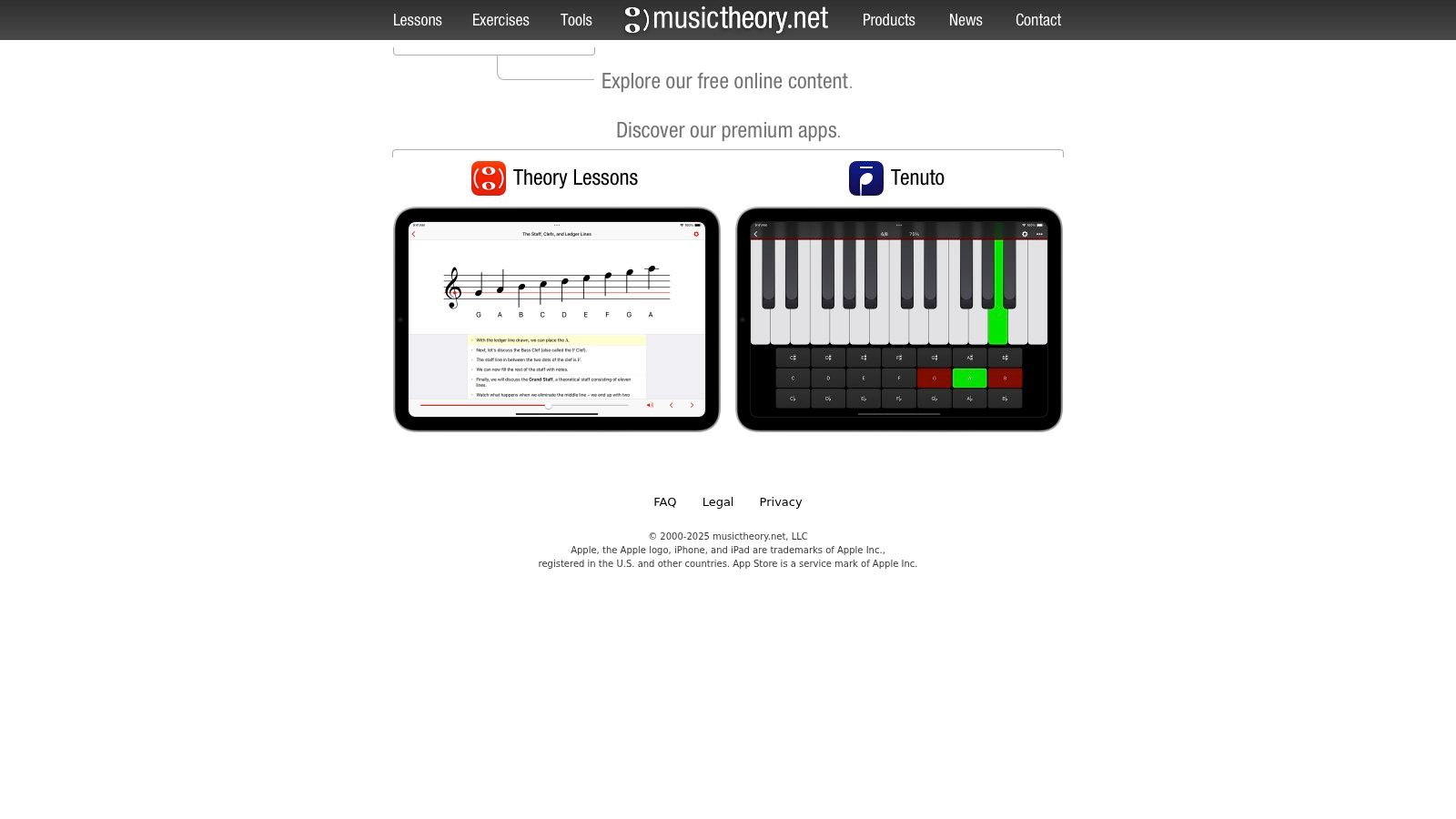
musictheory.net is still one of the easiest recommendations if you want a music theory app free option that doesn’t waste your time. It runs in the browser, loads fast, and gives you clean drills on notes, intervals, chords, scales, and key signatures without forcing an account.
What it does well is focus. The interface stays out of your way, so you can do short daily reps and move on. For beginners, that matters. If you’re trying to train your ear and your hands at the same time, friction kills consistency.
Why it still works
The strongest use here is interval work. Don’t just click answers visually. Hear the interval first, then sing it, then check yourself on your instrument. If you need a practical refresher on how intervals feel in real music, this guide to hearing and understanding intervals in music pairs well with the drills.
- Best for fundamentals: Notes, intervals, scales, and chords are presented clearly.
- Best habit: Use it for a focused 10-minute session, then apply the same sound on your instrument.
- Main drawback: The web version is the free sweet spot. The native iOS apps are paid extras, and there isn’t an official Android app.
Practical rule: If a drill teaches you to identify an interval on paper but you still can’t sing or hear it, slow down and move from screen to sound immediately.
This isn’t the most game-like tool on the list. That’s also why many musicians stick with it.
2. Teoria
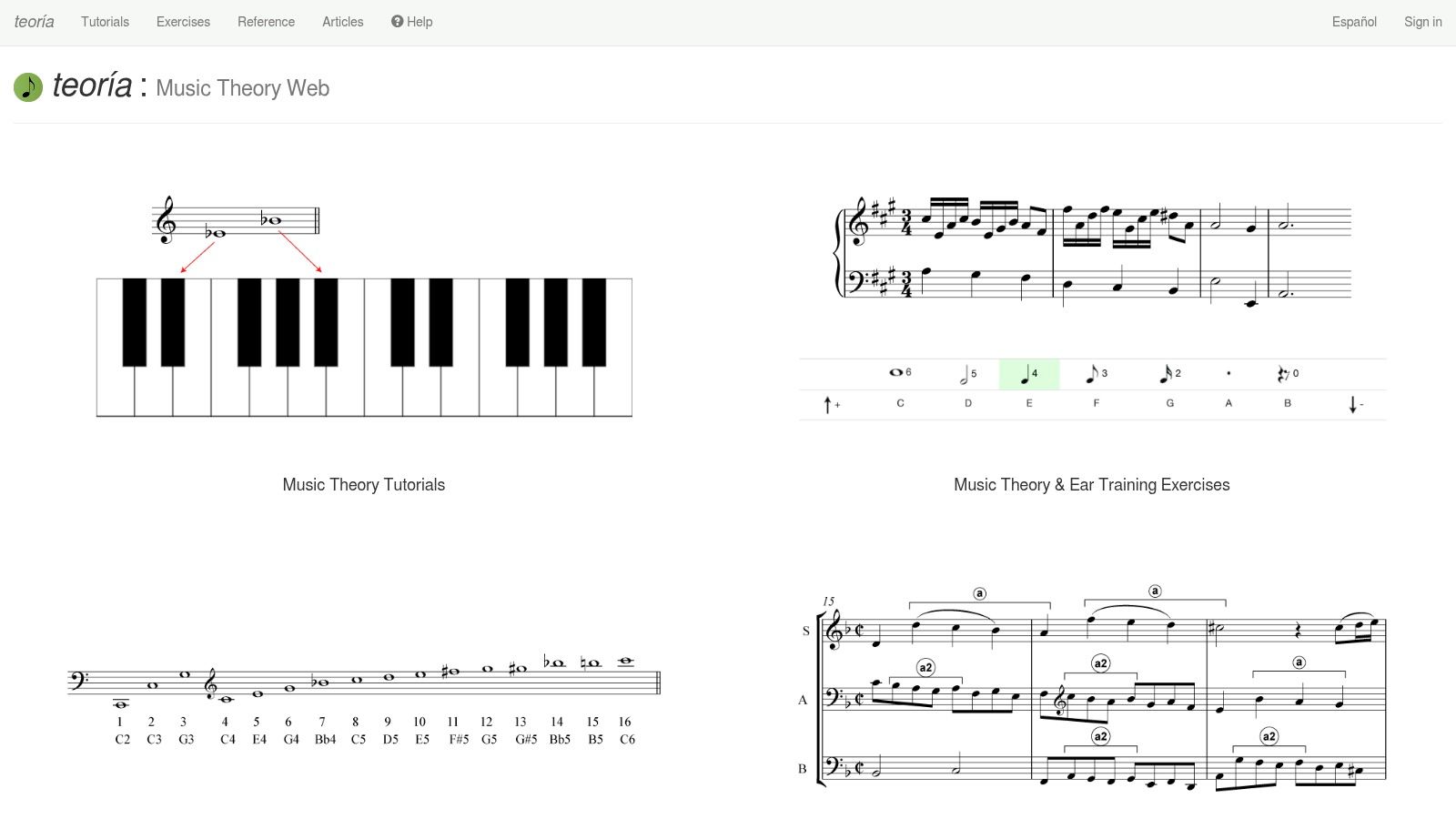
Teoria is one of the best free choices if you care about ear training as much as written theory. A lot of theory apps stop at naming notes and building chords. Teoria goes further into dictation, rhythm, intervals, chords, and progressions, which makes it more useful for people who want to play by ear.
Its design feels older than newer apps. That’s the trade-off. You don’t get a polished mobile-first experience, but you do get serious aural work without a paywall.
Best use case
Teoria works best when you’re ready to move past recognition into recall. Instead of only answering multiple-choice questions, you can practice hearing something and reproducing it. That’s much closer to what happens when you transcribe a melody, catch a bass movement, or figure out a chorus by ear.
Try this sequence with Teoria:
- Hear first: Do one interval or chord drill without touching your instrument.
- Sing second: Sing the answer before you click.
- Play third: Confirm it on piano or guitar after your ear makes a decision.
Teoria is one of the few free tools that pushes you toward actual listening, not just screen recognition.
If your goal is practical musicianship, that matters more than aesthetics. This is a strong option for students, teachers, and self-taught players who want theory tied directly to hearing.
3. Musicca
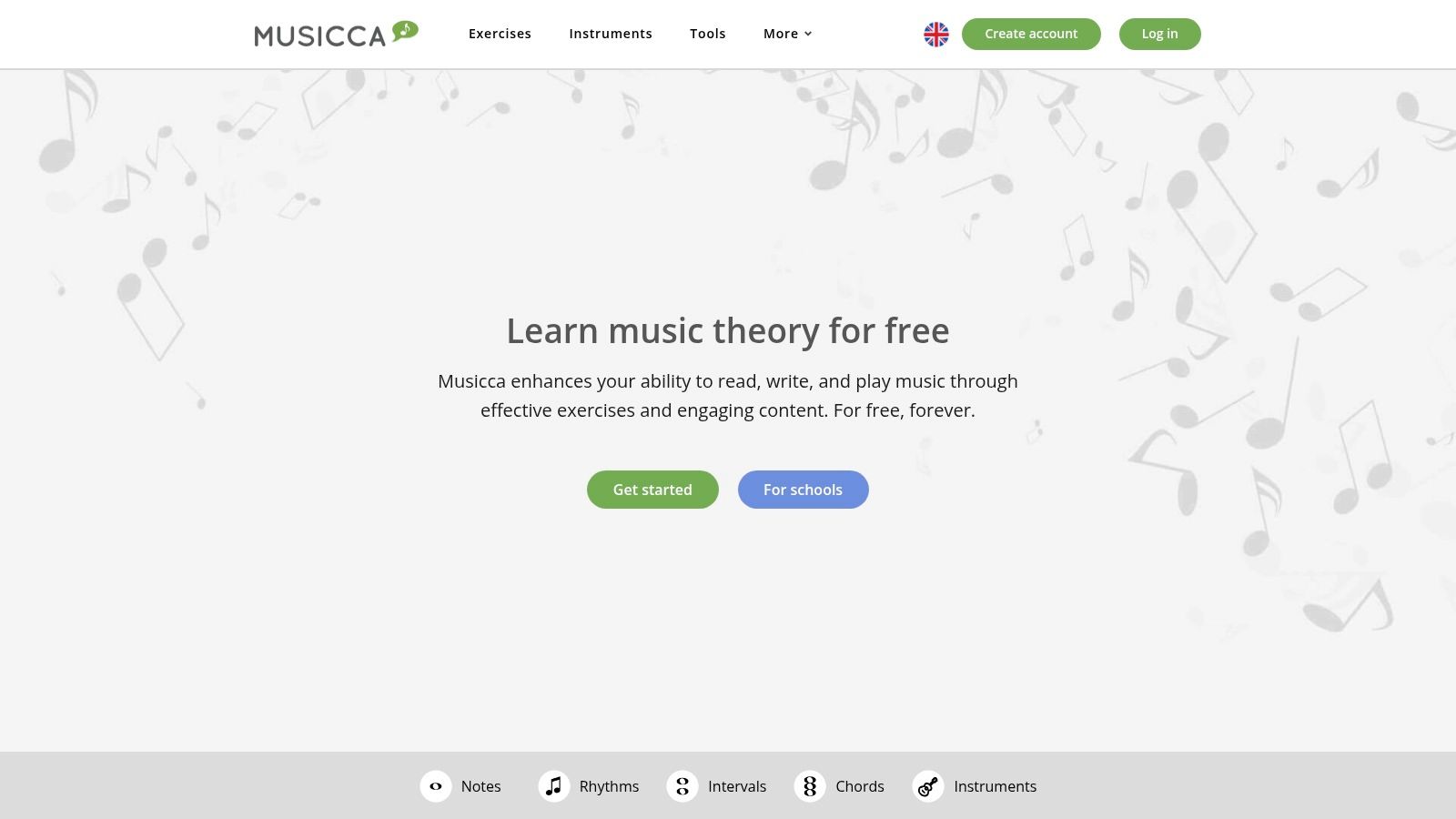
You sit down for ten minutes before practice, open a browser, and want something that sharpens your ear and your hands, not another stack of terms to memorize. Musicca fits that moment well.
Its strength is simple. It gives beginners a clear path through notes, rhythm, intervals, scales, and chords without adding friction. For players who freeze because theory feels scattered, that matters. A tool that gets used three or four times a week will do more for your musicianship than a deeper app you avoid.
Musicca also does a better job than many free theory tools of pointing theory back toward playing. Interval work, rhythm reading, and chord exercises can support real musical decisions if you use them actively. Don’t just click the right answer. Sing the interval, clap the rhythm, then find it on your instrument. That is how abstract information starts turning into usable ear training.
Where it helps most
Musicca works best at the stage where a player needs reps and consistency. It is especially useful for younger students, adult beginners, and teachers who want a clean practice option that does not need much setup. The browser format helps here.
The trade-off is depth. Musicca is stronger for foundations than for advanced harmonic hearing. If your goal is to hear secondary dominants, track borrowed chords, or recognize function inside real songs, you will eventually need more demanding material and more song-based work. This guide to how music theory chords function in actual songs pairs well with that next step.
A practical way to use Musicca is to keep each session short and tied to your instrument:
- Start with one drill: rhythm, interval, or note reading
- Say or sing the answer first: train recall, not just recognition
- Play it immediately after: connect the screen to sound and muscle memory
That approach makes Musicca more useful than its simple design might suggest. It will not carry an advanced player for long, but it can build the habits that make later ear training work much faster.
4. Hooktheory Hookpad Chord Crush TheoryTab
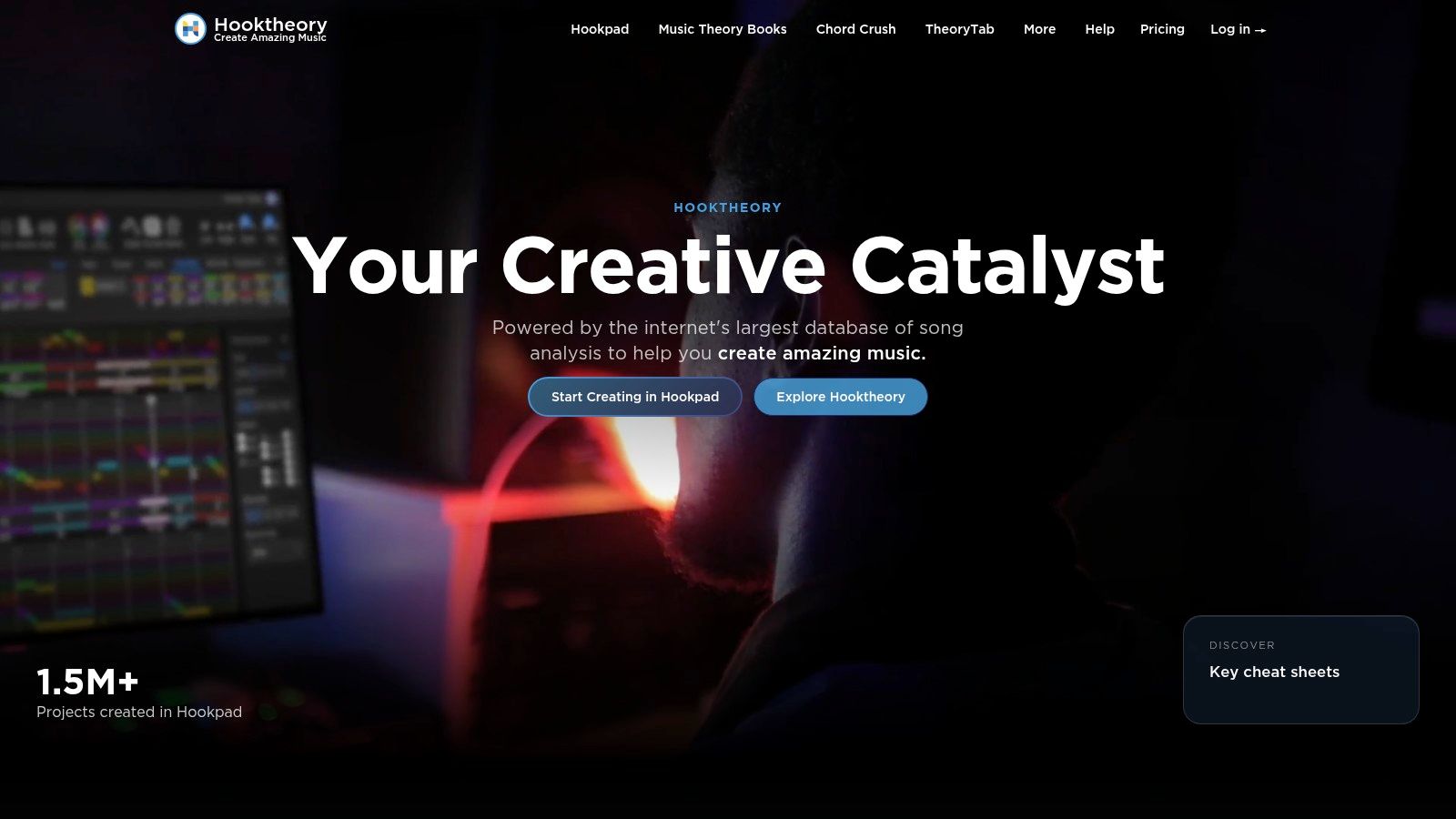
Hooktheory is different from most entries here because it starts with songs. That’s a smart move. Most musicians don’t want to become good at abstract labels. They want to hear a progression in a real track and know what’s happening.
TheoryTab helps with that by showing analyzed songs. Hookpad lets you experiment with chords and melody together. Chord Crush adds a more game-like chord recognition angle. The free access points are useful, but this is also where you need to watch the line between free and freemium.
Why song-based learning matters
A common problem with theory practice is transfer. You ace the app, then hear a song and freeze. Hooktheory reduces that gap because it connects concepts to repertoire and songwriting instead of isolated drills.
If you’re working on chord function, this deeper look at how music theory chords work in real songs is a helpful companion.
The main caution is access. Many searchers want a free music theory app free option, but app listings often reveal the catch. One listing says “Free · In-App Purchases,” and another says “The app is free, but some features require an active subscription” on the MyMusicTheory App Store listing. Hooktheory belongs in the category where free entry exists, but full depth usually doesn’t.
If songs are your motivation, Hooktheory can make theory click faster than a worksheet ever will.
5. ToneGym
You sit down to practice for ten minutes, miss two interval questions, and want to quit. ToneGym is built for that exact moment. It gives your ear training enough structure and feedback to keep you working long enough for the skill to stick.
That matters because ear training only pays off when it transfers to real playing. ToneGym does a good job with repetition, speed, and recall. Those are useful if your goal is hearing a major sixth, a dominant chord, or a cadence fast enough to use it on your instrument instead of naming it slowly in an exercise.
Best for consistent daily ear work
ToneGym is strongest as a practice habit tool. The game format, score tracking, and short workouts lower the friction of showing up every day. For many players, that is half the battle.
The trade-off is that it can pull you toward chasing streaks instead of listening intently. I’ve seen musicians improve their in-app scores without getting much better at figuring out songs by ear. To avoid that, pick one listening target and connect it to actual playing right away.
- Best for habit building: Short daily sessions make regular practice easier.
- Best for fast recognition: Repetition helps intervals, chord qualities, and basic harmonic sounds become more automatic.
- Main limit: The free tier is restricted, so serious practice can hit a wall quickly.
Use it with a simple rule. If you identify something in ToneGym, sing it, then play it. That extra step is what turns app progress into real musical reflexes.
6. uTheory
uTheory feels more like a guided course than a loose practice site. That’s its strength. If you want theory, rhythm, sight reading, and ear training arranged in a clear path, it does that well.
Some musicians love that structure. Others find it a bit school-like. Both reactions are fair.
Best for structured learners
uTheory is a good match if you prepare for exams, work inside a school program, or learn better when lessons and drills build in order. The feedback is clear, and the progression makes sense.
What it doesn’t do as well is feel instantly playful. This is less about exploration and more about steady training. For the right learner, that’s exactly what works.
Try using it like this:
- Pick one daily lane: Ear training one day, rhythm the next, then sight reading.
- Link each concept to sound: If you study chord quality, play and sing each chord right after the exercise.
- Stop before fatigue: A short, consistent session beats a long cram.
uTheory’s free plan is useful, but daily caps mean you may hit the ceiling quickly if you’re practicing seriously. Still, for scaffolded learning, it’s one of the more practical freemium choices.
7. Perfect Ear
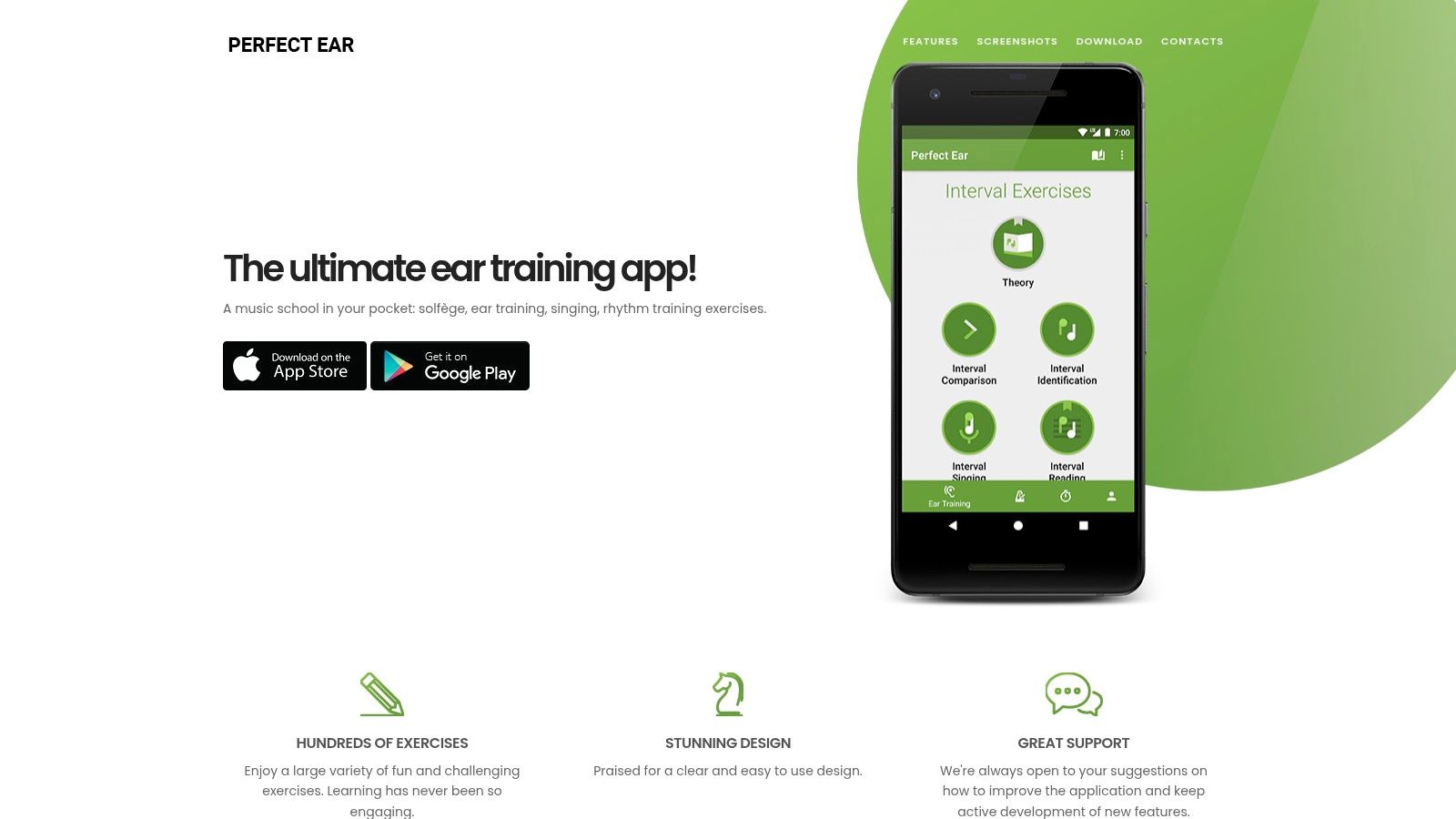
Perfect Ear is one of the strongest mobile-first apps on this list because it covers both ear training and useful theory in short sessions. Intervals, chords, scales, rhythm, melodic dictation, sight reading, and note singing all live in one app. That breadth makes it practical for real musicians, not just theory students.
It’s also good for people chasing better pitch memory or even exploring perfect pitch training, as long as expectations stay realistic. Ear training is trainable. It’s not some fixed gift you either have or don’t.
What it does better than most phone apps
Perfect Ear shines when you have small pockets of time. You can do a few interval reps on a commute, test chord recognition between rehearsals, or work on rhythm reading while away from your instrument. Because it runs offline after install, it’s also easy to keep using consistently.
If you want a broader framework for building listening skill, this guide to ear training for musicians who want to play by ear fits well alongside the app.
Don’t treat Perfect Ear like a quiz machine. Treat it like a call-and-response trainer. Hear, sing, check, repeat.
The free content is usable. Some packs and features sit behind in-app purchases, so it’s not a fully open system. But for mobile ear training, it’s still one of the most practical places to start.
8. EarMaster
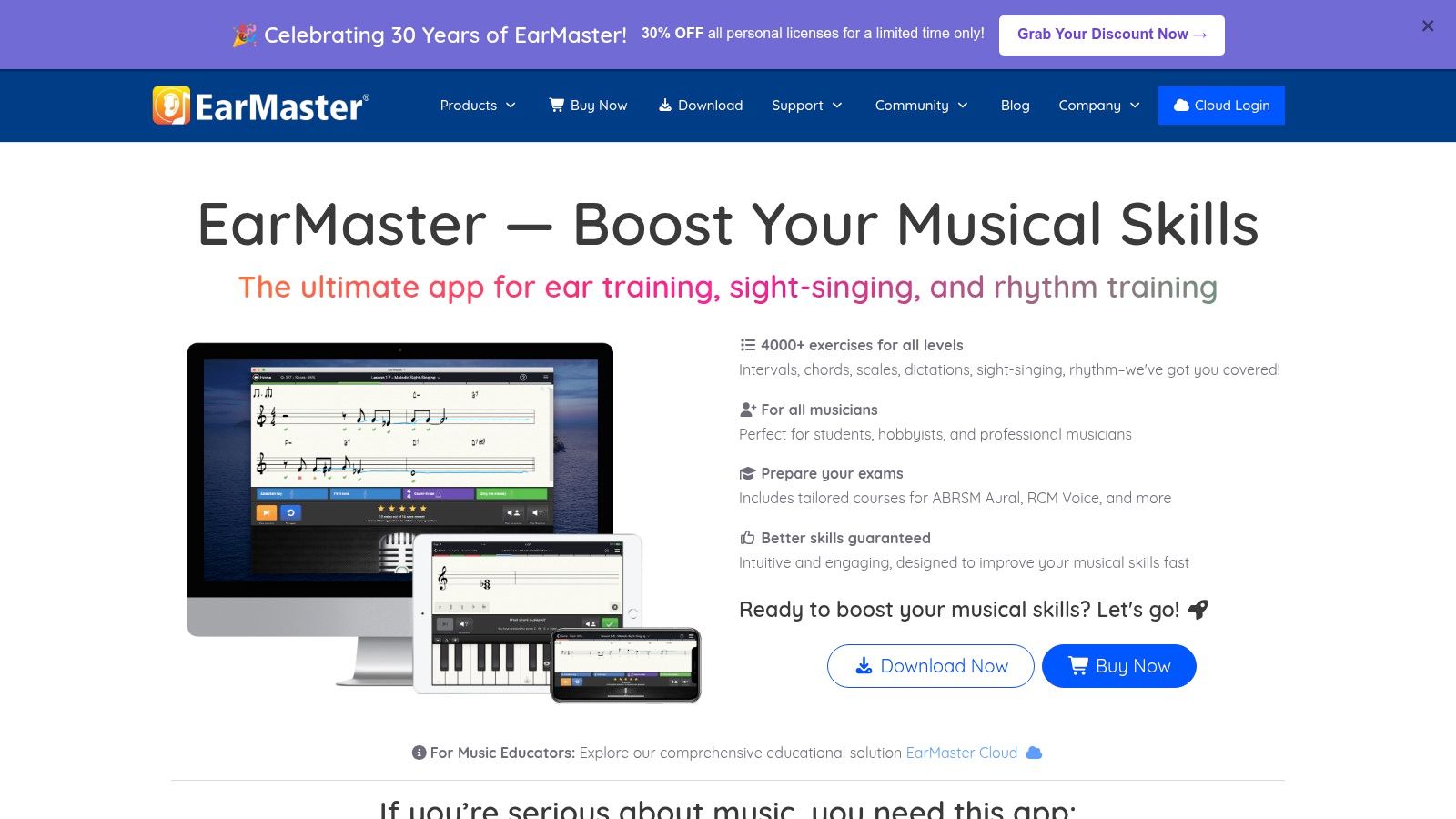
EarMaster has been around long enough to earn trust with teachers, students, and serious players. It covers intervals, chords, scales, rhythm, sight-singing, and dictation across mobile and desktop, and it goes deeper than many lightweight apps.
The free version gives you selected beginner content. The fuller experience sits behind paid access, so this isn’t the best answer if your only criterion is completely free.
Where it earns its reputation
EarMaster is especially strong for musicians who want rhythm and singing included, not just identification drills. That makes a big difference. Being able to recognize an interval is useful. Being able to sing it accurately and place it in time is much closer to real musicianship.
Use EarMaster if you want to practice skills like:
- Singing back intervals: Hear it, then reproduce it with your voice.
- Rhythmic accuracy: Clap or tap before you play.
- Dictation habits: Catch short melodic ideas by ear and verify them.
This is one of the better tools for people moving from beginner ear training into more formal aural skills. If you only want quick casual drills, it may feel heavier than necessary. If you want a fuller training environment, that heaviness is part of the value.
9. TonedEar
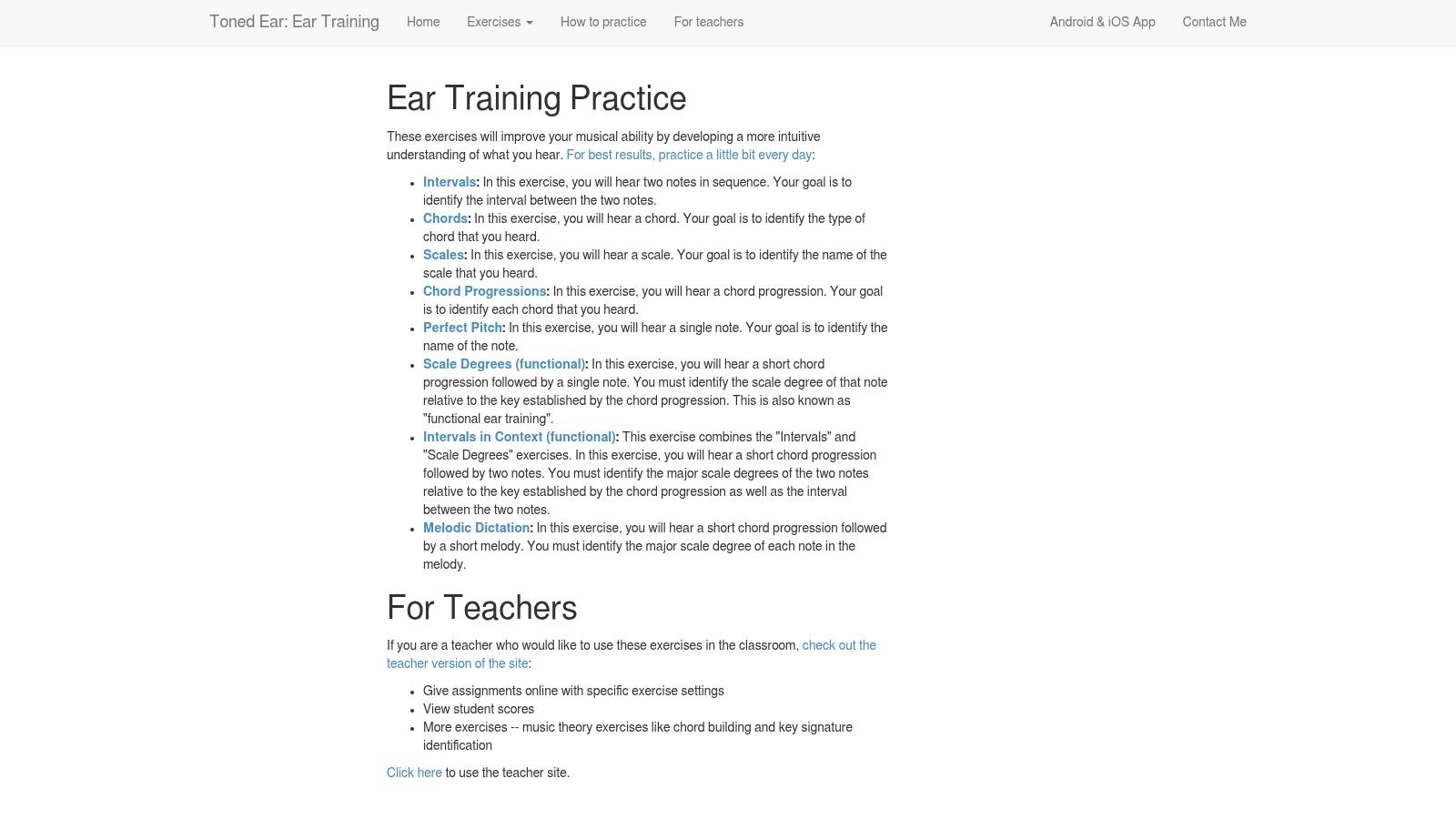
TonedEar is one of the simplest tools here, and that’s why it works. Open the site, choose intervals, chords, scales, or progressions, and start drilling. No account. No setup. No extra layers.
For busy musicians, that low friction is a real advantage. A lot of practice fails before it starts because the app asks too much before the first rep.
Why simplicity helps
TonedEar is excellent for quick daily ear reps. If you’re trying to recognize major versus minor chords, hear basic progressions faster, or sharpen interval recognition, it gets you there quickly.
What it doesn’t give you is a broader course. There’s little hand-holding, minimal tracking, and no larger curriculum wrapping the drills together.
Short drills count. Five focused minutes of active listening beats scrolling through features for twenty.
I like TonedEar most as a supplement. Use it after you’ve learned a concept elsewhere, then come here for clean repetition. For guitarists, singers, producers, and songwriters, that’s often enough. Hear the sound, name it, then find it in actual music the same day.
10. ChordIQ by Songtive
ChordIQ leans into game design more than some traditional theory tools. That helps if you get bored by standard drills but still want to train chord identification, interval recognition, scales, and sight reading on your phone.
Its biggest strength is repetition without feeling stale. You need repetition for ear training. There’s no shortcut around that. The challenge is finding a format that doesn’t make you quit after three days.
Best for repetition without boredom
ChordIQ is a solid fit for players who want arcade-style practice in short sessions. It keeps things moving, and that can make a difference when you’re building chord recognition or trying to hear common interval shapes faster.
The trade-off is familiar. Free download doesn’t mean fully free depth. Advanced content and cloud features sit behind optional paid access.
Use it best by narrowing the target:
- Chord days: Major, minor, diminished, augmented.
- Interval days: One family at a time, sung out loud.
- Reading days: Short sight-reading bursts, then immediate playback on your instrument.
If your goal is to play by ear, don’t let the game layer distract you from the actual point. You’re not trying to beat an app. You’re trying to hear music more clearly.
Top 10 Free Music Theory Apps, Feature Comparison
| Product | Core focus | UX & quality ★ | Value & pricing 💰 | Target audience 👥 | Unique selling point ✨🏆 |
|---|---|---|---|---|---|
| musictheory.net | Structured theory lessons & drillable exercises | ★★★★☆ | 💰 Free web; iOS apps paid | 👥 Students, teachers, self‑learners | ✨ No‑login browser access; classroom‑tested 🏆 |
| Teoria | Deep aural & notation library (dictation, part‑writing) | ★★★★ | 💰 Completely free; multi‑language | 👥 Intermediate → advanced, academic | ✨ Harmonic/melodic dictation, MIDI input 🏆 |
| Musicca | Progressive lessons + instant‑feedback drills | ★★★★ | 💰 Free core; runs in any browser | 👥 Beginners, classroom practice | ✨ Clean, beginner‑friendly UI |
| Hooktheory | Song‑driven writing + gamified recognition (Hookpad/Chord Crush) | ★★★★ | 💰 Freemium; paid for full features | 👥 Songwriters, creative learners | ✨ Real‑song integration & huge analyzed song DB 🏆 |
| ToneGym | Gamified adaptive ear‑training & daily workouts | ★★★★ | 💰 Free tier w/ limits; Pro subscription | 👥 Motivated daily practicers, competitive users | ✨ Adaptive games + leaderboards 🏆 |
| uTheory | Lessons + auto‑graded exercises with teacher tools | ★★★★ | 💰 Freemium; school licenses for full access | 👥 Schools, exam students, classrooms | ✨ Teacher dashboard & scaffolded pathways |
| Perfect Ear | Mobile ear training with customizable drills & offline mode | ★★★★ | 💰 Free app; IAPs for packs | 👥 Mobile learners, private students | ✨ Offline, sing/absolute pitch trainers |
| EarMaster | Full cross‑platform ear & sight‑singing suite | ★★★★☆ | 💰 Free limited; subscription/license | 👥 Beginners → advanced, schools | ✨ Very deep courses + classroom features 🏆 |
| TonedEar | Fast, lightweight web quizzes for quick drills | ★★★☆ | 💰 100% free web; optional paid apps | 👥 Quick‑practice users, casual drills | ✨ Instant launch, minimal friction |
| ChordIQ (Songtive) | Gamified chord/interval games with cloud sync | ★★★★ | 💰 Free download; subs for extra content & sync | 👥 Mobile gamers, learners on the go | ✨ Arcade gameplay + cloud progress sync |
Final Thoughts
You sit down with your instrument, hear a chord move in a song you like, and still cannot name what happened fast enough to play along. That is the test these apps need to pass. The key question is not which one explains theory best. It is which one helps you hear something, recognize it, and use it in music the same day.
The strongest free option is the one you will practice consistently and connect to actual playing. musictheory.net is still a strong pick for clean basics. Teoria and EarMaster do more if ear training is the priority. Hooktheory stands out when you want to connect sound, harmony, and real songs. Perfect Ear and TonedEar are practical choices for short, frequent drills on phone or browser. ToneGym and ChordIQ help learners who stay on track better with game-like repetition. uTheory and Musicca make sense if you want more structure and guided progression.
The trade-off is simple. Some apps improve quiz performance. Fewer build the kind of listening that helps you catch chord function, sing a line back, transcribe a progression, or find the right notes by instinct on your instrument.
That skill comes from active use.
Sing before you answer. Play the interval or chord right after you hear it. Move the same sound into a new key. Pull one pattern from the app and find it in a real song before the day ends. That is how theory turns into musicianship.
Free matters too, but in a practical way. Some tools are fully usable without paying. Others give enough to test the method, then hold deeper lessons or better drills behind a subscription. A smaller app you return to every day usually beats a bigger platform you stop opening after a week.
If your main goal is playing by ear, Trill: Ear Training Daily fits that lane with short listening practice around chords, intervals, notes, and scales, plus utility tools for practice.
Pick one app and stay with it for a while. Ten focused minutes a day, with honest listening and immediate playing, will do more for your ear than jumping between ten theory apps ever will.