10 Songs With Intervals to Train Your Musical Ear

You sit down at your instrument, hear the first two notes of a melody, and know you have heard that distance before. That is the goal of interval training. You stop hunting for notes and start recognizing them.
Intervals are not a talent some musicians get and others do not. They are a listening skill you can build the same way you build timing or finger strength: with short, focused reps. Familiar songs help because they give each interval a clear sound shape your ear can grab onto and remember.
This article uses songs with intervals as ear training workouts, not trivia. Each song gives you a specific sound to match, sing, and locate on your instrument. As you work through them, you will train the ear to hear an interval, attach it to a musical memory, and connect it to practical skills like finding melodies faster, hearing chord movement more clearly, and playing by ear with less guesswork.
If you want a clearer foundation first, this guide to musical intervals and how they sound lays out the basics.
Use each example with the same simple routine in Trill. Listen to the interval, sing it back, test yourself, then find that same distance on your instrument in a few different keys. That repeated workflow works like strength training for your ear. The song gives you the reference. The repetition turns it into a skill you can use.
Table of Contents
- 1. Star Wars Theme - Perfect Fifth and Perfect Fourth
- 2. The Simpsons Theme - Tritone
- 3. Somewhere Over the Rainbow - Octave
- 4. Jaws Theme - Minor Second
- 5. Here Comes the Bride - Major Second
- 6. Greensleeves - Minor Third
- 7. When the Saints Go Marching In - Major Third
- 8. My Bonnie Lies Over the Ocean - Major Sixth
- 9. Man in the Mirror by Michael Jackson - Major Seventh
- 10. Maria from West Side Story - Tritone
- Intervals in 10 Songs
- Turn These Songs Into Your Daily Ear Training System
1. Star Wars Theme - Perfect Fifth and Perfect Fourth
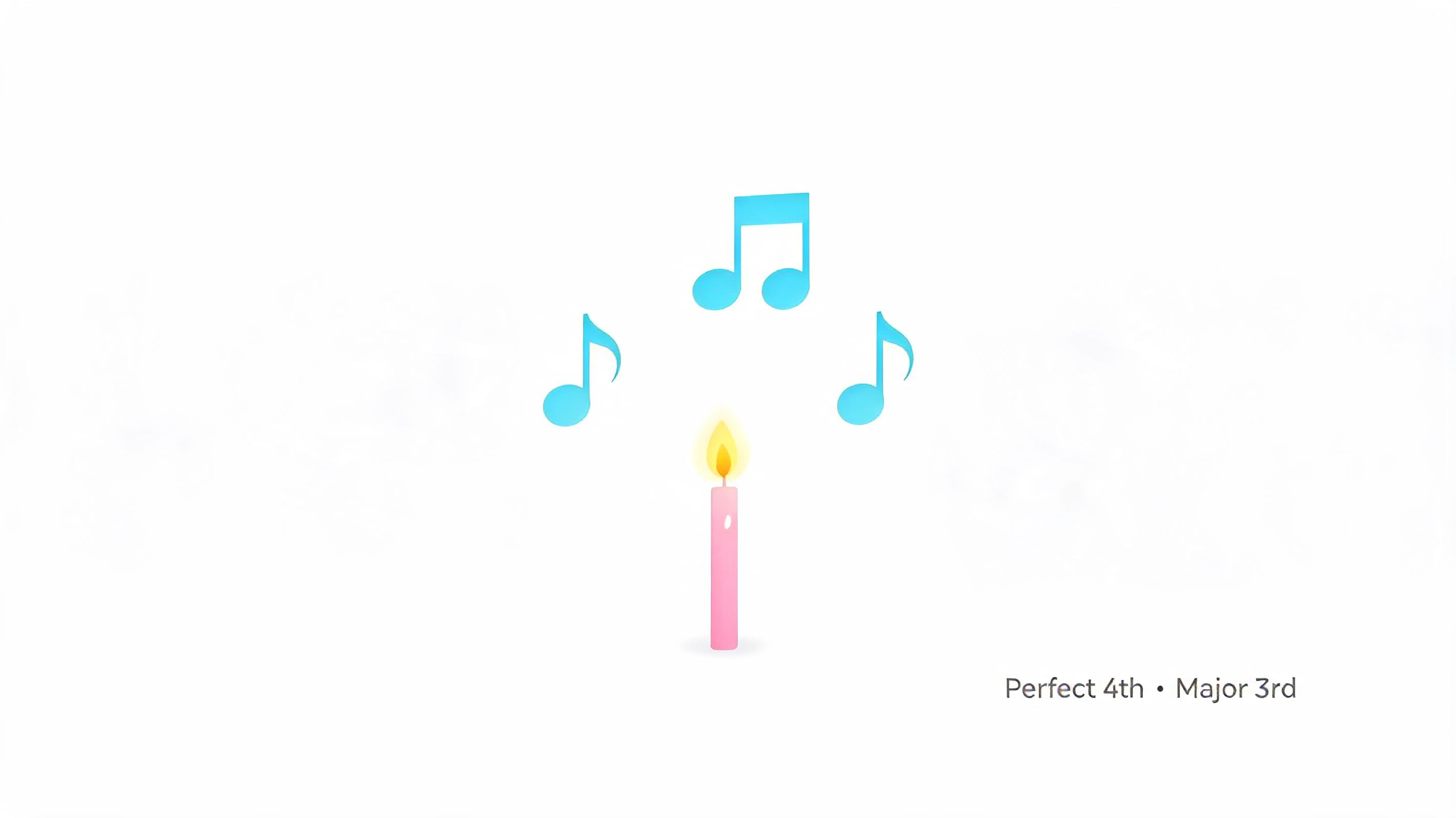
The opening of the Star Wars theme is one of the clearest interval lessons in popular culture. You hear a bold leap up, then a settling motion right after it. That combination makes it useful because you’re not only hearing one interval, you’re hearing how one leap creates lift and the next one brings shape back to the line.
If you’re trying to play by ear, this matters a lot. The perfect fifth is everywhere in riffs, bass movement, chord roots, and melody writing. The perfect fourth is just as common, especially when melodies feel grounded or hymn-like.
How to train it
Start by humming only the first leap. Don’t rush into the whole theme. Hold the first note, then jump cleanly to the second.
Then sing the next motion and notice the emotional difference. The first leap sounds open and strong. The next one feels more settled.
- Hum the first two notes repeatedly: This helps your ear stop guessing and start recognizing the feel of the leap.
- Check it against your instrument: Play one note, sing the fifth above it, then verify.
- Use a guided interval drill: Trill’s intervals in music guide can help you connect the name of the interval to the sound you just sang.
Practical rule: If a melody sounds big, stable, and heroic, test whether you’re hearing a fifth.
A real-world way to use this is on guitar or piano when you’re trying to find a song’s bass motion. If the root jumps in a way that sounds strong and familiar, there’s a good chance a fifth is involved. Training that sound makes chord progressions easier to hear before you even touch the instrument.
2. The Simpsons Theme - Tritone
You hear the first notes of The Simpsons, and your ear already knows something is off in an interesting way. That reaction is the lesson. The opening leap is a tritone, and few intervals announce themselves so clearly.
A tritone sits right in the middle of the octave, which is why it can feel unsettled. It does not point to the stable pull of a fifth or the familiar warmth of a third. It hangs there, almost like a question mark in sound. For ear training, that makes it useful because your job is not to make it pretty. Your job is to recognize that sharp, suspended color on command.
What to listen for
Sing “The Simp…” slowly and stop after the leap. Hold both notes in your mind for a second. If your ear feels a little off balance, you are probably hearing the right thing.
Many players get confused here because the tritone can seem random at first. It is not random. It has a very specific flavor. It feels tense, symmetrical, and unresolved, like a doorway that has opened but not shown you the room yet.
If a melody sounds edgy and hard to place as happy or sad, test whether the leap is a tritone.
Ear workout
Use this as a short daily drill, not a one-time example.
- Sing the opening two notes several times: Keep the rhythm simple so your ear focuses on the distance, not the tune.
- Match it on your instrument: Find one note, then locate the note six half steps away. Play both and listen for that same uneasy color.
- Label it inside Trill’s workflow: In Trill’s interval ear training practice guide, sing first, check second, and repeat until you can identify the sound without counting.
- Apply it to real music: Listen for this interval in dominant chords, film cues, jazz lines, and riffs that sound unstable on purpose.
That last step matters. The point of using The Simpsons is not just to memorize a trivia answer. It is to train your ear to catch tension quickly when you are figuring out melodies, hearing chord function, or trying to predict where a line wants to resolve. Once the tritone has a clear sound in your ear, harmony starts feeling less blurry.
3. Somewhere Over the Rainbow - Octave
You match a melody on your instrument, but something still sounds off. The notes are right, yet the line sits too high or too low. That problem often comes down to one interval. The octave.
The opening of “Somewhere Over the Rainbow” is a strong ear training exercise because it teaches your ear to hear sameness across distance. The two notes share the same pitch class, but they live in different registers. That is why the leap feels wide and stable at the same time.
For beginners, this can be confusing. A fifth sounds like two clearly different notes. A minor second sounds crowded. An octave works more like hearing the same voice from two floors of a building. The location changes. The identity does not.
How the octave helps you play by ear
This interval shows up in real playing constantly. Singers jump to octaves for emphasis. Guitarists and pianists double melodies in octaves to make them stand out. Bass lines often reinforce the same note class an octave lower.
If your ear can recognize that sound quickly, you get better at placing melodies in the correct register, stacking parts cleanly, and hearing when two lines are reinforcing each other instead of creating new harmony.
Start with the first two syllables, “Some-where.” Sing them slowly in a comfortable key. Then ask a better question than “How far is that?” Ask, “Does the second note feel like a new note, or the same note shifted higher?”
That question trains the right habit. Counting can come later.
Use the interval ear training practice guide with Trill’s sing, check, repeat workflow. Sing the leap first, test it against the app, then repeat until your ear recognizes the octave without guessing.
A simple 10-minute ear workout
- Minutes 1 to 3: Sing “Some-where” several times on different starting notes. Keep the rhythm simple.
- Minutes 4 to 6: Play one note on your instrument, then find and sing the octave above or below it.
- Minutes 7 to 8: Alternate between unison and octave so your ear learns the difference between same pitch and same note name.
- Minutes 9 to 10: Listen to familiar songs and notice where a melody gets doubled higher or lower without changing its identity.
This drill pays off fast. You hear register more clearly, your pitch matching improves, and arranging parts gets easier because you can tell when a line is being repeated rather than changed.
4. Jaws Theme - Minor Second
If the octave feels open, the minor second feels cramped. That’s why the Jaws theme works so well as a reference. Two notes rub right against each other, and your ear immediately hears danger, suspense, or pressure.
This is the smallest common distance in Western music. It matters because half-step movement creates pull. You hear it in melodies, in chord tension, and in the moments right before a line resolves.
What to feel, not just what to name
Play two adjacent keys on a piano. That’s the sound. If you’re on guitar, play neighboring frets on the same string. Then listen for the friction.
A lot of beginners try to label intervals by counting too early. For this one, don’t count first. Hear the crunch first.
- Alternate the two notes slowly: Let your ear notice the tension.
- Sing scale fragments: Pay special attention to close steps that want to resolve.
- Use a focused ear drill: Trill’s interval ear training article fits well here because half-step hearing becomes much easier when you practice it daily instead of occasionally.
A minor second doesn’t sound small. It sounds urgent.
This skill shows up in real music fast. When you’re trying to figure out a melody by ear, half-step motion often tells you where the line is leaning. If you can hear that pull, you can predict what comes next more often, and that makes transcription feel less random.
5. Here Comes the Bride - Major Second
You hear a singer start a phrase, and the next note steps up in a calm, natural way. That small move is often a major second. It is one of the basic motions your ear needs if you want scales, melodies, and chord tones to stop feeling random.
“Here Comes the Bride” works well because the opening gives you a clear whole-step sound. If the Jaws interval felt tight and anxious, this one feels like a normal walking pace. One note leads to the next without friction.
Train the sound like a daily ear workout
Start with just the first two notes. Sing them slowly, then play them on your instrument. Your job is not only to name “major second.” Your job is to recognize the feeling of a full step so quickly that your fingers and voice can follow it.
A good drill is to pair this song with a real playing task. Sing the opening of “Here Comes the Bride,” then find the same interval from three or four different starting notes. That helps your ear stop depending on one fixed pitch and start hearing the interval shape itself.
In Trill, this works well as a short daily cycle. Hear the interval, sing it back, then test yourself from a new starting note. That workflow turns a familiar tune into a repeatable exercise instead of a one-time memory trick.
Practice it in context
- Switch between major second and minor second: Go from “Here Comes the Bride” to the Jaws sound so your ear learns the difference between whole step and half step.
- Use solfege or scale degrees: Sing do-re, re-mi, or sol-la to hear the same distance in more than one place.
- Apply it on your instrument: On piano, skip to the next white key when appropriate. On guitar, move two frets on one string. Then listen before you label.
- Catch it in real music: This interval shows up in warmups, hooks, and simple melodies all the time.
The major second may seem plain at first. In practice, it is one of the intervals that helps you play by ear with better aim. Once you can hear this step clearly, melodic lines start to feel less like isolated notes and more like connected motion.
6. Greensleeves - Minor Third
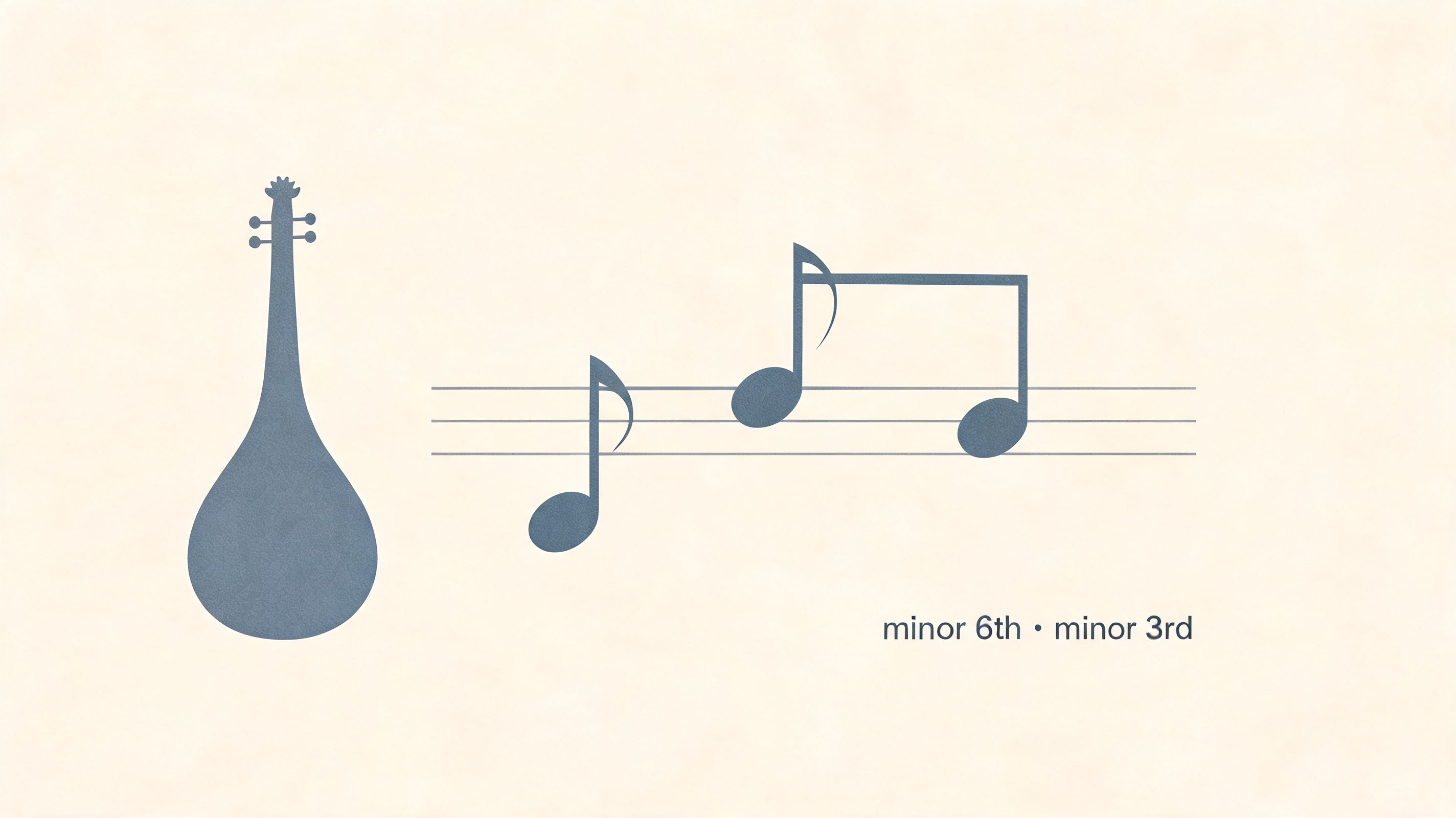
The minor third is one of the first intervals that starts to shape emotional color in a way beginners can hear clearly. “Greensleeves” gives you that darker, more reflective sound right away.
This interval matters because it’s closely connected to minor harmony. If you’re trying to hear the difference between major and minor chords, the third is often the deciding sound. Ear training becomes much more musical once you start hearing that change.
Hear the mood shift
Sing a major third first if you can. Then lower the top note by one half step and sing the minor third. That tiny change is one of the biggest listening lessons in all of music.
“Greensleeves” works because the sound is memorable and clear. You don’t need to know the whole tune. Just isolate the opening shape and repeat it.
Listening cue: The minor third often sounds thoughtful, bluesy, or sad, but don’t lock it to one emotion. Learn the sound itself.
Use it for chord recognition
Try this on your instrument. Play a root and minor third together, or one after the other. Then play a root and major third. Your job is to hear which version fits a melody better.
Songs with intervals offer more than just memory tricks. The minor third helps you hear whether a chord is likely minor, whether a melody is leaning darker, and whether your improvisation is matching the harmony underneath. That’s practical ear training, not abstract theory.
7. When the Saints Go Marching In - Major Third
The major third gives major harmony its bright center. “When the Saints Go Marching In” is a strong reference because the melody projects that sound with almost no ambiguity.
If the minor third feels inward, the major third feels open and affirmative. Your ear doesn’t need technical language first. It needs repeated exposure to the difference.
Why this interval unlocks harmony
When musicians say a chord sounds happy or bright, they’re often reacting to the major third. That’s why hearing this interval matters for playing by ear. It helps you identify chord quality sooner, especially in simple pop, gospel, and folk progressions.
A practical way to train it is to arpeggiate a major chord, then stop on the third and sing it back. Don’t play the whole chord every time. Isolate the color note.
- Use a familiar sound: Doorbell-style “ding-dong” motion can help if descending examples are easier for you.
- Pair it with the minor third: Switching between the two trains your ear to hear quality, not just distance.
- Test it in songs you know: Many choruses lean heavily on the major third because it outlines the home sound of the key.
One modern ear training approach that helps many learners is personalized song choice. EarMaster’s free interval chart generator lets users choose reference songs for intervals across styles instead of relying on a single fixed list (EarMaster interval song chart generator).
That kind of flexibility matters because a major third lands faster when the reference song is already living in your memory.
8. My Bonnie Lies Over the Ocean - Major Sixth
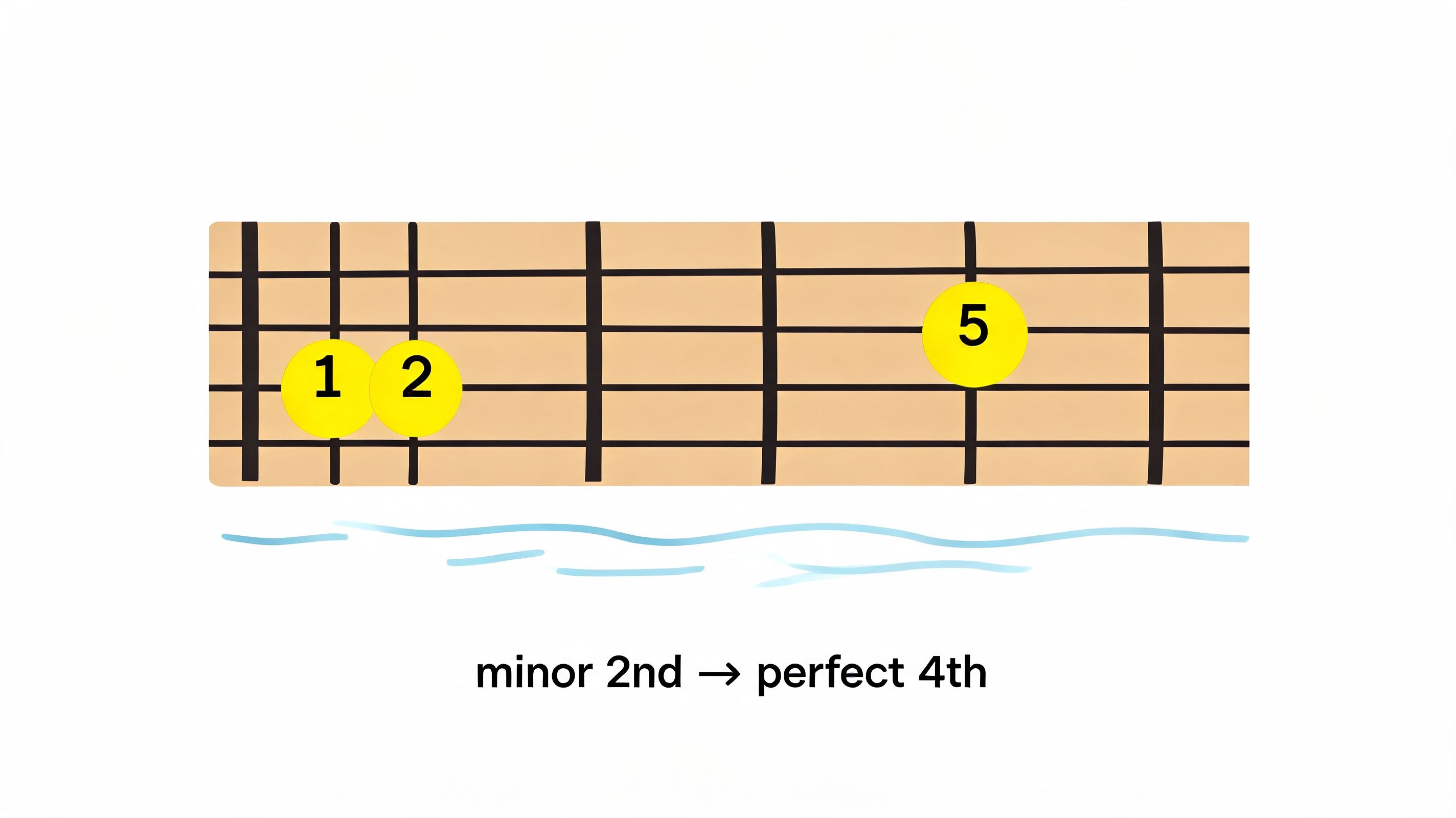
The major sixth is wide, lyrical, and a little harder to sing in tune at first. That’s why “My Bonnie Lies Over the Ocean” is such a useful workout. The leap is big enough that you can’t fake it. Your ear has to aim.
This interval often feels warm and hopeful. It isn’t as stable as an octave, and it doesn’t hit with the firmness of a fifth. It has more reach to it.
How to practice a wider leap
Start by singing the first note and hearing the target before you sing it. Don’t slide if you can avoid it. Clean jumps teach the ear more than glides.
If it’s too hard vocally, sing it in a lower key or play it first, then echo it. The skill isn’t about showing range. It’s about hearing distance accurately.
A better way to lock it in
Musical U’s modern interval song list favors references that place the interval right at the start of the melody, which makes recognition more immediate for many learners (Musical U interval reference songs). That’s exactly why “My Bonnie” works so well here.
Try this sequence:
- Sing the leap on the words “My Bon…”
- Play the two notes separately, then together if your instrument allows it
- Compare it with a fifth and an octave so the distance sits in the right place in your ear
Once you can hear a major sixth clearly, melodies stop feeling like random jumps. They start feeling measured, singable, and predictable.
9. Man in the Mirror by Michael Jackson - Major Seventh
The major seventh is one of those intervals that sounds beautiful and unstable at the same time. That’s what makes it memorable. It sits right below the octave, so your ear often expects one more step upward.
For many players, interval training begins to feel more musical and less basic at this stage. You hear sophistication in the sound right away.
How to hear it without overthinking
Sing an octave first. Then lower the top note by one half step. That’s the color of the major seventh.
When you use “Man in the Mirror” as your reference, listen for the soaring quality. It reaches high, but it doesn’t close the circle the way an octave does.
The major seventh often sounds like a note that wants to finish the thought, but pauses just before the landing.
Real-world use
This interval helps when you’re hearing jazz, soul, R&B, and richer pop harmony. It also helps you identify major seventh chords by ear, because that top relationship gives the chord much of its signature color.
A good short drill is to alternate among three sounds: octave, major seventh, octave. That comparison teaches your ear where the tension lives. If you can hear that one-note difference reliably, your chord recognition gets sharper fast.
10. Maria from West Side Story - Tritone
Most musicians first learn the tritone as something awkward or harsh. “Maria” is a good correction. It shows that the same interval can sound expressive, lyrical, and full of longing.
That matters for ear training because you don’t want to tie an interval to only one mood. If you do, you’ll miss it when it appears in a different musical setting.
Same interval, different feeling
Sing “Ma-ri-a” slowly and listen to the stretch in the line. Then compare that feeling with The Simpsons theme. The interval is the same basic distance, but the musical effect is completely different.
This is an important lesson for anyone who wants to play by ear in real music. Songs don’t present intervals in isolation. They place them inside tempo, harmony, tone, rhythm, and emotion.
Turn recognition into flexibility
Use this song to deepen your tritone hearing:
- Compare two references: One quirky, one lyrical.
- Sing both examples back to back: This trains the interval itself, not just the vibe.
- Test yourself away from the song: Play the interval on your instrument and identify it before thinking of either reference.
Once you can recognize the tritone in more than one emotional setting, your ear gets more reliable. That’s a major step toward hearing what music is doing instead of reacting only to whether it sounds pleasant.
Intervals in 10 Songs
| Item (Interval) | 🔄 Complexity | ⚡ Resources | 📊 Expected outcomes | 💡 Ideal use cases | ⭐ Key advantages |
|---|---|---|---|---|---|
| Star Wars Theme (P5 → P4) | Low, simple rhythm, clear leaps | Low, voice or playback suffice | High, reliable P5/P4 identification, harmony foundation | Daily interval drills, beginner ear training | Very memorable hook; clear contrast for training |
| The Simpsons Theme (Tritone) | Medium, dissonant but distinct | Low, listening or humming works | High, recognize tension/dissonance in music | Tension detection, jazz/metal listening practice | Unmistakable, characterful interval cue |
| Somewhere Over the Rainbow (Octave) | Low, large, pure leap | Low, sing or use tuner | High, pitch accuracy and range awareness | Vocal range training, pitch matching | Clear “same note higher” relation; universal example |
| Jaws Theme (Minor Second) | Low, minimal interval, highly tense | Low, two adjacent notes or piano | High, acute semitone discrimination | Chromatic ear training, suspense/dissonance spotting | Most dissonant; immediately recognizable |
| Here Comes the Bride (Major Second) | Low, stepwise, slow and clear | Low, voice or simple instrument | High, whole-step recognition, scale building | Early theory, sight-singing, melody learning | Culturally embedded, easy recall for M2 |
| Greensleeves (Minor Third) | Low–Med, distinct minor quality | Low, song reference or vocal practice | High, distinguish minor vs major third, chord quality | Chord recognition, emotive melody training | Strong “sad” tonal cue; clear minor example |
| When the Saints Go Marching In (Major Third) | Low, bright, straightforward leap | Low, voice or playback | High, identify M3; locate major chords | Harmony detection in pop/jazz/folk | Clear outline of major chord; joyful sound |
| My Bonnie Lies Over the Ocean (Major Sixth) | Medium, wide leap, trickier to intonate | Medium, tuner/practice helpful | Medium–High, recognize wide melodic leaps | Pop/folk melody learning, improvisation | Lyrical, pleasing interval; common in melodies |
| Man in the Mirror (Major Seventh) | Medium–High, near-octave, expressive | Medium, octave comparison/tuner advisable | High, recognize M7; modern harmony awareness | Jazz/R&B harmony, advanced ear training | Enables lush, sophisticated chord recognition |
| Maria, West Side Story (Tritone) | Medium, lyrical context softens tension | Low, listening or singing | High, contextual tritone recognition | Context-sensitive ear training, composition | Shows expressive versatility of the tritone |
Turn These Songs Into Your Daily Ear Training System
Knowing songs with intervals is useful. Training with them every day is what changes your playing.
Keep the process simple. Pick one song reference and one interval. Listen to the opening, sing it a few times, then find it on your instrument. After that, test yourself without the song. Hear the interval in your head first, then sing or play it. That final step is where real ear training starts.
A lot of musicians get stuck because they collect references but never turn them into a routine. The routine is what builds the skill. Ten minutes a day is enough if you stay focused. One minute listening. Two minutes singing. Three minutes finding the interval on your instrument. A few minutes testing yourself in melodies, scales, or chord tones.
This approach works because it connects memory, hearing, voice, and hands. You’re not learning intervals as vocabulary words. You’re learning how they feel in real music. That’s what helps you improvise, recognize chord quality, sing more accurately, and work out songs by ear without depending on tabs or sheet music.
It also helps to rotate your references. If one song stops being useful, switch it. The strongest ear training systems let you connect intervals to sounds you already know well. That’s one reason personalized charts and app-based practice can be helpful. They give you structure without turning listening into a dry theory exercise.
If you want to build beyond single intervals, use them inside actual musical situations. Hear a major or minor third inside a chord. Hear a fifth in a bass jump. Hear a minor second as tension in a melody. Hear an octave when a singer repeats the same note class higher up. That is how interval practice turns into real playing skill.
Trill: Ear Training Daily fits naturally into this kind of routine because it’s designed around short, repeatable practice. You can use songs as your memory anchors, then use app exercises, progress tracking, and Focus Lock to make sure the training happens. That’s the part many musicians miss. Progress usually doesn’t come from one long session. It comes from many short ones done consistently.
Train your ear the same way you’d train rhythm, technique, or strength. Keep it daily. Keep it musical. Stop guessing at notes and start hearing what they’re doing.
If you want a simple daily system for ear training, chord recognition, and learning to play by ear, Trill: Ear Training Daily is built for short practice sessions that help you hear music more clearly over time.