Master Rhythm & Tune with Beats of Notes
You’re probably here because you’ve heard one of two things and felt stuck on both.
First, that annoying wobble when you tune a guitar, sing with a piano, or stack synths that should match but somehow feel shaky. Second, the word “beat” in rhythm lessons, where people talk about quarter notes, eighth notes, and counting, but it still doesn’t quite turn into something you can hear naturally.
These are usually taught as separate topics. They shouldn’t be. Both kinds of beats of notes train the same larger skill: a more reliable musical ear. One helps you hear pitch alignment. The other helps you hear time alignment. When you train both, you stop guessing and start playing by ear with more confidence.
If you want better ear training, cleaner tuning, stronger groove, faster chord recognition, and a more practical path toward perfect pitch style listening skills, this is one of the best places to start.
Table of Contents
- That “Wobble” in the Music? It’s Your Secret Weapon
- Hearing the Physics What Are Acoustic Beats?
- Turning Wobbles Into Perfect Pitch Tuning by Ear
- The Pulse of Music Mastering Rhythmic Beats
- Daily Drills to Internalize Rhythm and Subdivisions
- The Ultimate Payoff How Beat Mastery Unlocks Musical Freedom
That “Wobble” in the Music? It’s Your Secret Weapon
A student once told me, “I know I’m close to the note, but it still sounds like the string is fighting me.” That’s exactly what many musicians hear when they’re almost in tune but not quite there. The sound swells and relaxes. It feels unstable, like two versions of the same note are rubbing against each other.
That wobble isn’t a defect in your ear. It’s useful information.
When two pitches are close but not matched, your ear catches the difference as a pulsing motion. Singers notice it when they try to blend with a choir. Guitarists hear it while tuning two strings together. Producers hear it when layered sounds don’t sit cleanly. Once you learn to notice that pulse, you can use it instead of fighting it.
Practical rule: If the wobble slows down, you’re getting closer. If it disappears, you’ve lined the pitches up.
The same goes for rhythm. A note only feels solid when it lands cleanly inside the pulse of the music. So there are really two ways musicians deal with beats of notes every day. One is the wobble of pitch. The other is the pulse of time.
That’s why this topic matters so much for anyone who wants to play by ear. A strong ear doesn’t just hear the right note name. It hears whether the note is centered, whether the chord lands in the groove, and whether the whole sound feels settled or tense.
A lot of people think this kind of listening belongs to “naturally gifted” musicians. It doesn’t. It belongs to musicians who’ve spent consistent time listening on purpose. Ear training is trainable. Your ear gets better when you give it clear jobs and repeat them daily.
Hearing the Physics What Are Acoustic Beats?
The wobble has a simple cause. Two close pitches interact with each other in the air.
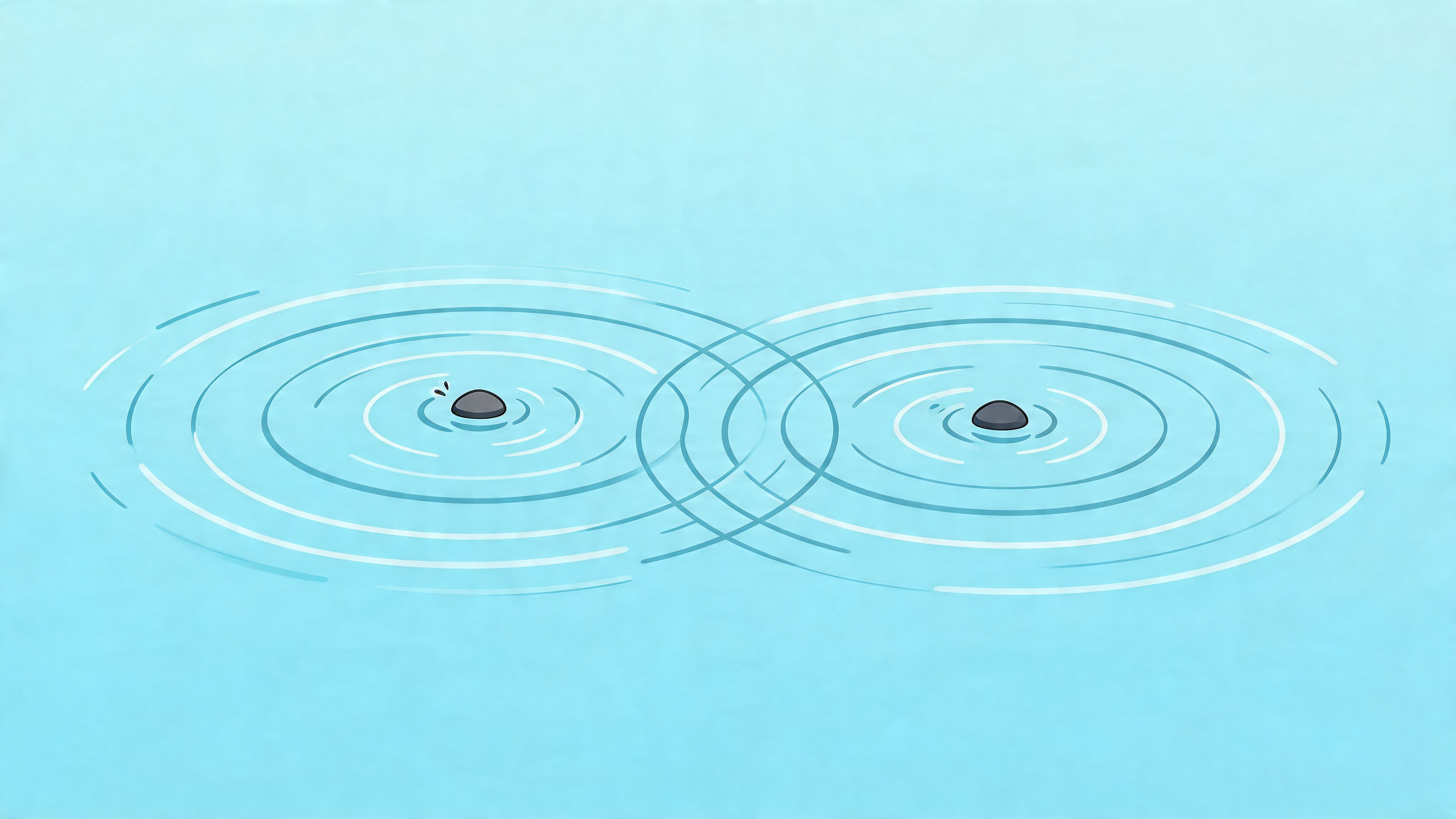
Think about two stones dropped into a pond. Each one makes ripples. Where those ripples meet, the water sometimes rises together and sometimes flattens out. Sound behaves in a similar way. Two nearby pitches create waves that line up, then slip apart, then line up again. Your ear hears that pattern as a repeated swell in loudness.
That’s an acoustic beat.
Why your ear hears a pulse
The cleanest way to say it is this: beat notes occur when two close-frequency sine waves interfere, producing an audible amplitude modulation at the difference frequency |f1−f2|. Humans hear these beats most clearly between 0.5 Hz and 20 Hz, with 1 to 5 Hz being especially useful for ear training. Above 20 Hz, the beats tend to fuse into a rougher sound rather than a clear pulse, as explained in this overview of acoustic beat perception.
You don’t need the math to use the skill, but the idea matters. If one pitch is slightly off from another, the speed of the wobble tells you how far apart they are. Slow pulsing means close. Faster pulsing means farther apart.
That’s why experienced musicians can tune by ear with surprising accuracy. They’re not using magic. They’re listening for the pulse to slow and settle.
If you want a practical companion to this idea, this guide on how instrument tuning relates to frequencies helps connect the sound you hear to the pitch relationships you’re adjusting.
What beat speed tells you
Here’s the useful part for everyday playing:
- Slow beats mean the notes are nearly matched.
- Medium beats usually mean you’re close, but still off enough to hear movement.
- Very fast beats can feel buzzy or rough, which usually means the pitches need a bigger adjustment.
Your ear can learn this quickly if you practice with intention. Start with a held note from a piano, tuner, app, or synth. Sing or play along. Don’t ask, “Is this the right note?” Ask, “Is there still motion in the sound?”
The beat is feedback. It tells you what your eyes can’t and what note names alone don’t solve.
A short demonstration makes this easier to hear in action:

This is why acoustic beats matter so much for ear training. They sharpen the part of your listening that notices tiny pitch mismatches. That helps with tuning, vocal blend, interval accuracy, and the kind of listening people often associate with perfect pitch, even though the underlying skill is really careful pitch perception.
Turning Wobbles Into Perfect Pitch Tuning by Ear
Most musicians first meet acoustic beats while tuning. They hear the wobble, turn the peg, overshoot, turn it back, and hope for the best. A better approach is to make the wobble your target.
A simple guitar tuning routine
Try this with one guitar string and a reference tone.
-
Play the reference note first. Let it ring long enough that your ear has something stable to compare against.
-
Play your string with it. Listen for the “wah-wah-wah” effect. Don’t rush to judge sharp or flat by theory alone. Hear the pulse first.
-
Turn the peg a little. Then listen again. If the wobble gets slower, you moved the pitch in a helpful direction. If it gets faster, turn back and go the other way.
-
Repeat in tiny steps. Large turns create confusion. Small turns let your ear track whether the beat rate is shrinking.
-
Stop when the motion disappears. The sound suddenly feels calmer, more unified, and less blurry.
That last moment matters. Two notes in tune don’t feel like two separate objects wrestling for space. They feel locked together.
Here’s a quick comparison you can use while practicing:
| What you hear | What it usually means | What to do |
|---|---|---|
| Strong wobble | Notes are noticeably apart | Make a bigger correction |
| Slower wobble | You’re approaching the target | Keep adjusting in the same direction carefully |
| No wobble | Pitches are closely aligned | Stop turning and confirm |
For hands-on practice, a good musician’s tuner tool can give you a reference note while you still do the important part by ear.
Don’t treat the tuner as the musician. Let it supply the note. You do the listening.
How this helps interval recognition
This tuning skill spills directly into playing by ear.
When you learn to hear whether two notes are settled or unsettled, you start recognizing intervals more cleanly. A harmony that’s slightly off doesn’t just sound “wrong.” It has texture. It moves. It beats. Your ear begins to notice that a chord tone landing cleanly feels different from one that’s rubbing.
That’s one reason tuning practice helps with broader listening. You’re training your ear to hear fine detail inside a note relationship, not just the label attached to it.
A few ways to practice this beyond tuning:
- Sing with a drone. Hold one pitch in the background and sing scale notes against it. Listen for which notes feel smooth and which ones create more motion.
- Match a keyboard note. Sustain a piano or synth note and slide your voice up or down until the wobble settles.
- Tune double stops slowly. If you play violin, guitar, bass, or mandolin, let paired notes ring and listen for movement before judging with your eyes.
This is one of the most practical paths toward better pitch perception. It won’t turn listening into a party trick. It builds something better. A dependable ear that can tune, blend, and hear music with greater understanding in real time.
The Pulse of Music Mastering Rhythmic Beats
You are in a rehearsal. The guitarist hits the right chord, the singer enters on the right note, and it still sounds off. The problem is not pitch. Everyone is landing in different places in time.
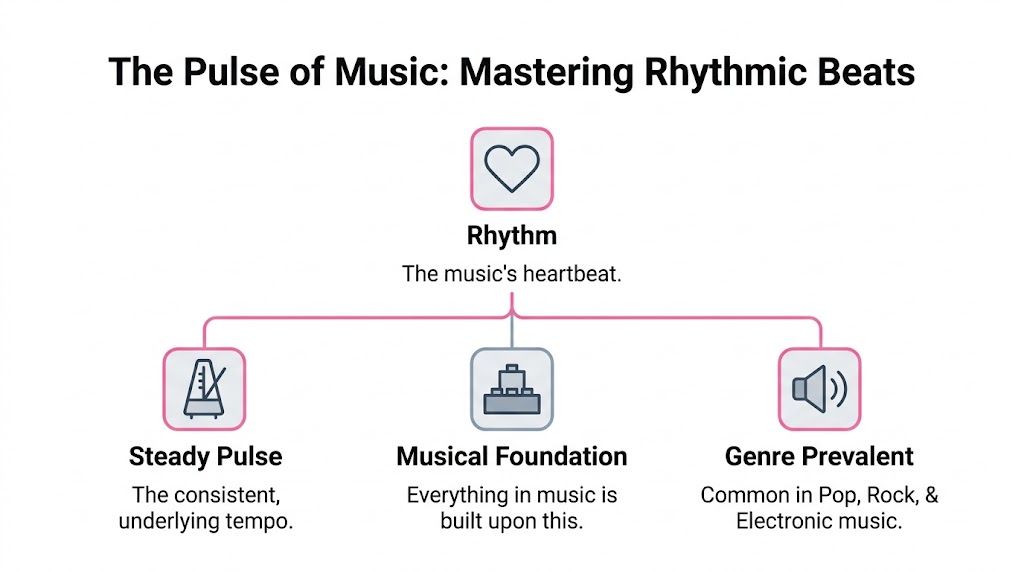
That is the other meaning of beats of notes. It is the pulse you clap to, walk to, dance to, and rely on when you want a band to feel tight.
This idea connects directly to the acoustic beats from tuning. There, you listened for a wobble caused by two pitches not quite lining up. Here, you listen for a pulse created by notes lining up, or failing to line up, in time. One trains your ear to hear closeness in pitch. The other trains your ear to hear placement in time. Great musicians develop both.
The note value system most musicians use
Rhythm becomes easier once you stop treating note symbols like random shapes. They work like a family of fractions. Each value has a clear relationship to the next.
Western notation commonly organizes note lengths in a 2:1 pattern. Two eighth notes equal one quarter note. Two quarter notes equal one half note. This long-used relationship sits behind the beat-value systems many teachers still use, as described in this history of rhythm syllable and beat value systems.
In plain language, the ladder looks like this:
- A whole note lasts as long as two half notes.
- A half note lasts as long as two quarter notes.
- A quarter note lasts as long as two eighth notes.
- An eighth note lasts as long as two sixteenth notes.
That repeating pattern matters because your ear can learn it physically. Once you can feel one steady beat, you can also feel the smaller ripples inside it, much like watching one big pond ripple split into finer waves.
How time signatures shape the beat
A time signature tells you how beats are grouped. In 4/4 time, the most common meter in Western music, there are four beats per measure and the quarter note gets one beat, as explained in this reference on time signatures and beat relationships.
That is why counting “1 2 3 4” feels natural in so much pop, rock, and beginner ear training.
| Note value in 4/4 | How it feels in counting |
|---|---|
| Quarter note | One full beat |
| Two eighth notes | Split one beat into two equal parts |
| Four sixteenth notes | Split one beat into four equal parts |
| Whole note | Fill all four beats |
Here is where many learners get tripped up. They try to memorize the symbol before they can feel the pulse. Your body learns rhythm faster in the opposite order. First, feel the steady step. Then hear how that step can split into halves, quarters, or triplets.
That is why practicing with a click can help if you use it musically. A metronome is not just a timing judge. It is a reference pulse that helps your ear and body agree on where the beat lives. If you want to build that skill with intention, this guide on why practicing with a metronome improves your time feel lays out the logic well.
Meter can also group beats in larger patterns. In 6/8, musicians often feel two big pulses, each divided into three smaller parts. So instead of hearing six equally heavy beats, you usually feel “ONE two three FOUR five six.” That sway is why 6/8 often feels more like a rolling wave than a straight march.
For playing by ear, this changes everything. A chord on beat one feels grounded. The same chord arriving just before beat one feels like a push. The same chord arriving after the beat can feel late or laid-back, depending on the style.
So rhythmic beat is not only about counting correctly. It is about hearing where musical events sit against the pulse. Once your ear notices that placement, groove starts to make sense in the same practical way tuning starts to make sense when you hear pitch wobble settle.
Daily Drills to Internalize Rhythm and Subdivisions
A lot of musicians can count rhythm on paper but still lose it in real music. That usually happens because they haven’t trained their ear and body to feel subdivisions consistently.
Many musicians struggle with rhythmic transcription because subdivision perception is weak. Aural mastery of subdivisions often gets neglected in favor of visual counting, while percussion teaching shows that kinesthetic practice like clapping before notation leads to meaningful accuracy gains, as described in this discussion of rhythm learning and kinesthetic practice.
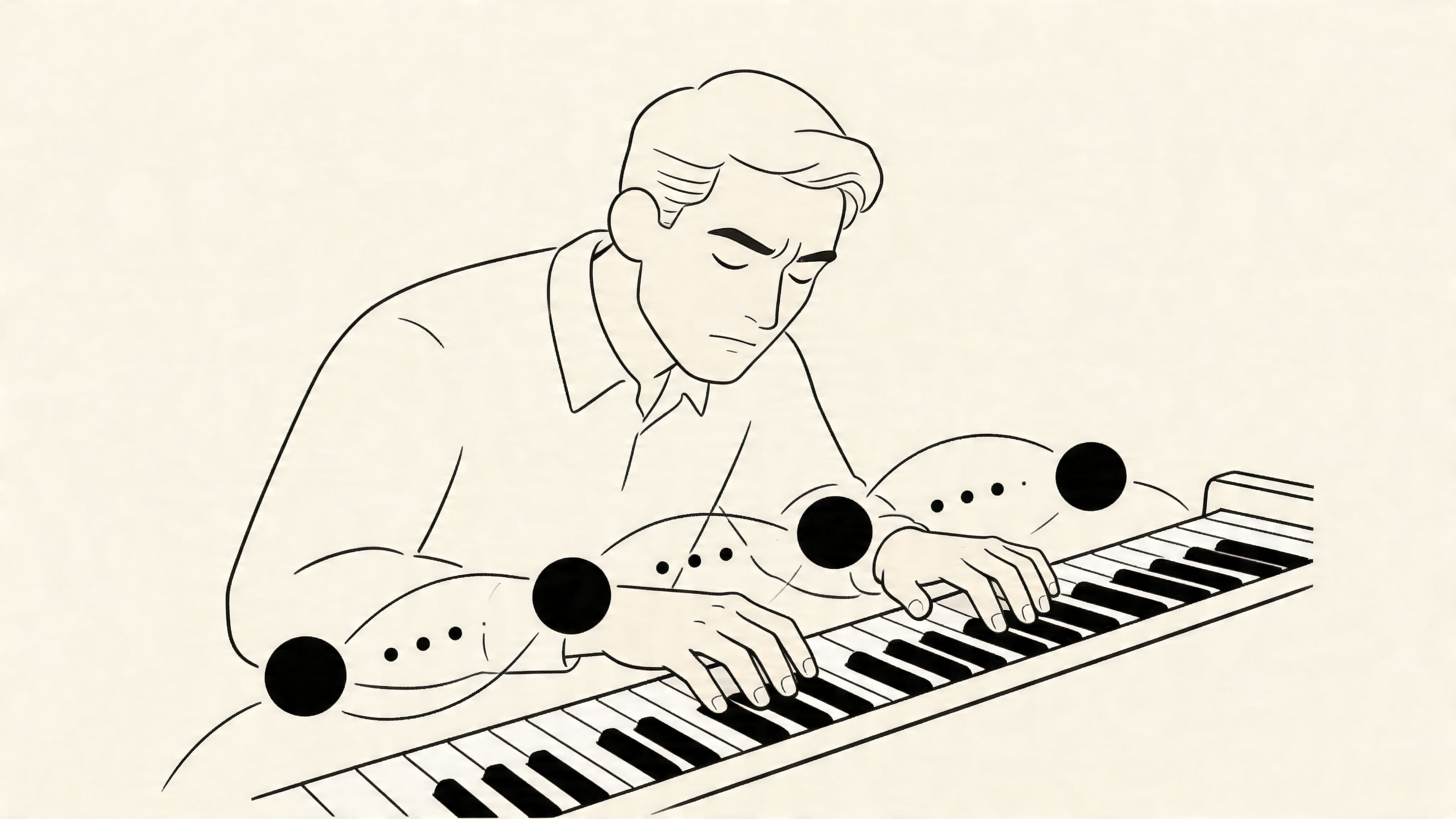
That’s good news. It means rhythm isn’t a mystery trait. It’s trainable through physical repetition and focused listening.
Start with your body first
Before you read rhythm, clap it. Before you clap it, step the beat.
Try this order:
- Step the pulse: Walk around the room or tap your foot on a steady count of 1 2 3 4.
- Clap quarter notes: One clap per step. Keep it relaxed and even.
- Add eighth notes: Keep stepping the beat, but clap twice for every step.
- Add sixteenth notes: Keep the step steady while your hands divide the beat into four.
- Say counts aloud: Use any syllables that help you stay even. The specific system matters less than consistency.
This physical approach keeps rhythm from becoming a visual puzzle. Your body starts learning where the beat lives.
A useful companion for this kind of practice is a guide to practicing with a metronome, especially if you tend to rush easier passages and drag on harder ones.
Your body should know the beat before your instrument tries to decorate it.
A 10 minute subdivision workout
If you want something simple and repeatable, use this daily routine.
Minute 1 to 2
Clap steady quarter notes with a metronome or drum loop. Don’t add anything fancy. Make the beat feel grounded.
Minute 3 to 4
Alternate one bar of quarter notes with one bar of eighth notes. Keep the pulse in your foot the whole time.
Minute 5 to 6
Move to sixteenth-note claps for short bursts, then return to quarter notes. This teaches you to zoom in and out without losing the center.
Minute 7 to 8
Listen to a song and identify the pulse before touching your instrument. Then ask whether the vocal phrase starts on the beat, before it, or after it.
Minute 9 to 10
Play one chord or one note on your instrument, but place it in different spots. Put it on beat one. Then on the “and.” Then on the next downbeat. Hear how the same sound changes character because of placement.
Here are the common mistakes to watch for:
- Rushing subdivisions: The small notes get squeezed because you’re aiming for the next beat too soon.
- Losing the main pulse: You can clap fast notes, but your body no longer feels where beat one is.
- Only practicing with eyes: You can read the pattern but can’t recognize it in a real song.
- Ignoring silence: Rests are part of rhythm. Hearing where not to play is part of groove.
A short listening challenge helps tie this into real music. Pick a familiar song. First find the beat by stepping. Then clap only the snare or backbeat. Then clap the vocal rhythm. Then play the chord changes while keeping your foot on the pulse. You’re training timing, listening, and coordination all at once.
Daily ear training pays off. Ten minutes a day is enough to make rhythm feel less like math and more like instinct when you stay consistent.
The Ultimate Payoff How Beat Mastery Unlocks Musical Freedom
A well-trained ear hears two things at once. It hears whether a note is sitting in tune, and it hears whether that note lands in the right place in time.
That is why these two kinds of beats belong together. The pitch wobble between nearly matching notes teaches you to notice tiny differences. The rhythmic pulse teaches you to feel where sounds belong. Put those skills side by side, and music becomes clearer. You start hearing why a guitar string feels slightly off, why a vocal harmony sounds settled or tense, and why the same note can feel relaxed, urgent, early, or perfectly placed depending on the beat.
This carries straight into playing by ear. As noted in this explanation of beat placement and note value perception, timing helps your brain organize what it hears. Rhythm and harmony are part of the same listening process. If the placement is muddy, chord changes are harder to catch. If the pulse is steady, your ear has a better frame for identifying intervals, chords, and phrases in real time.
The reward is practical. You tune faster. You blend better with other musicians. You hear grooves more acutely. You improvise with more control because your ears are tracking both the wobble of pitch and the pulse of rhythm, like watching both the ripples and the steady current in the same stream.
No rare gift is required. Consistent, focused practice is enough.
Train the wobble. Train the pulse. Over time, your ear becomes steadier, more accurate, and more useful every time you pick up your instrument.
If you want a simple daily system for building these skills, try Trill: Ear Training Daily. It’s built for musicians who want to stop guessing, strengthen ear training in short sessions, recognize chords and intervals more reliably, and play by ear with more confidence in just 10 minutes a day.