B Flat Trumpet: Your Guide to Playing by Ear
You’ve probably had this moment already. You open the case, lift out your trumpet, and see B♭ in the name. Then the questions start.
Why B flat? Why doesn’t it just say trumpet? Why do band directors talk about “concert pitch” like it’s a different language? And why can you press the right valves, play the right note on the page, and still feel like something sounds off?
That confusion is normal. It doesn’t mean you’re behind. It means you’re meeting the actual instrument for the first time.
A b flat trumpet isn’t hard because it’s mysterious. It feels hard because it asks you to connect what you see, what you finger, and what you hear. That’s why so many players get stuck memorizing fingerings but never feel fully free. They can read notes, but they can’t always play by ear, adjust intonation on the fly, or trust their musical instincts.
The good news is that ear training is trainable. It’s not a gift some people get and others don’t. If you can learn to match a pitch, hear when a note is too low, or recognize when a melody lands “home,” you can build the listening skills that make trumpet playing feel natural.
Table of Contents
- Your First B Flat Trumpet An Introduction
- What Makes a B Flat Trumpet the Standard
- Hearing Transposition How Your Trumpet Really Sounds
- B Flat Trumpet vs C Trumpet Which Is for You
- Train Your Ear to Master Your Trumpet
- Choosing and Caring for Your First Instrument
Your First B Flat Trumpet An Introduction
A beginner once brought me a brand-new trumpet and said, “I can already buzz a note, but I still don’t know what kind of instrument this is.”
That’s such an honest place to start. You’re excited, maybe a little proud, and also unsure what you’re supposed to understand first. The valves make sense. The mouthpiece makes sense. The name doesn’t.
What usually helps is to stop treating the b flat trumpet like a puzzle to solve and start treating it like a voice to learn. The instrument has its own habits. It responds a certain way. Some notes feel open and easy. Others need more attention. And the biggest leap comes when you stop asking, “What buttons do I press?” and start asking, “What am I hearing?”
Practical rule: If you can hear when a note locks in, you’re already learning musicianship, even before you know all the terms.
That’s the heart of this instrument. Yes, there’s some mechanics to learn. Yes, there’s some music reading involved. But your long-term freedom comes from ear training, not guesswork.
When your ear gets stronger, everything changes. You start correcting pitch without waiting for a tuner. You recognize when a melody should rise or fall. You get better at chord recognition. You can improvise simple ideas instead of freezing. You stop depending on sheet music for every musical decision.
And that kind of progress doesn’t require perfect pitch. It requires attention, repetition, and a small daily habit. Ten minutes a day of focused listening can do more for your playing by ear than an hour of mindless note-running.
What Makes a B Flat Trumpet the Standard
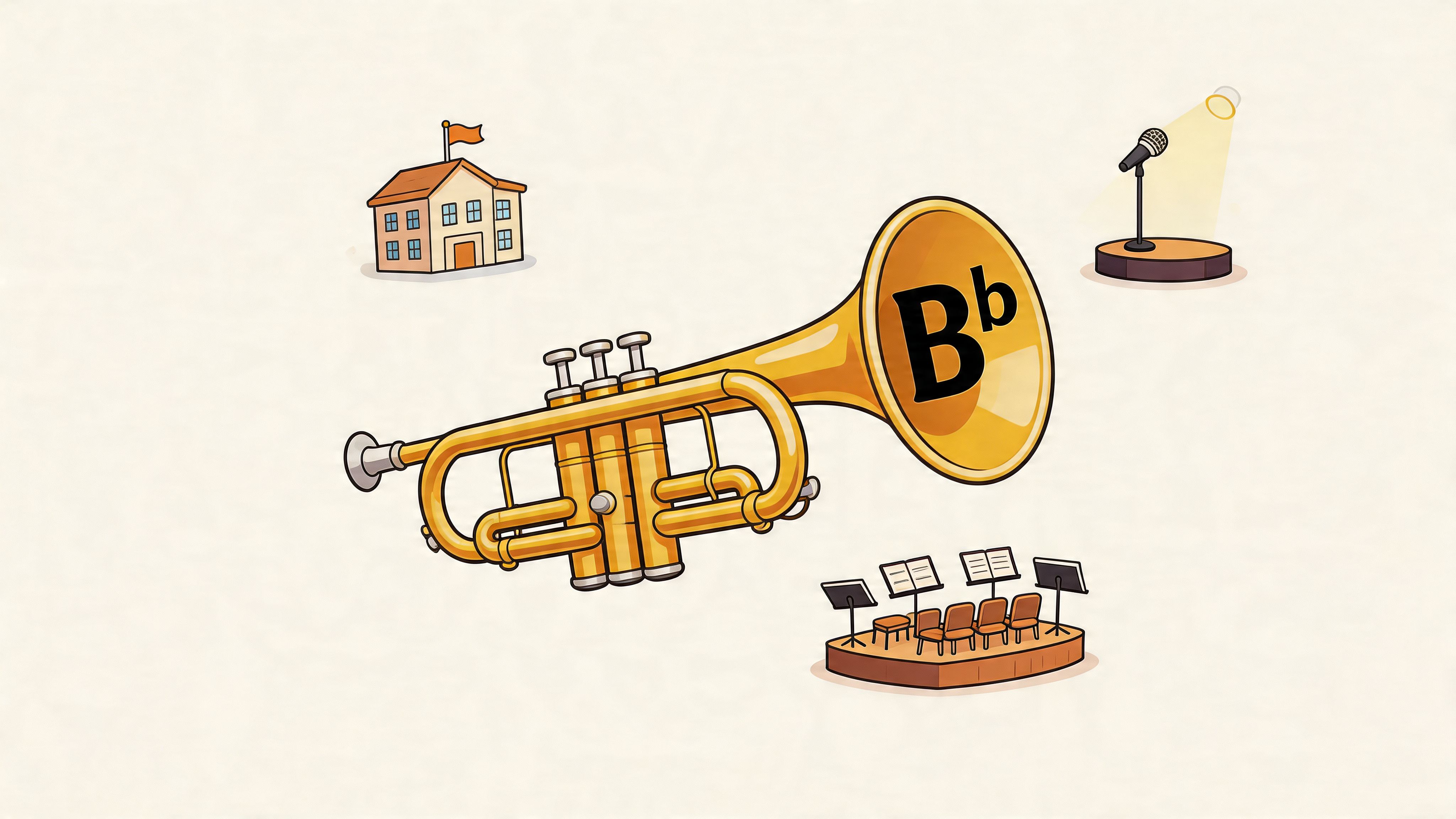
You bring your trumpet to band for the first time. The director says, “Play a concert B flat,” and half the room is instantly ready. That moment tells you a lot about why the b flat trumpet became the standard. It is the instrument schools, bands, method books, and teachers built around because it gives large groups a shared starting point.
Why this trumpet became the default
The b flat trumpet won out for practical reasons. It worked well in bands. It was reliable to build. It let teachers train many students on one common setup instead of juggling older trumpet types and extra parts.
That kind of standardization shapes how people learn. Once one instrument becomes the classroom norm, fingering charts, beginner books, ensemble parts, and tuning habits all start lining up around it. A beginner is not learning in isolation. You are stepping into a system that has already been organized for this instrument.
There is an ear-training benefit here too. A consistent instrument gives you a repeatable sound map. When you play the same horn type your teacher uses, and the same horn type your section hears every day, it gets easier to connect what your fingers do with what your ears expect. That matters more than beginners often realize.
How the design supports learning
A b flat trumpet is small in your hands, but it works like a carefully folded tube. Buzz at one end, and the air column inside decides which pitches speak clearly. The valves lengthen that tube, which lowers pitch. If you have ever changed the length of a garden hose nozzle attachment and noticed the flow feel different, you already have the right basic picture. Length changes response.
A few parts matter most at the start:
- Mouthpiece: where your lips start the vibration
- Valves: where you change tubing length and choose lower pitch combinations
- Bell: where the sound projects outward
- Slides: where you make small tuning adjustments
You do not need to memorize every hardware detail on day one. You do need to notice cause and effect. Press a valve, hear the pitch drop. Adjust a slide, hear the center of the note shift. That habit will help you far more than staring at a fingering chart and hoping the note comes out right.
The trumpet responds to air, lip shape, and listening. Your ear is part of the mechanism.
That is one reason the standard b flat design helps so much. When the instrument responds predictably, your ear can learn predictable patterns. You begin to hear which notes tend to sit high, which ones need a small adjustment, and how the horn lines up with basic tuning frequencies and pitch reference points. In other words, the standard instrument is not just easier to teach. It is easier to hear correctly.
The big takeaway is simple. The b flat trumpet became standard because it gave players and teachers a common musical language. For someone learning by ear, that common language is gold. It gives you a stable home base for hearing pitch, noticing intonation, and building real confidence instead of guessing.
Hearing Transposition How Your Trumpet Really Sounds
You play a note that looks like C on the page. The piano player answers with B flat. For a beginner, that moment can feel like the room is disagreeing with your eyes.
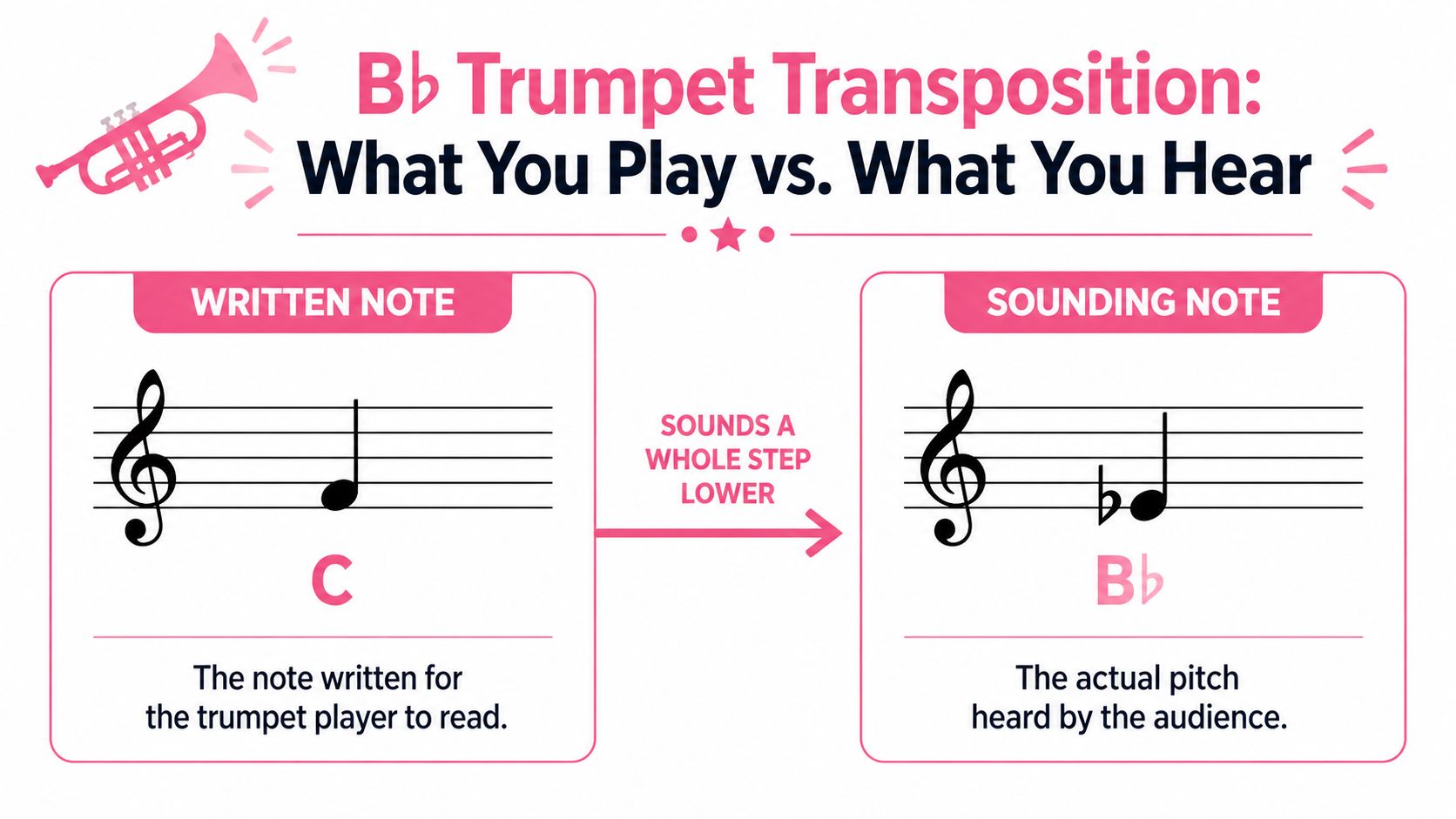
What is happening is simple once you hear it the right way. A B flat trumpet is a transposing instrument, so a written C on your part sounds as concert B flat in the room. The page is written in trumpet language. The band hears concert pitch.
What written C really means
A good way to hear this is to treat written pitch and sounding pitch like two labels for the same event. Trumpet players read one label. The rest of the ensemble hears the other.
So if your part says C, you finger and play your normal trumpet C. The audience and the piano hear B flat. Nothing is wrong. Your instrument is built for that relationship.
Transposition is not only a reading skill; it is an ear skill. If you only memorize fingerings, you may hit the right valve combination and still feel unsure in rehearsal. If you learn the sound of your trumpet in concert pitch, your ear starts predicting what the room will hear before you play.
Train your ear to hear both versions
The fastest way to get comfortable is to pair each written note with its sounding note until they feel connected, like two names for one person.
Start with your easiest anchor note. Play written C, then match it against a concert B flat from a piano, tuner, or drone. Hold the note long enough to notice when the sound locks in and the wavering settles. That settling point is your ear finding the center of the pitch, not just your fingers finding the note.
Try these short drills:
-
Say both names out loud
Before you play, say, “written C, concert B flat.” Speaking it helps your ear build the link. -
Sing the concert pitch first
Hear or sing B flat, then play your written C. This teaches your body to aim for sound, not valve patterns. -
Use a drone for steady listening
Play against a sustained concert pitch and listen for beats, the small pulses that tell you the note is not quite lined up. -
Test one note in different places
Play the same written note softly, loudly, and after a breath reset. You will hear how intonation can shift even when the fingering stays the same.
That last point is where many students get stuck. They assume transposition and intonation are separate topics. On trumpet, they work together. First you learn what note the horn really sounds. Then you learn whether that sounding pitch is centered, sharp, or flat.
A tuner can help, but your ears need a job too. A tuner is like a map. Your ear is the sense that tells you whether you are standing on the road.
If you want a wider picture of how concert pitch lines up across instruments, this guide to instrument tuning frequencies and pitch reference points gives useful context.
The goal is not fast mental math during a song. The goal is to hear written pitch and sounding pitch as one connected habit. Once that clicks, rehearsals feel less confusing, tuning gets easier, and your trumpet starts sounding like a voice you recognize instead of a machine you are trying to operate.
B Flat Trumpet vs C Trumpet Which Is for You
If you’ve heard people mention the C trumpet, you might wonder whether you picked the wrong instrument. Most beginners haven’t.
The b flat trumpet is usually the better starting point because it’s the common language of school bands, jazz groups, and a lot of everyday playing. The C trumpet is often associated with orchestral use, where players want a different response and a different relationship to written pitch.
The sound and feel difference
The b flat trumpet has been described as having a “heavier, weightier sound and more stable volume” compared to higher-pitched trumpet variants in Paul Morelli’s writing on trumpet sound. That description matches what many players feel right away. The sound has width. It sits comfortably in a band. It doesn’t feel thin.
At the same time, it still has a bright, penetrating tone that can cut through a group when needed. That balance is one reason it works in so many styles. You can blend, lead, punch accents, or play lyrical lines without feeling like the instrument is fighting the job.
A C trumpet often feels more direct to players who spend a lot of time in orchestral settings. But for those learning to play by ear, familiarity is the more important issue. You’ll find more teachers, more beginner materials, and more ensemble parts built around b flat trumpet habits.
If your goal is musical freedom, the best first horn is usually the one you’ll play consistently with other people.
A simple comparison table
| Characteristic | B♭ Trumpet (The Standard) | C Trumpet (The Orchestral Specialist) |
|---|---|---|
| Common role | Most common starting point for bands, jazz, and general playing | More often associated with orchestral contexts |
| Sound character | Heavier, weightier sound with stable volume | Brighter, more direct feel |
| Learning environment | Common in schools and group settings | More specialized |
| Best for most beginners | Yes | Usually not the first choice |
| Ear training focus | Hearing transposition clearly and consistently | Often tied to score-reading demands in orchestral use |
For a newer player, the main question isn’t “Which trumpet is better?” It’s “Which trumpet helps me build strong listening skills and useful playing habits?” In most cases, that answer is the b flat trumpet.
And if you later pick up a C trumpet, a trained ear will help you far more than memorized habits ever could.
Train Your Ear to Master Your Trumpet
You’re in rehearsal. The fingering is right, the note comes out, and your teacher still asks you to adjust. That moment confuses almost every beginner.
The reason is simple. A trumpet note has two parts. Your fingers choose a valve pattern, but your ear decides whether the note is centered, in tune, and shaped to fit the music around you. On a B♭ trumpet, that matters even more because you are always balancing what you see on the page with what sounds in the room.
A clear example is the 1+2+3 fingering. That valve combination often sits flat, and Tunable’s B♭ trumpet fingering chart points out those intonation tendencies. If you only memorize the fingering, you will keep missing the center of the note. If you learn to hear that sag in pitch, you can correct it while you play.
Why your ear has to lead
Students often ask, “If I pressed the right valves, why wasn’t it right?” Because trumpet playing works like aiming a basketball. Your hand may know the motion, but your eyes still guide the shot. On trumpet, your fingers start the note, and your listening guides it into place.
Some notes need a small slide adjustment. Some need steadier air. Some need a tiny embouchure change so the pitch settles instead of drooping. None of that is random. You are learning to hear when the note locks in.
That word, locks, is useful. A centered trumpet note feels like a wheel dropping into a groove. The sound gets clearer. The pitch stops floating. The instrument starts to ring instead of wobble.
Here are a few common listening problems beginners run into:
- Low notes feel fuzzy or unstable. Your ear is still learning the difference between “a note came out” and “the note is centered.”
- All-valve notes sound low. Those fingerings need extra attention because the pitch often falls under the center.
- Band tuning stays messy even with a tuner nearby. The player may be watching a needle instead of listening to the chord.
A tuner can help, but it cannot do the hearing for you.
A 10 minute daily routine for stronger aural skills
Keep this routine short enough that you will use it. Ten focused minutes every day will help more than one long session once a week.
-
Minute 1 to 3. Sing, then find the note
Sing one comfortable pitch. Then search for that same pitch on the trumpet. Do not worry about the note name at first. You are matching sound to sound, the same way you match a voice on the phone before you remember the person’s name. -
Minute 4 to 6. Pair written notes with sounding notes
Choose a familiar note such as written C. Say the written name, then say the concert pitch you hear, then play it. This trains your ears to connect transposition to real sound instead of leaving it as a reading rule. -
Minute 7 to 8. Correct a note that drifts low
Hold a note that often sags, especially one with 1+2+3. Listen for the moment when the sound firms up. Adjust with air first, then embouchure, and use the slide if needed. -
Minute 9 to 10. Hear intervals as distance
Play two notes slowly. Ask whether the second note feels a step away, a skip away, or much farther. That sense of distance is the beginning of relative pitch, and relative pitch is what helps you hear melodies, chords, and transposition clearly.
If you want more practice ideas, this guide to ear training exercises for learning songs by listening gives a helpful structure for building consistency.
A strong ear does not mean perfect accuracy. It means you notice problems early and correct them quickly.
Connect the drills to real trumpet playing
These exercises matter because they solve real B♭ trumpet problems.
If you play in band, you need to hear whether your written D is blending with the concert pitch everyone else hears. If you copy a melody from memory, you need to hear the next note before your fingers guess. If your intonation slips on a long tone, you need to recognize the drift before the whole phrase sounds unsettled.
This short demonstration is useful after you have tried the drills yourself.

Use your listening in musical situations like these:
- Practice with a drone. Hold one note and listen for the wavering to calm down as the pitch lines up.
- Learn simple melodies from memory. Children’s songs are perfect because you already know how they should sound.
- Sustain notes over chords. Notice whether your note feels settled, bright, tense, or slightly in the way.
- Copy short patterns. Have a teacher, friend, or app play two or three notes, then answer back on the horn.
Many beginners worry about whether they have “natural talent” for hearing music. A better question is whether they practice listening every day. Trumpet players who hear note relationships clearly usually make faster progress with tuning, improvising, ensemble playing, and learning songs from sound alone.
Choosing and Caring for Your First Instrument
You open the case, press a valve, and blow your first note. If the horn responds easily, your ear gets clear feedback. If the valves stick or the pitch wobbles because the instrument is fighting you, it becomes much harder to learn what a centered note sounds like.
That is why your first trumpet should help you hear clearly.
A good beginner B flat trumpet feels predictable. The notes speak without a wrestling match. The valves return quickly. The slides move when you need them to. You are not shopping for prestige. You are choosing a tool that teaches your ear and hands to agree.
How to choose your first horn
For many beginners, renting is a practical first step. It gives you time to learn what kind of resistance, weight, and response feel comfortable before you buy.
When you try a student trumpet, check the basics first:
- Valves move smoothly: They should feel quick and even, not gummy or noisy.
- Slides move with gentle pressure: They should not be loose, but they should not feel frozen.
- Notes start without excess force: A simple middle G or C should speak cleanly.
- The instrument feels stable: No rattles, bent parts, or loose braces.
Now add one listening test. Play a comfortable note, then play it again several times. If the horn responds the same way each time, that consistency helps your ear learn faster. A beginner needs repetition that makes sense. An unreliable horn is like a piano with a few sticky keys. You can still learn on it, but every lesson gets harder.
You will also hear people discuss bore size. Bore changes the feel of the air through the instrument, a bit like drinking through straws with different widths. Some trumpets feel more open. Some feel more compact and resistant. As a beginner, the best question is simple: can you make a steady, relaxed sound and hear the center of the note without strain?
A quick pitch check during warm-up can help with that. A simple tool like the online trumpet tuner and pitch reference gives you a note to match, so you can listen for when your sound locks in instead of only watching a needle.
A simple care routine
Trumpet care is basic instrument hygiene. It keeps the horn honest.
Use a routine like this:
- After playing: Wipe off moisture and fingerprints.
- A few times each week: Oil the valves so they stay quick and quiet.
- Regularly: Empty the water keys and make sure the slides still move.
- Every so often: Clean the mouthpiece and leadpipe area so buildup does not slow the response.
Take care of the horn, and the horn gives your ear a fair chance to learn.
That matters more than beginners often realize. If a valve hesitates, you may blame your fingers. If the mouthpiece is dirty and the response feels stuffy, you may think your breath support is the problem. Sometimes the issue is not musical at all. It is mechanical.
A well-maintained trumpet gives you cleaner feedback. Cleaner feedback helps you hear intonation, attack, and tone color more accurately. And once you can hear those differences, you can fix them faster.