10 Best Blank Staff Paper PDF Resources for 2026
Many musicians download a blank staff paper PDF, print it out, and then leave it on the piano, the desk, or the music stand for weeks. The page stays empty. It starts to represent intention more than practice.
That’s a missed opportunity.
Blank staff paper isn’t just for “serious composers” or theory homework. It’s one of the simplest tools you can use to train the skill that changes everything else: your ear. If you want to play by ear, recognize chord movement faster, sing more accurately, or stop guessing intervals, an empty page gives you a place to turn sound into something visible.
That matters because hearing music is trainable. It’s not reserved for people with perfect pitch, and it doesn’t require advanced theory first. A good blank staff paper PDF lets you capture what you hear, check what you missed, and repeat the process until your listening gets sharper. That’s how ear training starts becoming practical instead of abstract.
The useful question isn’t just where to find staff paper. It’s which kind helps you practice consistently. Some layouts are better for short melody dictation. Some are better for chord work. Some are better for piano players, drummers, singers, or guitarists who are trying to connect ear training to real playing.
The list below compares the best resources, but with one twist. Every option is judged by how well it supports actual musical growth, not just printing.
Table of Contents
- 1. MusicTheory.net Staff Paper Generator
- 2. BlankSheetMusic.net
- 3. GeneratedPaper Blank Sheet Music Templates
- 4. StaffPaper.org
- 5. StaffPaper.net
- 6. Musicca Staff Paper
- 7. Papiermusique.fr Professional-grade Blank Sheet Music
- 8. EmptyMusicSheets.com
- 9. 8notes Free Blank Sheet Music
- 10. FreeBlankSheetMusic.org
- Top 10 Blank Staff Paper PDF Comparison
- Your Daily Ear Training Action Plan
- How to Use Staff Paper for Ear Training
- Your 10-Minute Daily Workout
- Supercharge Your Practice The Paper + App System
1. MusicTheory.net Staff Paper Generator
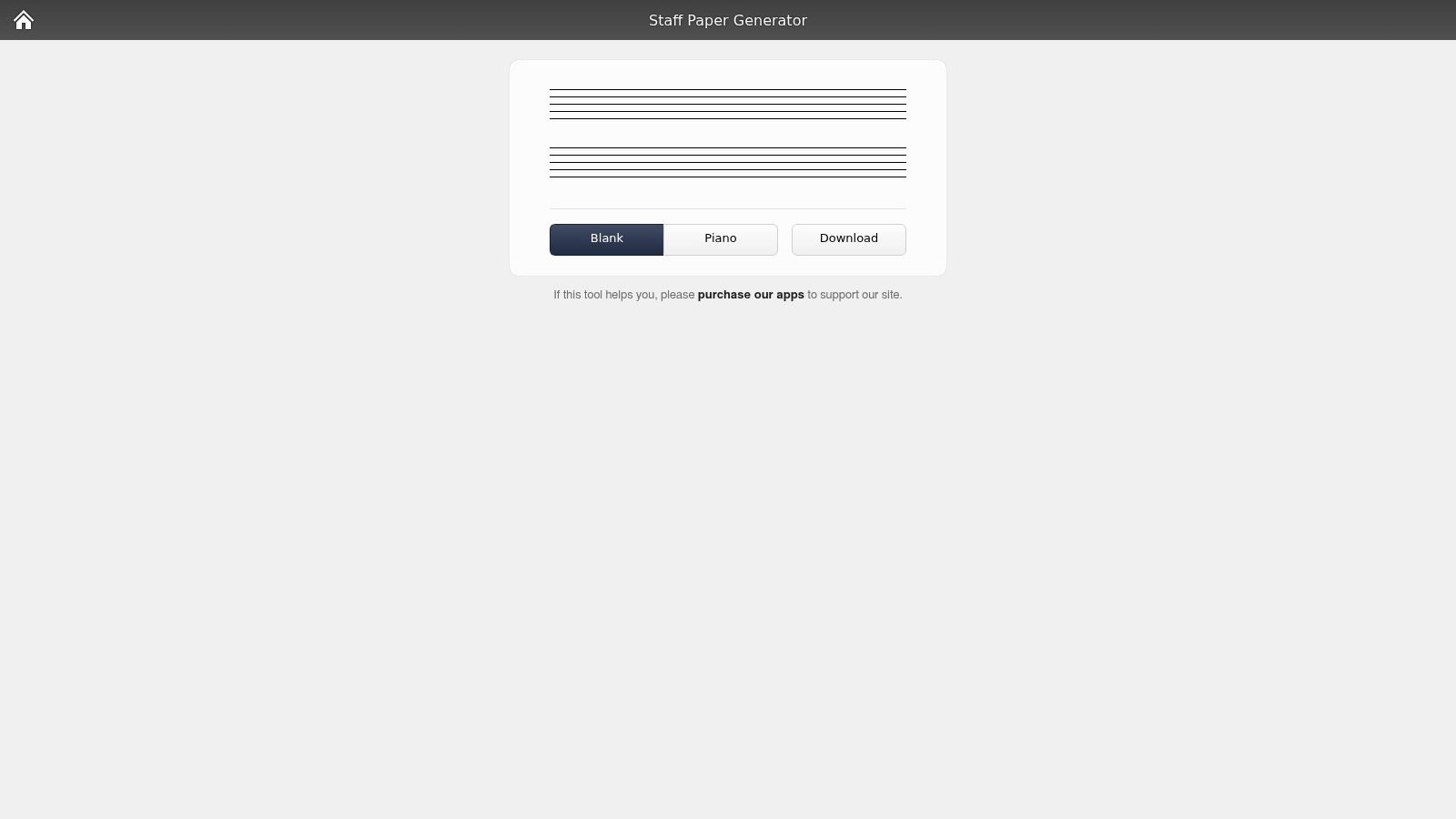
MusicTheory.net Staff Paper Generator is one of the cleanest options if you want a blank staff paper PDF without distractions. It’s fast, readable, and practical. For daily ear training, that matters more than fancy design.
What separates it from many static downloads is control. You can adjust paper layout before printing, which helps if your practice changes from melody work to grand staff piano work. I like tools like this because they let you make the page fit the exercise instead of forcing the exercise onto the page.
Why It Works for Ear Training
This tool suits musicians who want to build a repeatable routine. A denser page can work for interval journaling or quick dictation drills. A more spacious page works better when you’re slowing down and trying to hear phrase shape, not just note names.
If you’re still shaky on note placement, pair your printouts with a simple music note name worksheet. That combination keeps the page from becoming intimidating.
- Best for clean repetition: You can print the same format again and again, which is great when you’re building a 10-minute daily habit.
- Best for focused listening: There’s no notation editor to tempt you into “fixing” what you hear with software.
- Less useful for composing inside the browser: It generates paper well, but it won’t help you enter notes or hear playback.
Practical rule: If your ear training page looks cluttered before you write the first note, your listening will usually get worse, not better.
One more reason this style works. A dedicated printable PDF still makes sense in a digital world. Berklee PULSE notes that blank sheet music is available in printable forms for piano, guitar, percussion, treble, bass, and alto clef, which reflects how broad the need still is.
2. BlankSheetMusic.net
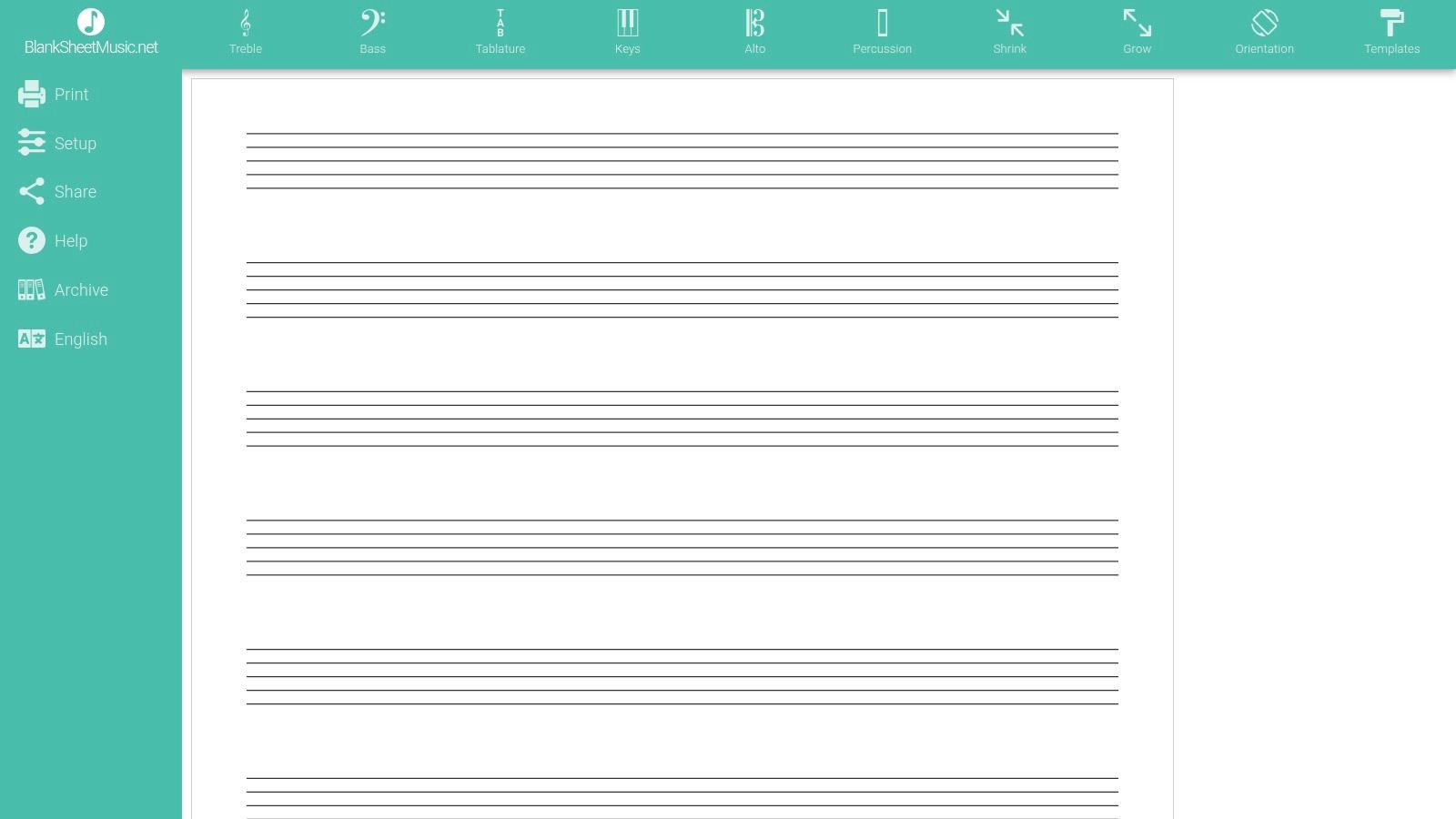
BlankSheetMusic.net is the site I’d hand to a student who wants options immediately. It covers more than the standard single-staff page, so you can move from melody dictation to chord boxes or tab-based listening work without hunting around another site.
That range matters if you’re trying to become a more intuitive musician. Ear training isn’t only about hearing a melody and writing it on one stave. A drummer may want rhythmic hearing practice. A guitarist may want to hear and label patterns on tab or fretboard shapes. The better tool is often the one that removes friction.
Best Use Case
This one is strong for mixed-instrument households, teachers, and players who switch between notation types. If you’re working on groove transcription, you can combine staff work with reading support like this guide to how to read drum notations.
A few trade-offs are worth knowing before you print.
- Strong template variety: Good if your practice includes standard notation, piano layouts, and guitar-oriented work.
- Fast to access: No sign-up wall helps when motivation is low and you just need to start.
- Less precise than specialist generators: If you’re picky about spacing, another tool may feel tighter.
Blank pages should make listening easier. If a template asks you to think about layout too much, it’s already slowing down your ears.
Use this site when you want flexibility more than precision. It’s especially helpful for players who are moving away from depending on tabs or charts and trying to hear more of the music directly.
3. GeneratedPaper Blank Sheet Music Templates
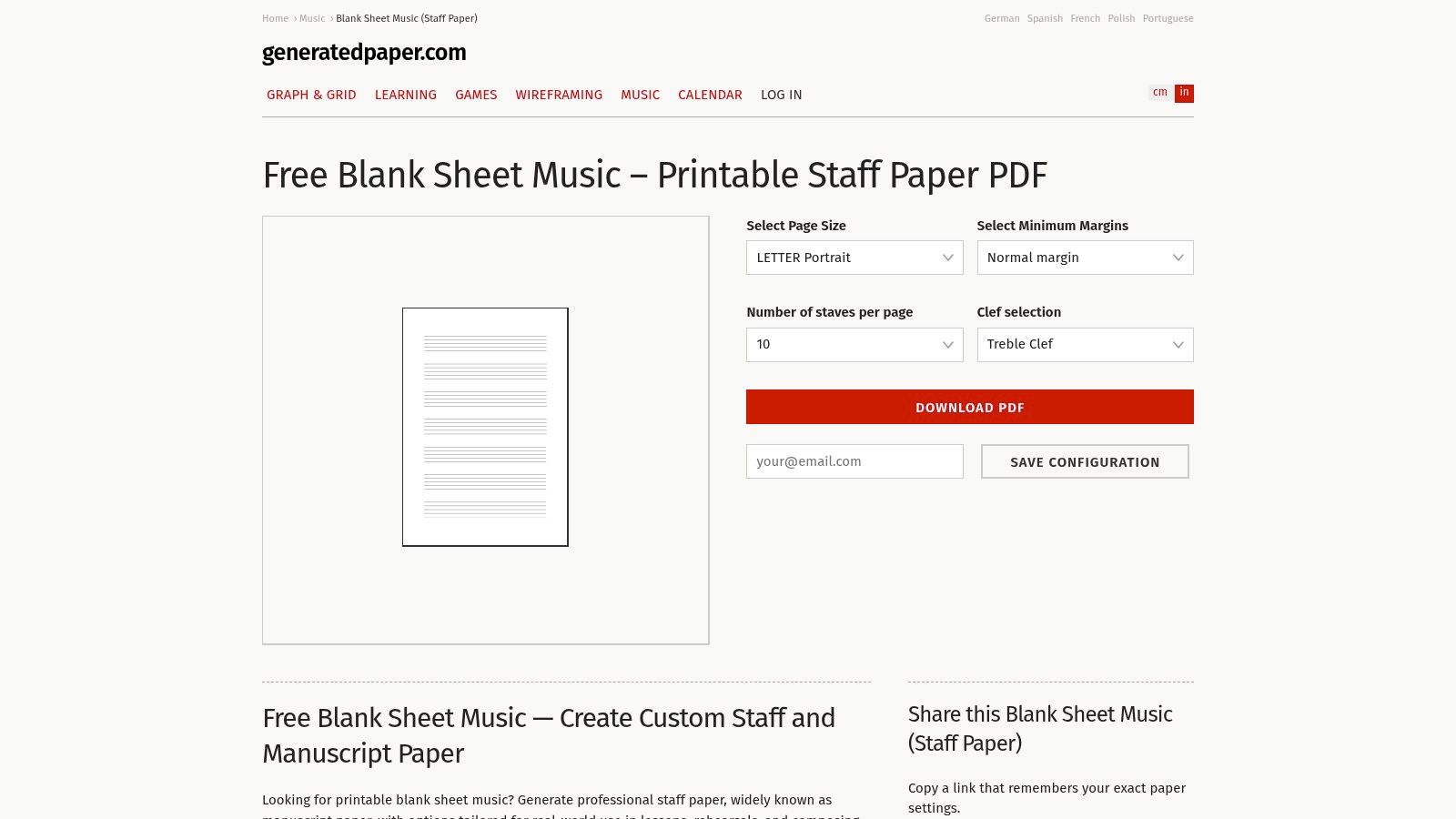
GeneratedPaper Blank Sheet Music Templates is practical in a different way. It’s not built only for musicians, and that’s either a strength or a limitation depending on how you work.
If you like a simple utility site that can also handle other paper types, it’s convenient. If you want something that feels very music-specific, it can seem a little generic. Still, for ear training, generic is sometimes enough.
Where It Fits
This is a good choice for musicians who keep one practice binder for everything. You might use staff paper for transcribing, graph paper for rhythm grouping, and lined paper for writing what you noticed about a progression. That kind of cross-training can sharpen your ear because it makes you describe what you heard, not just notate it.
The site’s music section is most useful when your routine is light, regular, and practical.
- Good for habit builders: Print a batch and keep them ready so you don’t lose practice time.
- Good for melody capture: Clean pages help when you’re singing back a phrase, then writing it.
- Not ideal for deep music-specific browsing: Dedicated manuscript libraries usually feel richer.
For beginners, this can be a plus. A complicated site can become another form of procrastination. A plain blank staff paper PDF that gets printed quickly often produces more real ear training than a “perfect” setup that never leaves the screen.
4. StaffPaper.org
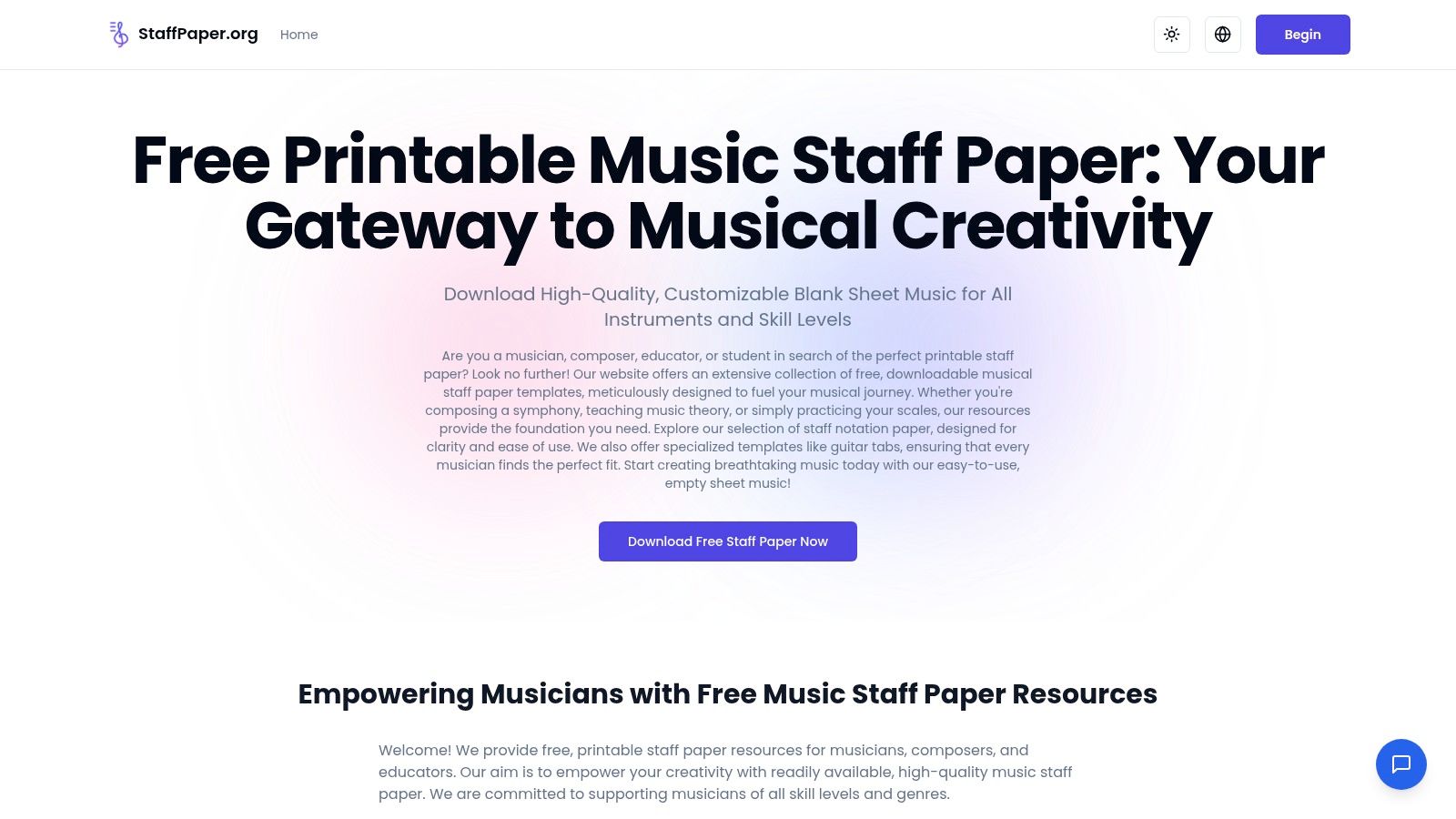
StaffPaper.org feels like a tool made by someone who respects your time. Open it, set what you need, download, print, done.
That no-frills approach is excellent for listening work because it keeps your attention on sound. Many musicians say they want better ear training, but then they create too much setup around the training. This kind of tool cuts that problem down.
What It Does Best
Use StaffPaper.org when you already know the drill you want to run. Maybe you’re doing short melodic dictation from a recording. Maybe you’re transcribing the top note of a chord voicing. Maybe you’re writing back bass movement from a pop song.
Those exercises don’t need a feature-rich environment. They need speed.
- Great for immediate printing: Good when you want to capture an idea before it disappears.
- Good for lesson prep: Teachers can create fresh pages for class without overthinking.
- Limited if you want specialized formats: It’s stronger on simplicity than breadth.
When students struggle to play by ear, the issue often isn’t talent. They just haven’t repeated the listen, sing, write cycle enough times.
If you’re trying to make ear training a daily system, this tool supports the mindset well. Fast setup lowers resistance, and lower resistance means more reps.
5. StaffPaper.net
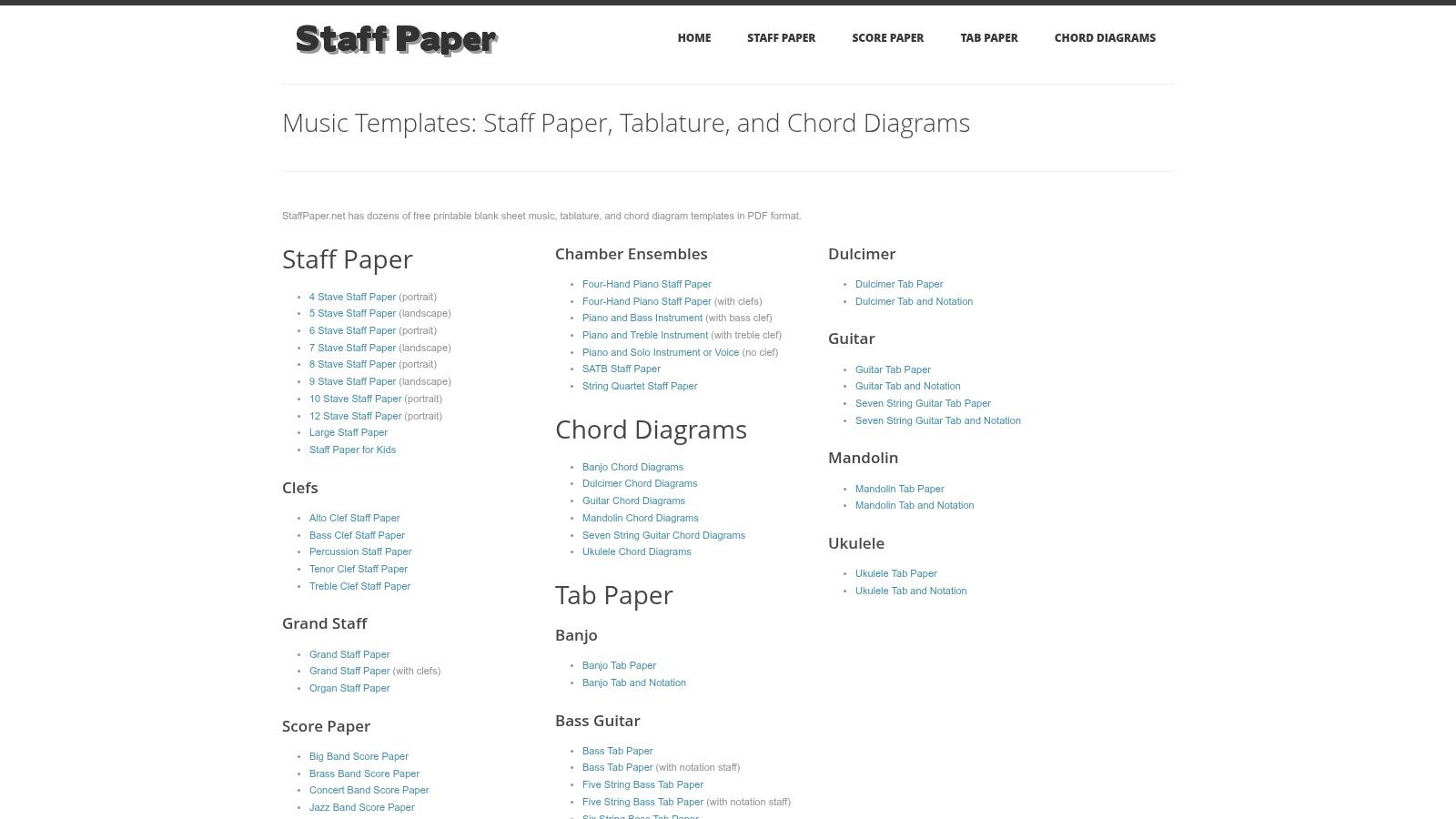
StaffPaper.net is the opposite of a minimalist generator. It’s better for musicians who don’t want to configure much and would rather choose from a wide set of ready-made pages.
That works well when your ear training has different lanes. One day you’re writing melody. Another day you’re sketching choir voicings by ear. Another day you’re checking bass line movement against upper harmony. Pulling a prebuilt page can save energy.
Best for Players Who Want Ready-Made Layouts
This site is especially useful if you know your format before you arrive. Ensemble players, piano students, arrangers, and guitarists who move between standard notation and chord work tend to benefit most.
The bigger advantage is consistency. You can keep using the same kind of page for the same kind of listening task.
- Reliable template library: Better for musicians who want structure around their practice.
- Useful for instrument-specific needs: Grand staff and other layouts help connect ear training to real playing.
- Less flexible in the moment: If you want custom spacing, a live generator may feel better.
One useful fact from the current manuscript-paper ecosystem is that layout variety is already standardized enough to matter. A free manuscript collection from Hindson includes 12-stave A4 paper and notes that variants can change spacing between staves. That’s exactly why sites like StaffPaper.net still matter. The page shape changes the exercise.
If you want to become a more intuitive musician, don’t ignore that detail. Dense layouts encourage quick hearing capture. Spacious layouts encourage careful hearing.
6. Musicca Staff Paper
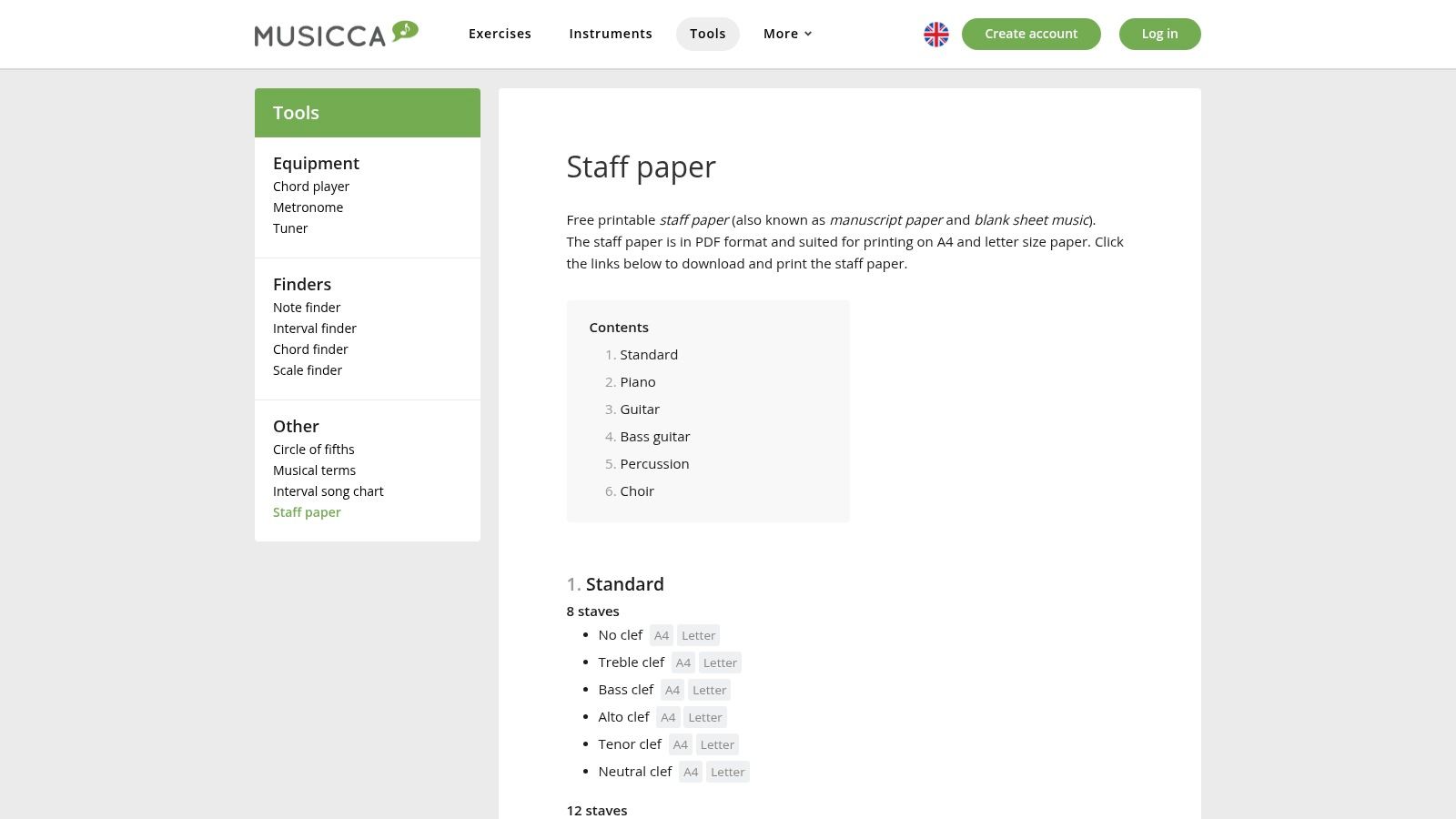
Musicca Staff Paper is organized in a way that helps people start. That sounds small, but it isn’t. A clear category system is often the difference between “I should practice ear training” and “I practiced today.”
Musicca groups templates by practical use. Piano players can find piano pages quickly. Guitar and choir users don’t have to dig. Students also tend to like tools that make the next step obvious.
Why Teachers and Self-Learners Like It
For self-learners, this site reduces the decision load. For teachers, it’s easy to send a student to one place and say, “Print this, then write back what you hear.” That simplicity supports consistency, and consistency is what trains the ear.
If you’re pairing notation practice with hearing scales and tonal centers, Musicca works nicely alongside a scale practice tool so the sound on your instrument matches the shapes on the page.
- Good classroom flow: Categories are easy to understand.
- Good for instrument-specific ear work: Piano, bass, choir, and guitar players can choose layouts that match real musical situations.
- Not built for heavy customization: You choose from prepared options rather than building your own.
There’s also a broader print reality behind this kind of resource. In nearby discovery channels for blank sheet music, downloadable listings commonly include A4 and US Letter page sizes and multiple PDF files for different print workflows. That’s useful because musicians still print for practice, rehearsal, and lesson use, not just screen viewing.
7. Papiermusique.fr Professional-grade Blank Sheet Music
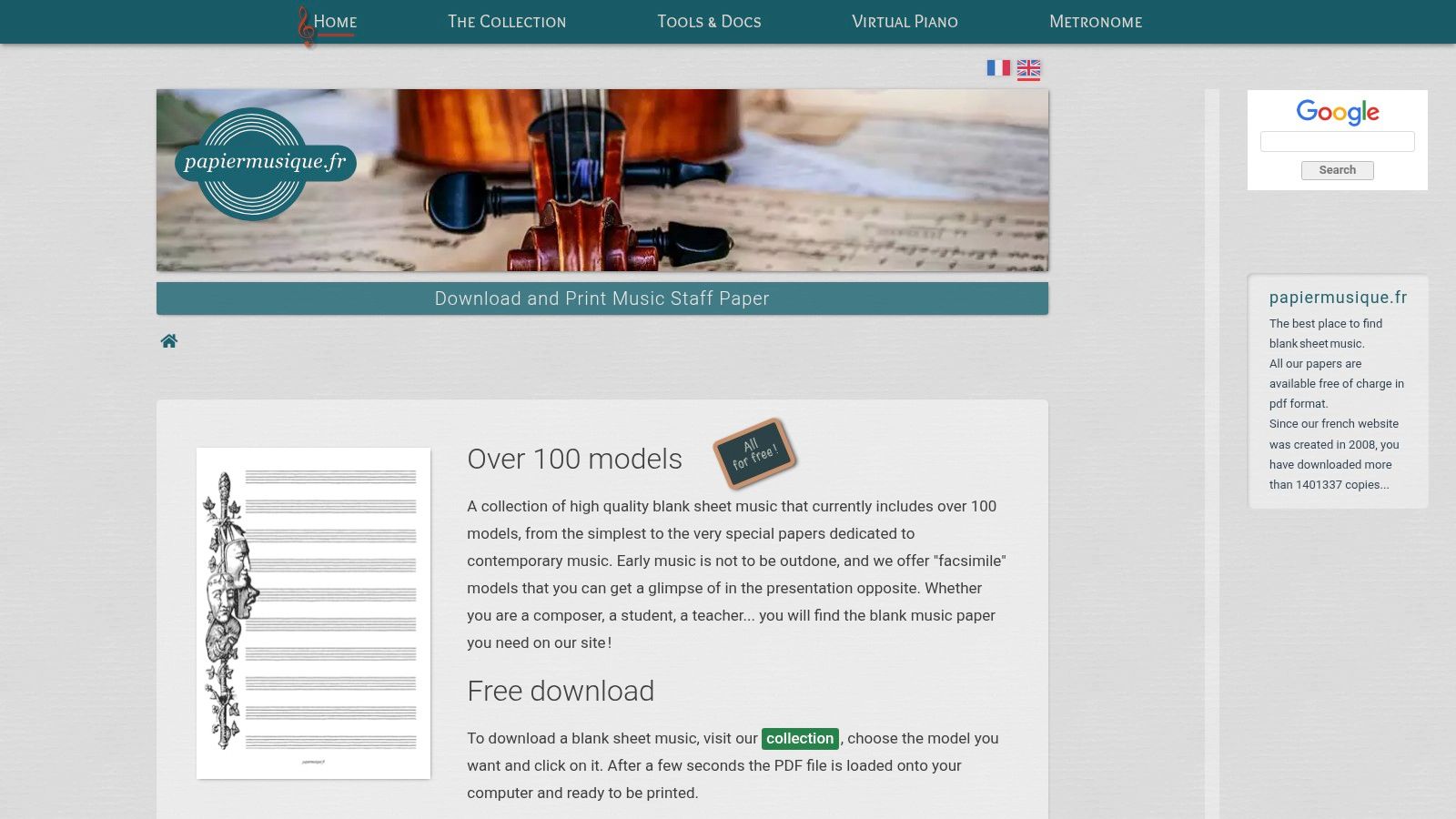
Papiermusique.fr feels polished. The layouts look intentional, and that can help more than people expect.
A clean page affects handwriting. Better handwriting affects review. Better review affects ear training, because you can look back at what you wrote and spot the exact place where your hearing drifted. Messy pages make that much harder.
When Presentation Helps Practice
This is a good option for musicians who review their dictation carefully. If you often revisit pages to compare your first hearing against the correct line, a well-engraved template pays off.
The site’s default language may slow some users for a moment, but the actual downloading process is still simple.
- Strong visual clarity: Helpful when you want to review mistakes without visual clutter.
- Good for singers and pianists: Clean spacing supports phrase-based notation and harmonic sketching.
- A bit less direct for some users at first glance: The interface may feel less familiar if you expect a US-centric layout.
A page that invites neat writing usually invites better listening too. You slow down enough to hear the difference between what you assumed and what was actually there.
For musicians chasing perfect pitch, this kind of page won’t create that skill by itself. But it does support the actual work. You hear, you test, you write, you correct. That loop is how better pitch recognition develops.
8. EmptyMusicSheets.com
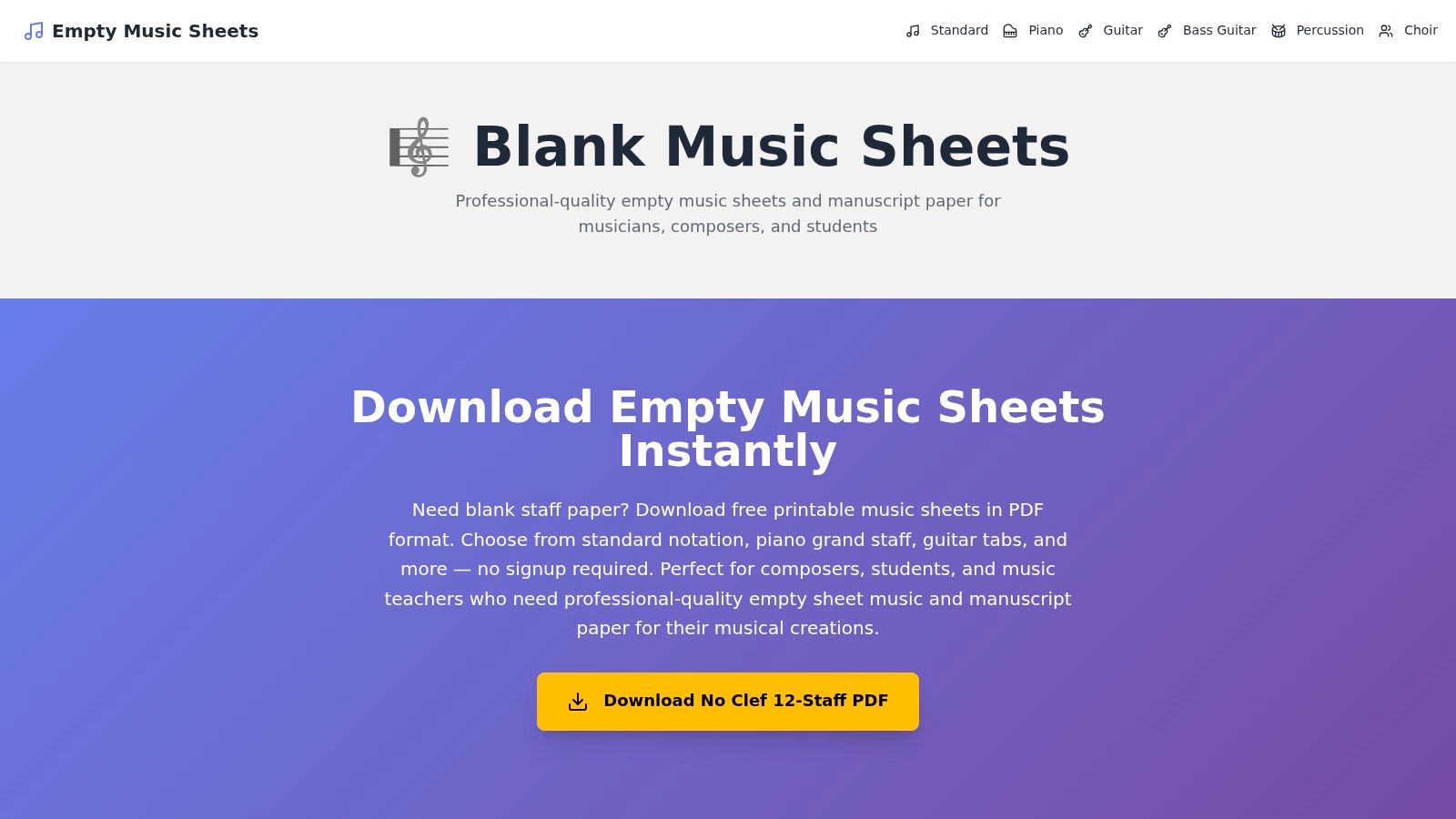
EmptyMusicSheets.com is one of the easier modern catalogs to use if you don’t want a lot of decisions. The site feels current, and the path from landing page to printable page is short.
For many musicians, that’s enough. Ear training gets stronger when the barrier to beginning is low. If you need to print tonight’s dictation pages in a minute, a clean catalog beats a complicated system.
A Good Fit for Simple Daily Routines
This resource works best when your practice routine is already defined. Maybe you always do one melody, one bass line, and one short chord sketch. Maybe your teacher gives you a weekly listening assignment. Maybe you’re trying to stop relying on tabs and begin to play by ear.
A straightforward site helps you protect the habit.
- Good for repeated daily use: Easy access supports consistency.
- Good for common notation needs: Standard pages, piano layouts, and tab formats cover a lot of ground.
- Not for edge cases: If you need unusual ensemble formats, you may outgrow it.
One thing worth noticing from the wider market is that even paid digital manuscript products are specified in practical print terms. An Etsy listing offers a blank sheet music PDF with 12 staves in both U.S. Letter and A4, plus versions with and without measure lines. That reinforces a simple point. Blank staff paper PDF tools are still working documents, not nostalgic leftovers.
9. 8notes Free Blank Sheet Music
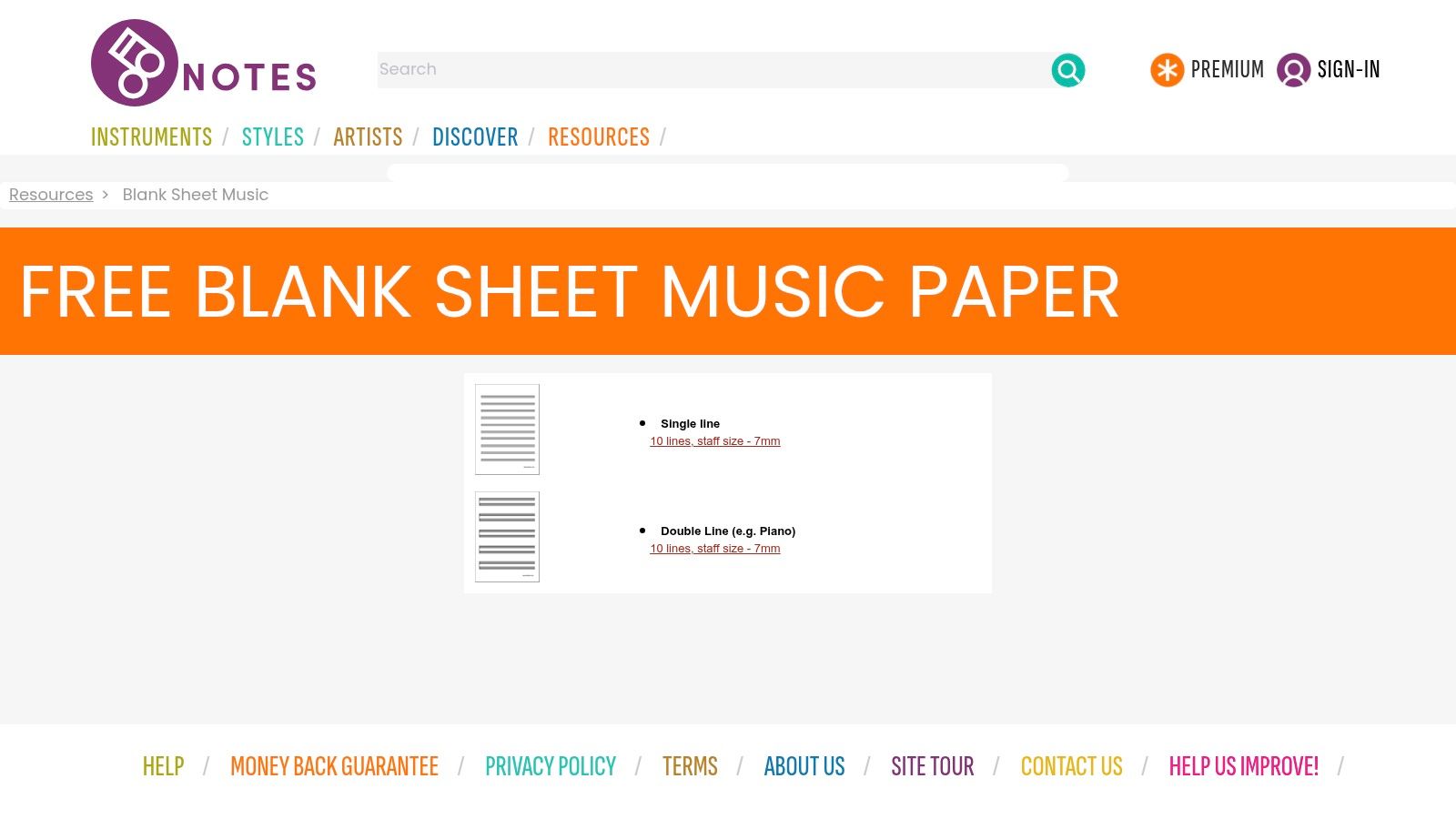
8notes Free Blank Sheet Music is a sensible choice if you already use 8notes for lessons or educational materials. It doesn’t try to do everything, and that’s part of the appeal.
Some musicians don’t need customization. They need dependable pages they can print before a lesson, rehearsal, or short ear training session. 8notes does that well.
Best for Straightforward Practice
This one is strong for students and teachers who want familiar, classroom-friendly resources. If your exercises are basic but important, such as writing back a sung interval or notating a simple tune by ear, the site gives you enough.
It’s less ideal for musicians who like to optimize every page.
- Good for no-nonsense dictation practice: You can get to work quickly.
- Good for music students: Especially helpful when combined with broader lesson materials.
- Less useful for highly customized workflows: Specialist generators offer more control.
Don’t underestimate simple pages. If you do 10 minutes a day of listen, sing, write, and check, a basic printable sheet can support very strong musical growth. The page doesn’t need to be advanced. Your listening does.
10. FreeBlankSheetMusic.org
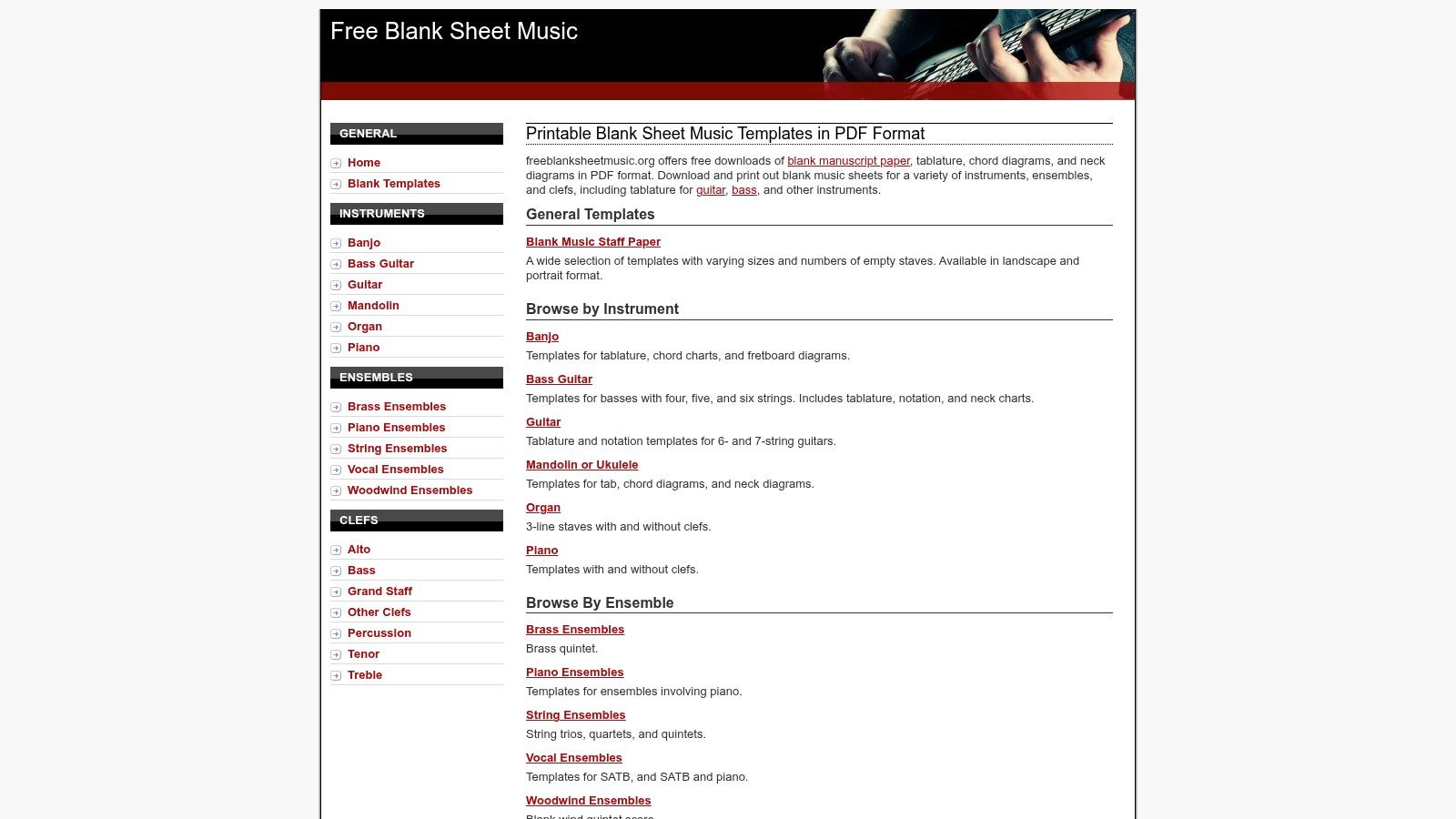
FreeBlankSheetMusic.org is useful when you want a broad library of common manuscript needs in one place. It’s simple, direct, and built around practical downloading rather than visual polish.
For musicians who just want a dependable stack of pages ready for the week, that’s often the right trade-off. This site doesn’t feel glamorous, but practice tools don’t need to impress you. They need to get used.
Where It Helps Most
This resource makes sense for musicians who rotate between treble clef, bass clef, piano formats, and ensemble pages. It’s also good for teachers who want to keep multiple template types on hand for different students.
What works best is using the site as a batch-printing station. Print a handful of formats once, then keep them in a folder near your instrument.
- Good for practical variety: Common layouts are easy to find.
- Good for weekly preparation: Print in advance so your ear training isn’t blocked by setup.
- Not the best for customization: This is more library than generator.
A blank page becomes powerful when it’s already waiting for you. The less time you spend preparing to practice, the more time you spend hearing.
Top 10 Blank Staff Paper PDF Comparison
| Tool | Core features | UX & Quality | Value (💰) | Best for (👥) | Unique selling point (✨/🏆) |
|---|---|---|---|---|---|
| MusicTheory.net, Staff Paper Generator | Custom staff size, clefs, margins, one‑click PDF | ★★★★★, precise & lightweight | Free 💰 | Educators & composers 👥 | ✨ Precise spacing controls; 🏆 trusted by teachers |
| BlankSheetMusic.net | Staves, grand staff, tabs, chord boxes, quick PDF | ★★★★☆, very fast, template variety | Free 💰 | Guitarists & pianists 👥 | ✨ Broad templates + no sign‑up |
| GeneratedPaper, Blank Sheet Music Templates | Adjustable staff count/spacing, vector PDF, multi‑paper | ★★★★☆, clean exports | Free 💰 | General practice & multi‑use 👥 | ✨ Includes graph/lined paper beyond staves |
| StaffPaper.org | Simple on‑page controls, instant vector PDF download | ★★★★☆, ultra‑fast & minimal | Free 💰 | Quick classroom/handwriting needs 👥 | ✨ 5‑second clean PDF export |
| StaffPaper.net | Dozens of ready‑made templates (portrait/landscape) | ★★★★, consistent print‑ready PDFs | Free 💰 | Users building practice binders 👥 | 🏆 Huge template library; ready‑to‑print |
| Musicca, Staff paper | Category navigation, clef‑specific PDFs, one‑click download | ★★★★, classroom friendly | Free 💰 | Students & teachers 👥 | ✨ Organized by instrument/category |
| Papiermusique.fr, Professional‑grade | Professionally engraved layouts, optimized spacing | ★★★★★, polished print quality | Free 💰 | Professionals & neat handwriting 👥 | 🏆 Professional engraving; excellent legibility |
| EmptyMusicSheets.com | Standard, piano, tab templates; 8/12 stave options | ★★★★, modern UI, fast downloads | Free 💰 | Song analysts & arrangers 👥 | ✨ Modern catalog with 12‑stave PDFs |
| 8notes, Free Blank Sheet Music | Single line & grand staff PDFs; educator resources | ★★★★, reliable & familiar | Free 💰 | Teachers & classroom use 👥 | ✨ Integrated with wider educational materials |
| FreeBlankSheetMusic.org | Organized PDF library by use case (treble/bass/piano) | ★★★, straightforward & utilitarian | Free 💰 | Ensemble transcription practice 👥 | ✨ Quick access to common manuscript templates |
Your Daily Ear Training Action Plan
A blank staff paper PDF helps only when it becomes part of a routine. That’s the key shift. Don’t treat these pages like office supplies. Treat them like your ear-training workbench.
If you want to play by ear, recognize chords faster, or build the kind of pitch awareness people often associate with perfect pitch, writing matters. It slows your hearing down just enough to make it conscious. You stop guessing and start noticing.
How to Use Staff Paper for Ear Training
Start small. One line of melody is enough. Sing it back before you write anything. Then write only what you’re sure of, even if that’s just the starting note, the contour, or the rhythm shape.
Use the page for musical questions, not just answers. Write the tonic you think you hear. Mark the spots where the melody leaps. Circle the note that keeps fooling you. That turns notation into active listening instead of passive copying.
You can also separate layers. Write melody on the top staff. Write bass movement underneath. Add chord symbols only after you’ve sung the roots and tested them on your instrument. That sequence trains your ear to hear structure.
Don’t wait until you can hear everything. Hearing improves because you keep trying to write what you hear.
Your 10-Minute Daily Workout
Short daily work beats long occasional work. If you can give this 10 minutes a day, you’ll build real listening skill over time.
Keep one printed page beside your instrument. Use the same routine often enough that your brain starts recognizing the job immediately.
1. Melodic Dictation
Listen to a short phrase from a song, app exercise, or teacher example. Pause it. Sing it back without touching your instrument first.
Then write what you heard. After that, check it on your instrument and correct only what the ear test exposed. This is one of the fastest ways to improve play-by-ear ability because it connects hearing, voice, hand, and notation.
2. Chord Progression Transcription
Choose a simple progression from a song you like. First, listen for the bass or root movement. Don’t jump straight to chord labels.
Write the roots on the staff or under the staff. Then test chord quality by hearing whether the sound feels brighter, darker, more stable, or more tense. This develops real chord recognition, which is much more useful than memorizing theory terms without sound attached.
3. Interval Journaling
Take one interval a day and make it concrete. Hear it, sing it, play it, then write it in a few keys on your blank page.
Add one short sentence under the staff about how it feels. Maybe it sounds open, tense, bright, or unresolved. That kind of journaling may seem simple, but it helps your ear stop treating intervals like random facts and start treating them like recognizable sounds.
Supercharge Your Practice The Paper + App System
Paper is powerful, but paper doesn’t give feedback. That’s where a daily ear training app changes the game.
The strongest setup is a simple two-part system. The app gives you the sound, structure, repetition, and correction. The staff paper gives you a place to slow down, analyze, and lock the sound into memory through writing. One trains recognition in real time. The other helps you process what happened.
That combination is especially useful for musicians who want more than theory knowledge. If your goal is improvisation, faster chord recognition, better intonation, or the confidence to play by ear with other people, you need both immediate hearing practice and deliberate reflection.
Trill is an excellent fit. As a daily trainer, it supplies short, focused ear training that you can stick with. Then your printed manuscript pages become the workbench where you write the intervals you missed, sketch the progression you almost recognized, or notate the melody you finally heard correctly on the third try.
Do that consistently and the results compound in a very practical way. Songs become easier to decode. Chords stop feeling invisible. Improvisation starts feeling less like trial and error. You build the kind of musical freedom that comes from hearing structure before your hands find it.
You don’t need a perfect routine. You need a repeatable one. Pick one blank staff paper PDF resource from this list, print a small stack, and use it every day for 10 minutes. That’s enough to start changing how you hear.
If you want a daily system that helps you stop guessing and start hearing, try Trill: Ear Training Daily. It pairs perfectly with printed staff paper: Trill gives you the audio exercises, instant feedback, and daily structure, while your manuscript pages help you write, analyze, and remember what you heard. If your goal is to play by ear, recognize chords faster, improve pitch accuracy, and build real musical freedom, this is a strong place to begin.